Why Trillionaire Elon Musk Believes Only Bitcoin Can Survive the Coming AI Collapse
Exploring Musk's views on AI-driven abundance and Bitcoin's role in the future economy.
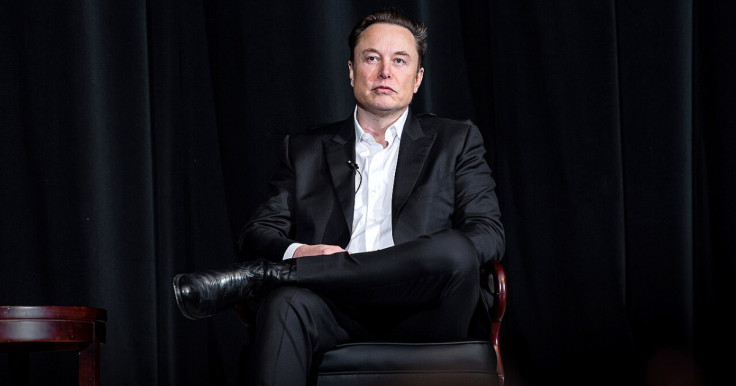
Elon Musk's latest argument over artificial intelligence is not only about robots replacing workers or companies becoming more productive. It is also about what happens to money when AI begins reshaping the global economy.
The Tesla and SpaceX chief has argued that advanced AI and robotics could create an era of unprecedented abundance, where goods and services become so plentiful that inflation becomes less of a concern. But his position has also raised a familiar question among Bitcoin supporters: whether traditional currencies could face pressure in a world transformed by automation.
That debate has gained fresh attention after SpaceX disclosed that it held 18,712 Bitcoin on its balance sheet as of March 31. The figure has renewed interest in Musk's long-running support for digital assets and his broader views on the future of wealth.
The argument places Musk on one side of a growing divide. Supporters believe AI will create enormous economic gains, while critics fear those benefits could become concentrated among the companies and individuals controlling the technology.
SpaceX Brings Bitcoin Back Into Focus
SpaceX's public debut has brought more attention to the company's financial position, including its Bitcoin holdings.
The disclosure does not mean SpaceX is replacing traditional financial assets with cryptocurrency. However, it adds a concrete figure to Musk's long-running interest in digital currencies.
SpaceX S-1 Filing Reveals 18,712 Bitcoin Holdings With Average Cost Basis of $35,300
— Wu Blockchain (@WuBlockchain) May 20, 2026
SpaceX disclosed in its S-1 filing that, as of March 31, 2026, the company held 18,712 bitcoin with a total cost basis of approximately $661 million, implying an average acquisition cost of… pic.twitter.com/D5hE7CuZAp
Musk has previously influenced crypto markets through his comments on Bitcoin and Dogecoin, making him one of the most closely watched technology figures in the sector.
For Bitcoin advocates, the appeal is tied to scarcity. Unlike government-backed currencies, Bitcoin has a fixed supply, which supporters argue makes it attractive in periods when they fear excessive money creation.
That argument has become increasingly relevant as technology leaders debate how AI-driven growth will affect the economy.
Vance Warns AI Could Deepen Inequality
The debate intensified after Vice President J.D. Vance discussed AI's social impact during an appearance on Steven Bartlett's The Diary of a CEO podcast.
Vance argued that AI could create a dangerous concentration of wealth if the biggest gains flow mainly to companies developing the technology. He questioned whether firms generating enormous profits from AI would voluntarily distribute those gains widely enough to prevent inequality from worsening.
Vance: AI won't cause mass unemployment. But it might cause mass inequality — and that's its own crisis. In the industrial revolution, mass joblessness wasn't the consequence either.
— Tymofiy Mylovanov (@Mylovanov) June 18, 2026
But rich people got way richer. That led to fascism and communism across Europe. 1/ pic.twitter.com/I8fsnUkdem
His concern is that AI could create a system where a small number of companies control powerful technology while millions of workers become increasingly dependent on those who own it.
When Bartlett suggested that AI leaders such as Musk and OpenAI chief Sam Altman sometimes present a dystopian view of the future, Vance argued that technology executives may have incentives to promote dramatic predictions because they attract investment and attention.
US VP JD Vance on AI Company's marketing strategy, some AI CEOs sell fear because fear makes their product look powerful.
— Rohan Paul (@rohanpaul_ai) June 19, 2026
And his view on AI driven job loss.
"I think the AI companies themselves, the CEOs, have a certain incentive to be super dystopian because it is like a form… https://t.co/KJ5bXL0LVb pic.twitter.com/X9mK8XSaZI
The disagreement highlights one of the biggest questions surrounding AI: whether it becomes a force for broad prosperity or a tool that concentrates economic power.
Musk's Bet on AI Abundance
Musk's response comes from a different assumption. In an X post, he argued that AI and robotics will increase the supply of goods and services faster than the supply of money, meaning inflation would not be the defining economic problem. Instead, he predicted that deflation could become the bigger issue.
Better just to send money directly to the people from the Treasury.
— Elon Musk (@elonmusk) June 20, 2026
So long as the increase in goods & services exceeds the increase in the money supply, which will be the case with AI & robots, there will not be inflation.
In fact, my prediction is that we will desperately…
Under Musk's view, automation would dramatically lower production costs and create a world where scarcity becomes less important. The challenge would be ensuring people benefit from the wealth generated by machines.
Musk has rejected the idea of government ownership stakes in AI companies. Instead, he has argued that governments should tax successful companies and return money directly to citizens.
That approach would allow people to benefit from AI-driven growth without requiring the state to control the companies producing it.
Why Bitcoin Matters in the AI Debate
The connection between Bitcoin and AI comes down to trust in financial systems. Bitcoin advocates argue that a rapidly changing economy could increase demand for assets with limited supply, especially if governments respond to disruption with higher spending or expanded money creation.
Musk has previously criticised currency debasement and expressed support for cryptocurrencies as alternatives to traditional financial systems.
However, whether Bitcoin can actually serve as a long-term safeguard remains uncertain. Critics point to its volatility and argue that it is unlikely to replace established currencies.
What is clear is that Musk sees AI as more than a technological shift. He sees it as a challenge involving wealth, ownership and the future of money itself.
Whether the future resembles Musk's vision of abundance or Vance's warning about inequality, the AI debate is moving beyond technology. It is becoming a wider argument about who controls the gains of the next economic era — and how those gains are distributed.
© Copyright IBTimes 2026. All rights reserved.
- Recommended For You