Why Are Nvidia, AMD, and Micron Stocks Falling? AI Valuation Fears and Fed Jitters Explained
A cooling AI trade, rising rate concerns, and new market listings combined to drag Nvidia, AMD and Micron lower

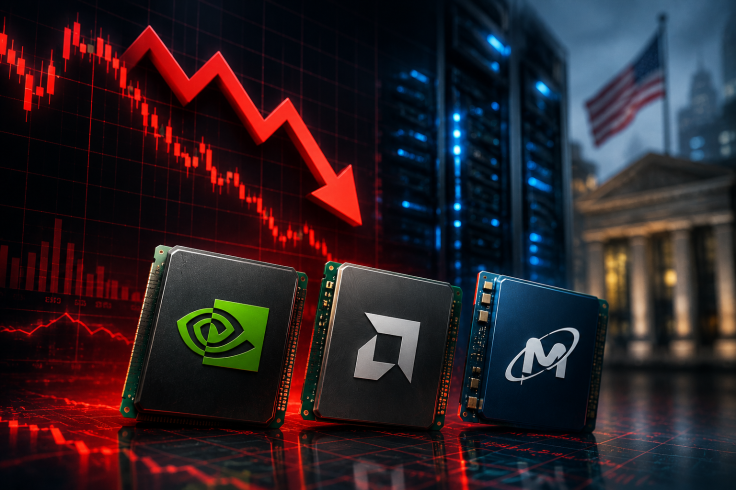
Nvidia, AMD, and Micron Technology led a broad technology sector sell-off on Tuesday as investors pulled back from some of the market's biggest winners. The decline came days after the Federal Reserve signalled that inflation remains above its target, raising concerns that interest rates could stay higher for longer. Investors also appeared to reassess valuations across the artificial intelligence sector after months of strong gains.
The technology sector was among the worst performers of the day, helping push the Nasdaq Composite down roughly 2.1 per cent and extending losses for a second consecutive session.
AI Leaders Hit by Market Retreat
Nvidia, one of the biggest beneficiaries of the AI boom, fell more than 4 per cent during Tuesday's trading session. Micron Technology dropped 13 per cent ahead of its quarterly earnings report, while AMD also moved lower. The weakness was not limited to US markets.
Asian chipmakers SK Hynix and Samsung Electronics also declined, reflecting broader caution across the semiconductor sector. Other AI-related stocks, including Broadcom and Intel, also traded lower as investors reduced exposure to technology shares.
Federal Reserve Signals Weigh on Sentiment
Investor attention remains focused on the Federal Reserve and the outlook for US interest rates. Last week, policymakers indicated that inflation remains persistent, prompting concerns that monetary policy could remain restrictive for longer than previously expected.
Higher interest rates can affect growth-oriented sectors because they increase borrowing costs and reduce the present value of future earnings. Technology companies are often particularly sensitive to these expectations. The latest market moves came as investors shifted towards a more cautious approach following the Federal Reserve's comments.
Questions Emerge Over AI Valuations
The sell-off also comes after a remarkable run for AI-related stocks. Technology has been the best-performing sector this year, helping major US stock indices reach record highs in recent weeks. Much of that growth has been driven by optimism surrounding AI infrastructure spending.
However, rising share prices have increased scrutiny of company valuations. Investors are closely monitoring whether future earnings growth can support the elevated valuations seen across parts of the AI sector. Micron's decline ahead of earnings reflected the high expectations that many investors currently have for companies benefiting from AI-related demand.
New Listings Add to Market Competition
Investors are also preparing for several high-profile public market debuts. The recent SpaceX initial public offering attracted significant market attention, while anticipated listings involving AI companies Anthropic and OpenAI are expected to draw further investor interest.
Large public offerings can influence market flows as investors rebalance portfolios and allocate capital to new opportunities. SpaceX shares experienced sharp volatility this week, briefly falling before recovering some losses after a significant decline in the previous session.
AI Growth Story Remains in Focus
Despite the recent pullback, demand for AI infrastructure remains a key theme for investors. Technology companies continue to invest heavily in data centres, advanced semiconductors, and AI-related services. Those investments have supported strong performance across much of the semiconductor industry over the past year. For now, investors appear focused on balancing long-term optimism about AI with concerns over valuations, interest rates, and broader market conditions.
The coming weeks may provide greater clarity as companies report earnings and policymakers continue to outline their expectations for inflation and economic growth. Until then, Tuesday's sell-off serves as a reminder that even the market's strongest performers can face periods of volatility when investors reassess risk and valuation expectations.
Disclaimer: Our digital media content is for informational purposes only and does not constitute investment advice. Please conduct your own analysis or seek professional advice before investing. Remember, investments are subject to market risks, and past performance does not guarantee future returns.
© Copyright IBTimes 2026. All rights reserved.
- Recommended For You