Moon May Have Formed in Five Hours, Scientists Say, as Believers Claim the Discovery Supports the Bible
Study explores rapid Moon formation scenario, challenging traditional debris-disc models
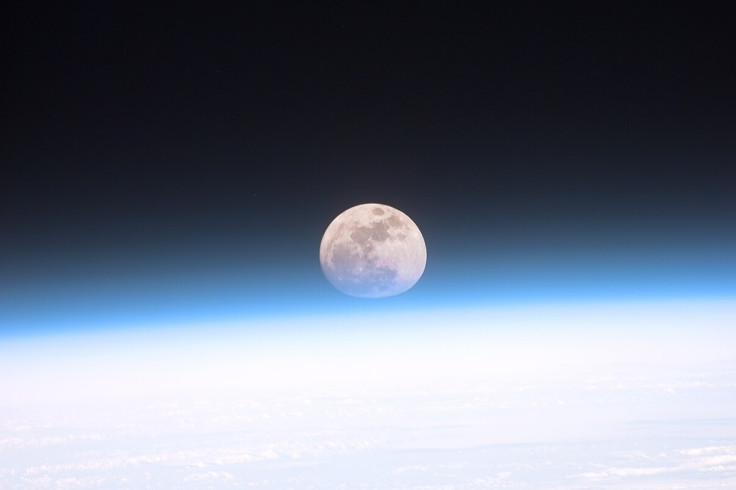
A new computer simulation suggests that Earth's Moon could have emerged in orbit within about five hours of the giant impact thought to have created it.
The study, led by Dr Adeene Denton of the Southwest Research Institute and published in The Astrophysical Journal Letters, found that including the temperature-dependent strength of the colliding bodies can produce a different outcome from the debris-disc scenario used in many earlier models.
The result does not establish that the Moon actually formed in five hours. Rather, it shows that an intact Moon can emerge within that timescale in one simulated scenario. Other simulations in the same study produced a disc of debris that would form the Moon over time.
The finding has prompted some people online to draw comparisons with the creation account in Genesis, particularly Genesis 1:14–19, which describes the 'greater light' and 'lesser light' in the heavens on the fourth day.
The biblical passage does not provide a scientific timescale for the physical formation of the Moon.
The Leading Theory of Lunar Origin
The leading explanation for the Moon's origin is the giant-impact hypothesis, which proposes that a Mars-sized body called Theia collided with the young Earth, producing material that ultimately became the Moon.
Previous simulations often produced a disc of debris from which the Moon formed over time, although newer models show that an intact Moon can emerge directly from some simulated impacts.
Previous giant-impact simulations generally neglected the material strength of the colliding bodies, assuming that the extreme conditions of the collision would make strength relatively unimportant. Denton's team incorporated temperature-dependent material strength into the simulations, alongside the internal temperatures of the colliding bodies.
In the simulations, hotter planetary material was weaker and more readily deformed than cooler material, changing the outcome of the collision. In one simulation, an intact Moon emerged in orbit about five hours after the simulated impact.
'When we used the same parameters as original impact modelling, down to the equal temperature structures inside both bodies, within around five hours, an intact moon emerged,' Denton said. The result suggests that, under some conditions, the Moon could have emerged from the impact within hours rather than assembling gradually from a debris disc.
The study examines the physical consequences of the Moon-forming impact and does not address the biblical account. It models what could have happened after a proposed collision between Theia and the early Earth.
Online Reactions and Biblical Comparisons
Some social-media users responded by drawing parallels with Genesis. One commenter wrote, 'The Book of Genesis told me this a while ago,' while another argued, 'God can do whatever He wants; whenever He wants,' adding that it could have taken 'five seconds' rather than five hours.
Genesis 1:14–19 describes two great lights, the 'greater light' to govern the day and the 'lesser light' to govern the night, on the fourth day. The 'greater light' and 'lesser light' are commonly understood as referring to the Sun and Moon, respectively.
Science and Caution
NASA has previously reported simulations suggesting that the Moon could have formed within hours of a giant impact. A 2022 study led by Jacob Kegerreis found that material could have been launched directly into orbit and produced a Moon-like satellite within hours.
The latest study presents the five-hour result as one possible formation scenario rather than an established reconstruction of the Moon's history. Other simulations in the research produced a protolunar disc that would form the Moon over time.
The simulation is a published scientific result, but it does not establish that the Moon actually formed within five hours. The five-hour timescale applies to a specific simulated outcome, not a direct measurement of how long the Moon took to form.
© Copyright IBTimes 2026. All rights reserved.
- Recommended For You