

Abdul El-Sayed Deals GOP a Setback in Michigan Senate Race After Donald Trump's 'Jihadist' Campaign Remarks
The Democrat retained Gary Peters' seat despite attacks from Donald Trump and divisions within his own party over Israel and his progressive platform
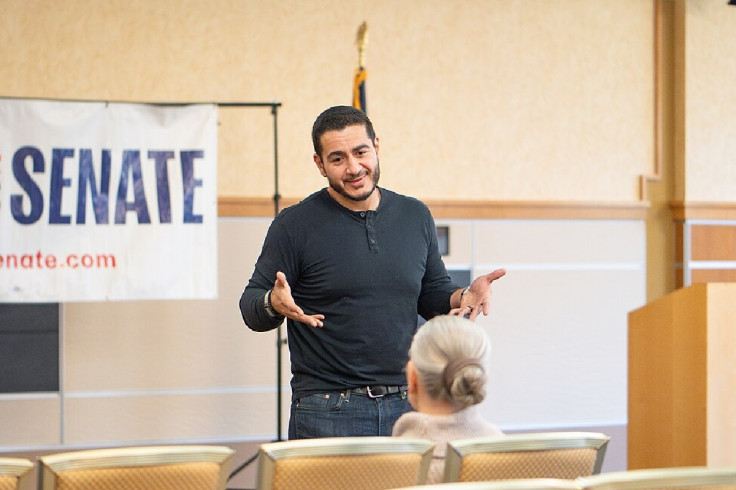
Abdul El-Sayed defeated Republican Mike Rogers in Michigan's US Senate election on Tuesday, 3 November 2026, becoming the first Muslim elected to the chamber.
The Associated Press called the race at 2.27 a.m. local time on Wednesday. His victory kept the seat in Democratic hands despite President Donald Trump's unfounded attacks on his religion.
The contest for retiring Democratic Senator Gary Peters' seat had offered Republicans a chance to make gains in a crucial battleground state.
Instead, El-Sayed, a former Detroit health official, won after months of arguments over living costs, national security and the Democratic Party's direction.
Rogers, a former congressman and FBI agent, had narrowly lost a Senate contest in 2024. He entered this race with Trump's endorsement, while El-Sayed faced doubts about whether his progressive platform could attract voters beyond the Democratic base.
Trump's 'Jihadist' Remarks Spark Religious Controversy
At a rally in Port Huron on 25 October, Trump described El-Sayed as a 'jihadist' and alleged he belonged to the Muslim Brotherhood. The president also suggested the candidate would need to pass through a metal detector before entering the Senate, questioning his loyalty to the United States.
Those allegations were not established facts. PolitiFact found no evidence that El-Sayed belonged to the Muslim Brotherhood or advocated religious violence, rating Trump's claim 'Pants on Fire'. El-Sayed rejected the accusations, describing them as attempts to mislead voters.
HISTORIC WIN 🇺🇸
— CA Anurag (@CAAnurag_) November 4, 2026
Abdul El Sayed wins Michigan’s Senate race, becoming the first Muslim elected to the U.S. Senate.
A notable setback for Trump, who had repeatedly targeted El-Sayed during the campaign. 👀 pic.twitter.com/XK6l12Nuzo
Rogers also challenged the Democrat on security issues. Speaking in Bad Axe before polling day, he questioned El-Sayed's statements on Iran and his response to an attack Rogers described as Hezbollah-inspired.
Those criticisms formed part of the Republican campaign's effort to portray El-Sayed as unsuitable for national office.
El-Sayed argued that his opponents were focusing on his name and Muslim faith rather than the cost of petrol, groceries and housing. His campaign sought to shift attention back to the financial pressures facing Michigan households.
The Republican attacks did not prevent his victory. However, the election result alone cannot establish whether affordability, religion or other issues mattered most to individual voters.
El-Sayed's Campaign Exposes Democratic Divisions
El-Sayed ran on proposals including Medicare for All, action on medical debt and measures to reduce corporate influence in politics. Rogers favoured tax cuts and domestic manufacturing, while facing questions about Trump's tariffs, the trade dispute with Canada and the war involving Iran.
Both campaigns drew national support. Trump, Vice President JD Vance and Senator Ted Cruz backed Rogers. Former President Barack Obama, Representative Alexandria Ocasio-Cortez and Senator Bernie Sanders campaigned for El-Sayed.
Yet some of the Democrat's fiercest opposition came from within his own party. El-Sayed had defeated Representative Haley Stevens in the August primary, raising concerns among party figures about his ability to win statewide.
On Sunday, 1 November, Stevens endorsed Rogers, a remarkable break with her party's nominee just two days before the election. Her decision followed disputes over El-Sayed's criticism of Israel and his campaign appearances with political streamer Hasan Piker, whose past comments had provoked controversy.
The American Israel Public Affairs Committee, or AIPAC, was another prominent opponent. Its affiliated super PAC, United Democracy Project, spent millions opposing El-Sayed and supporting Stevens during the Democratic primary, according to election spending records.
The bitter primary and Stevens' subsequent endorsement illustrated how divided Democrats remained over Israel and the party's ideological direction, even as the general election approached.
El-Sayed's Victory Raises Questions for Democrats
At his victory celebration in Detroit, El-Sayed invoked alhamdulillah, an Arabic expression meaning praise be to God. He then addressed Rogers directly, declaring, 'You chose hate, and Michigan chose hope.'
El-Sayed also criticised AIPAC's campaign spending and celebrated defeating the organisation's efforts against him. Rogers, meanwhile, had told supporters early Wednesday that the count would take time.
The result denied Republicans a chance to capture a seat held by Democrats, rather than flipping a Republican seat. El-Sayed will succeed Peters when the new Senate term begins in January 2027.
His victory could intensify disagreements among Senate Democrats. El-Sayed has criticised Senate Minority Leader Chuck Schumer and expressed a preference for Senator Chris Van Hollen to lead the party, according to Fox News.
For now, Michigan has delivered both a historic first and a setback for Republican efforts to reclaim the seat. Whether El-Sayed's victory reshapes Democratic leadership or policy remains a question for his arrival in Washington.
© Copyright IBTimes 2026. All rights reserved.