Who Is Nadia Sawalha? Former 'Loose Women' Host Starts Legal Action Against Itv for Untimely Removal
Television presenter Nadia Sawalha alleges discrimination by ITV due to her support for Palestinian rights
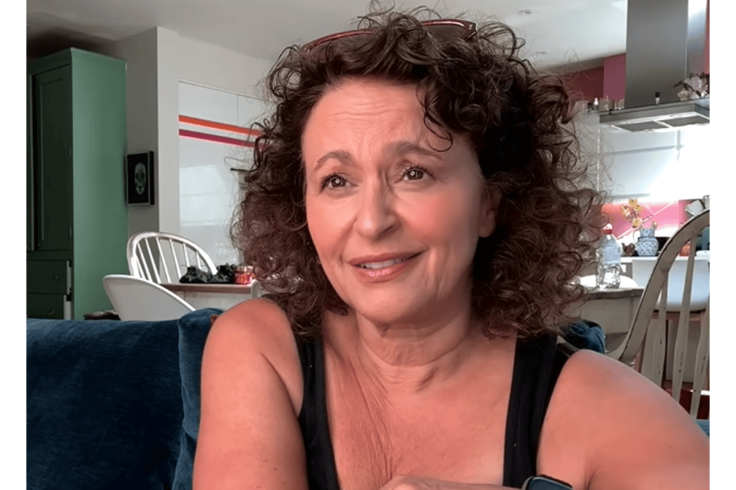
Television presenter Nadia Sawalha has begun legal action against ITV over claims she was repeatedly dropped from 'Loose Women' because of her public support for Palestinian rights, after alleging she was effectively 'bullied out' of her long-running role on the daytime panel show. The broadcaster and actress alleges she was repeatedly removed from the programme because of her outspoken support for Palestinian rights, a claim ITV has not publicly accepted.
The dispute marks a new chapter in the career of one of the longest-serving panellists on 'Loose Women'. Sawalha has instructed the European Legal Support Centre (ELSC), which has sent a pre-action letter alleging direct discrimination, indirect discrimination and harassment linked to what it describes as her protected philosophical beliefs under the Equality Act 2010.
The legal team is seeking an apology from ITV, assurances that she will not be removed from future broadcasts because of her beliefs, and other remedies.
Who Is Nadia Sawalha?
Born on 18 November 1964 in Wandsworth, London, Nadia Sawalha has been a familiar face on British television for more than three decades. She comes from an entertainment family. Her father was Jordanian-born actor Nadim Sawalha, while her sisters, Julia and Dina Sawalha, also forged acting careers.
After training at the Italia Conti Academy of Theatre Arts, Sawalha built her reputation through acting before becoming one of Britain's best-known television presenters.
She first found widespread fame playing Annie Palmer in 'EastEnders' between 1997 and 1999. Her storylines made her one of the soap's central antagonists before she left Albert Square to pursue presenting opportunities.
Away from acting, Sawalha reinvented herself as a television personality. She became one of the original panellists on ITV's 'Loose Women' when the programme launched in 1999, helping establish its format of debates on current affairs, celebrity news and family life. Although she initially left in 2002, she returned to the show in 2013 and became one of its regular contributors once again.
Over the years, Sawalha has also appeared on 'Celebrity MasterChef', 'Dancing on Ice', 'The Circle' and lifestyle programmes, while building an online audience through cooking videos and discussions about family life, mental health and menopause.
Why Is Nadia Sawalha Taking ITV to Court?
Sawalha claims her difficulties with ITV began after she started publicly expressing support for Palestinian rights in late 2023. In a video shared on Instagram, she alleged she had been repeatedly taken on and off 'Loose Women' despite never discussing Palestine during the programme itself.
'I've never brought up or spoken about Palestine directly on the show,' Sawalha said, adding that she had nevertheless been told by programme bosses that 'it's all a bit noisy out there for us.'
According to the ELSC, the presenter believes ITV treated her less favourably than other presenters who had also faced public complaints. The organisation argues that her anti-Zionist beliefs constitute a protected philosophical belief under the Equality Act and alleges the broadcaster discriminated against her because of those beliefs.
Sawalha has also launched a public petition calling for her reinstatement on 'Loose Women', telling supporters that she wanted to demonstrate there were 'many more people with us than against us.'
ITV Yet to Respond in Detail
At the time of writing, ITV has not publicly responded in detail to Sawalha's allegations or the legal claims outlined in the pre-action letter. A pre-action letter is the formal step that typically precedes legal proceedings and allows both parties to address a dispute before court action begins.
It also remains unclear whether the matter will ultimately proceed to an employment tribunal or be settled privately.
A High-Profile Dispute
Sawalha's legal action has attracted debate because it touches on questions surrounding freedom of expression, workplace discrimination and the responsibilities of broadcasters toward on-air talent with publicly expressed political views.
The dispute has become one of the most closely watched challenges involving 'Loose Women' in recent years. For Nadia Sawalha, whose television career has spanned acting, presenting and reality television, the outcome could have implications for her own future with ITV and for wider discussions about how broadcasters balance editorial considerations with employees' protected beliefs.
© Copyright IBTimes 2026. All rights reserved.
- Recommended For You