

NASA Maven Loses Contact - Mars Orbiter Mysteriously Disappears After Capturing 3I/ATLAS Images
MAVEN lost signal soon after capturing unprecedented ultraviolet data on comet 3I/ATLAS, a rare communications anomaly.
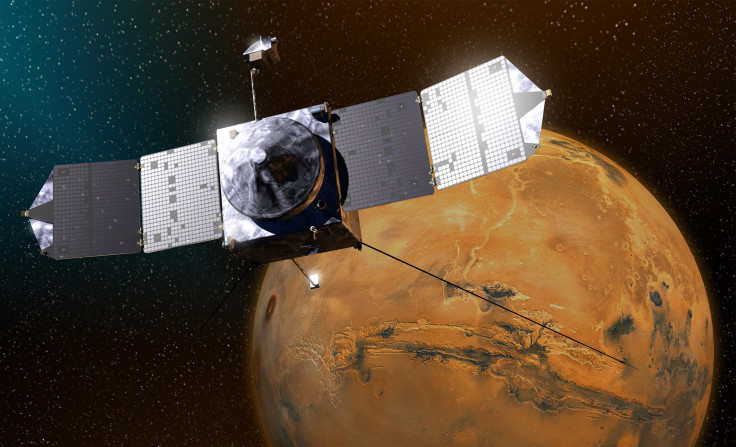
NASA is working to re-establish contact with its MAVEN spacecraft after ground controllers unexpectedly lost signal with the Mars orbiter on 6 December, an incident that comes just weeks after the mission helped capture some of the most detailed observations ever recorded of an interstellar comet passing through the solar system.
According to NASA, telemetry received before MAVEN passed behind Mars showed all onboard systems functioning normally. However, after the spacecraft emerged from occultation, the agency's Deep Space Network was unable to detect a signal, prompting an ongoing investigation into the anomaly.
What NASA Has Confirmed So Far
MAVEN, short for Mars Atmosphere and Volatile EvolutioN, has been orbiting Mars since September 2014 and plays a dual role: conducting long-term atmospheric science while also serving as a communications relay for rovers on the Martian surface.

NASA has stressed that the loss of signal does not yet mean the spacecraft is permanently lost. Engineers and operations teams are analysing the situation and have not released details on whether the issue may involve power, orientation, or communications hardware.
The agency noted that more information will be shared as it becomes available, underscoring that investigations of deep-space anomalies can take time, especially when a spacecraft is hundreds of millions of kilometres from Earth.
MAVEN And The Rare Encounter With 3I/ATLAS
Just weeks before contact was lost, MAVEN played a key role in observing comet 3I/ATLAS, the third confirmed interstellar object ever detected passing through the solar system.

In late September and early October, MAVEN used its Imaging Ultraviolet Spectrograph to capture unique ultraviolet images of the comet, helping scientists identify hydrogen emissions and estimate the chemical makeup of the object's coma as it was warmed by the Sun.
NASA scientists described the data as significant, noting that every interstellar object observed offers rare insight into material formed around other stars.
Comet 3I/ATLAS was discovered on 1 July 2025 by the NASA-funded ATLAS survey telescope in Chile and was identified as interstellar due to its extreme speed and hyperbolic trajectory, which means it is not gravitationally bound to the Sun.
At its closest approach to Mars, the comet passed just outside the planet's orbit, giving MAVEN and other Mars missions a front-row seat to a once-in-a-generation event.
Was The Disappearance A Coincidence?
NASA has not suggested any link between the comet observations and the signal loss, and there is no indication that the flyby posed any danger to spacecraft. Scientists have repeatedly stated that 3I/ATLAS poses no threat to Earth or Mars and remained tens of millions of kilometres away during observations.

Still, the coincidence has drawn attention because MAVEN's ultraviolet measurements of 3I/ATLAS are among the mission's most distinctive recent contributions, making the timing of the communications issue particularly notable.
A Mission With A Decade Of Discoveries
The timing of the signal loss is striking given MAVEN's recent scientific success. Earlier this year, the spacecraft marked its 10th anniversary in orbit, having completed more than 22,000 orbits and contributed to over 700 peer-reviewed scientific papers.
MAVEN was the first mission dedicated to understanding Mars' upper atmosphere and how solar wind and radiation stripped it away over billions of years, helping explain how the planet transformed from a potentially habitable world into the cold, arid environment seen today.
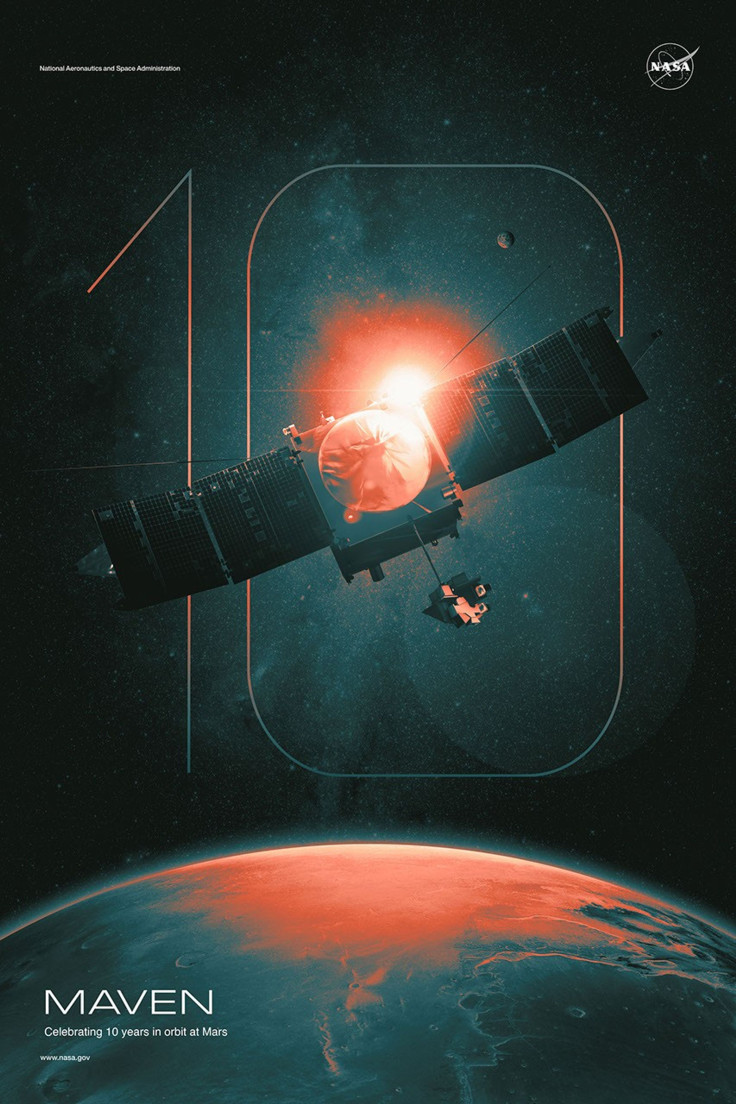
Among its major findings are the discovery of new types of Martian auroras, insights into how global dust storms accelerate atmospheric loss, and the mapping of electric currents and Mars' twisted magnetotail.
Why The MAVEN's Recovery Matters

Beyond its scientific value, MAVEN's role as a communications relay means its status is important for ongoing and future Mars operations. The spacecraft has supported thousands of data relays for missions including Perseverance and Curiosity, setting records for data volume transmitted in a single relay.
NASA has redundancy built into its Mars relay network, but MAVEN remains a critical asset, especially as surface missions continue long-term exploration and sample collection efforts.
For now, NASA teams continue working to diagnose the loss of signal, while the data MAVEN returned during its encounter with 3I/ATLAS is already providing scientists with a deeper look at material formed far beyond our solar system.
Whether the spacecraft can be recovered or not, MAVEN's legacy includes transforming our understanding of Mars' atmosphere and capturing a fleeting glimpse of an interstellar visitor — an unusual overlap of scientific triumph and operational uncertainty that underscores both the rewards and risks of deep-space exploration.
© Copyright IBTimes 2026. All rights reserved.