

NATO Is Testing AI To Speed up Targeting While Searching for Cheaper Ways To Stop Inexpensive Drones
NATO is testing AI-enabled targeting and layered counter-drone systems in Latvia as it seeks faster, cheaper responses to growing drone threats
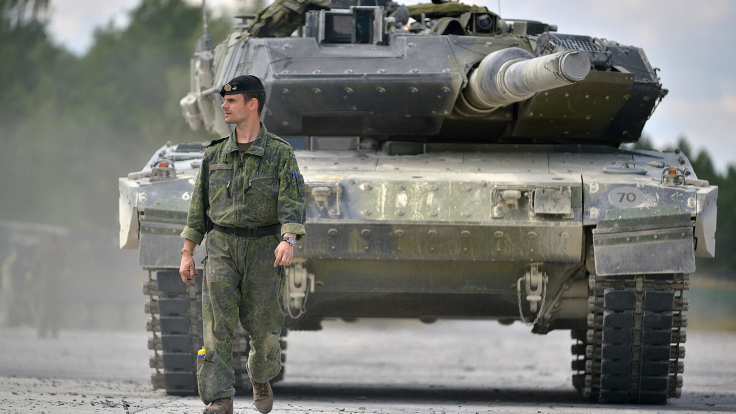
NATO is testing artificial intelligence to speed up targeting and develop lower-cost ways to counter small drones, following repeated airspace incursions on its eastern flank that officials say have exposed gaps in the alliance's defences.
The experiments took place at NATO FUSE in Latvia on 29 and 30 October, involving more than 30 countries and more than 100 companies, according to Maj.-Gen. Arnoud Stallmann, NATO's assistant chief of staff for multi-domain capability.
NATO describes the work as an experimentation effort rather than a procurement programme.
Allied Command Transformation brought together military organisations, operators and industry to test whether connected sensors, command systems and AI tools can operate under realistic conditions and to gather evidence on which capabilities could be expanded.
Stallmann said the urgency increased after drone incursions into Poland in September, which he described as the start of a wider problem. 'We see it all the time in our nations on the eastern flank, with drones entering our airspace,' he said before the drills.
Why NATO AI Targeting Matters
NATO officials say the challenge is that drones are cheap, available in large numbers and can be used for surveillance, disruption and attack, while systems traditionally used to counter them are often far more expensive.
Stallmann said NATO needs alternatives to relying on fighter aircraft or missile interceptors designed for larger threats. 'We really need to find other solutions,' he said, stressing the need for lower-cost interception options.
NATO is pursuing a layered counter-drone approach that combines sensors, effectors and command-and-control systems, rather than relying on a single system.
The Layered Counter-UAS Initiative, known as LCI-X, has held dedicated counter-drone events in Finland and Latvia over the past year. NATO says it is moving from testing individual systems towards linking counter-UAS cells with alliance command networks and providing industry with direct feedback from operators.
'We are looking wider than just what we have in our own stock,' Stallmann said. 'We're not advocating that we have a total solution, but we have a layered C-UAS solution.'
Connecting the Alliance's Data
Alongside the drone work, NATO is testing a digital backbone intended to let allied forces share information and operate together across borders. The Digital Backbone eXperimentation, or DiBaX, is examining resilient command and control, communications during network disruption, and faster decisions using data, sensors and AI.
NATO is a coalition of sovereign states with national systems, national rules and national sensitivities. The alliance is working on a common architecture that allows industry and national systems to connect without requiring every member to use the same equipment.
Stallmann said commanders have identified urgent gaps in connectivity, digital infrastructure and next-generation targeting. The aim is a 'mosaic' of interoperable capabilities spanning air, land and cross-border operations.
The targeting element, Next Generation Targeting, is intended to integrate national data through modular AI and data-management tools. NATO says the programme would retain human authority over engagement decisions, while reducing the time between information and decision. One stated objective is to cut that latency by more than 50%.
NATO says AI may help sift sensor data and suggest options, and that the technology is intended as decision support rather than a replacement for human decision-making.
A Sprint, Not a Procurement Cycle
Stallmann described the effort as 'a sprint', noting that funding has already been allocated this year and next. He said NATO cannot keep fielding capability on a 20-year timetable when adversaries and battlefield technologies are changing more quickly.
'We need to adopt quicker and innovate quicker, because the enemy is doing that too,' he said.
Stallmann, who previously led the Dutch Directorate for Ukraine coordinating platform deliveries and training, said the conflict in Ukraine has shown how fast drone technology evolves.
'The character of war is changing, and we need to adapt to that new character of war,' he said.
Stallmann said NATO is also examining quantum computing and quantum-resistant systems, which he described as a potential game changer approaching the horizon.
Whether FUSE produces deployable systems within the intended timeline has not yet been determined. The exercises are intended as the start of a continuing feedback loop. 'This is not only the end point. It's the start of a learning curve; learn fast and we are going to continue,' Stallmann said. 'This is the beginning of a never-ending cycle.'
Stallmann said the alliance does not yet have a complete answer to cheap drones and is working to develop one.
© Copyright IBTimes 2026. All rights reserved.