

Netanyahu's Explosive TV Boast: Did He Really Trick Trump Into Going To War With Iran?
Netanyahu says nearly 1,000 hours on American TV helped sway US opinion on Iran, but Trump denies Israel talked him into war, raising explosive questions about who really drove the decision
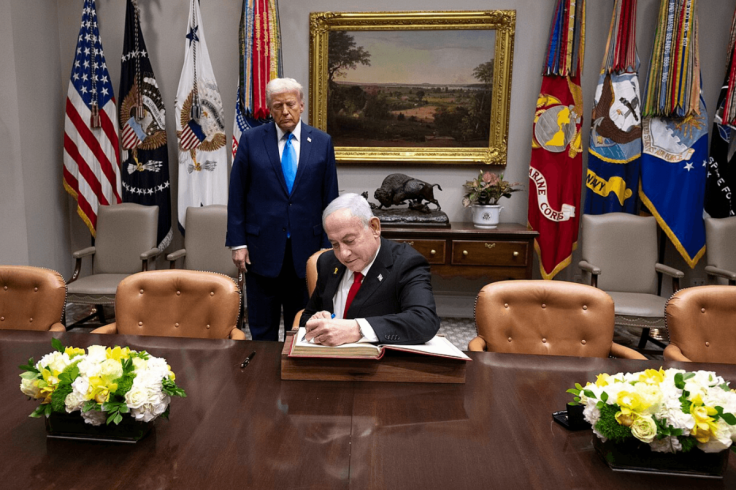
Benjamin Netanyahu has offered a remarkable glimpse into how he believes he helped shift American thinking on Iran, pointing to an unusual political weapon: his years of appearances on US television.
In a recent interview, the Israeli prime minister said it took years to convince Washington that diplomacy alone would not stop Iran. He then revealed just how much time he had spent making Israel's case to an American audience, claiming he had accumulated close to 1,000 hours on US television.
Netanyahu said that exposure gave him the ability to influence opinion in America, as well as an intimate understanding of its political leaders and how to navigate Washington.
The claim has now triggered a much bigger question about Netanyahu's influence on Trump: did the Israeli leader help persuade Donald Trump to go to war with Iran, or did he actually manipulate the president into doing something he might otherwise have rejected?
Netanyahu appeals to Israeli voters by boasting that he manipulated Trump:
— Max Blumenthal (@MaxBlumenthal) August 31, 2026
“it took a long time to get the US to come to its senses” but I finally got it to attack Iran due to my “influence” over its leaders through “1000 hours on American television” pic.twitter.com/hwrswfkbv2
Netanyahu's 1,000-Hour Strategy
Netanyahu's remarks make clear that he sees his American television appearances as more than political publicity.
He described a long effort to bring the United States around to his view of Iran, saying his familiarity with American leaders, including those who supported Israel and those who did not, helped him influence opinion. That makes the Netanyahu 1,000 hours on American TV claim especially striking. He was not simply boasting about airtime.
He was describing the influence he believes he built through decades of communicating directly with Americans. And that strategy did not begin with Trump.
The Iran Campaign Predates Trump
Netanyahu's confrontation with Washington over Iran goes back years. On 3 March 2015, he addressed a joint session of the US Congress and warned against the nuclear agreement being negotiated with Iran during Barack Obama's presidency. His appearance became a highly controversial intervention by a foreign leader in an American foreign-policy debate.
In 2018, Netanyahu again made the case against Iran's nuclear programme as Trump considered abandoning the 2015 agreement. That history matters because it shows that Netanyahu's influence on the war in Iran cannot be reduced to his relationship with Trump. His effort to shape American opinion about Iran had been underway long before Trump entered the White House.
Kupchan Draws the Line
The programme also featured Charles Kupchan, a senior fellow at the Council on Foreign Relations, who was asked whether Netanyahu's remarks proved that the war was effectively being fought for Israel.
Kupchan rejected that conclusion, but he did not dismiss Netanyahu's influence. He said there was no question in his mind that Netanyahu had influenced Trump's decisions, pointing to the close US-Israeli military coordination surrounding the conflict.
But Kupchan made an important distinction: influence did not mean Israel had deceived the United States or dragged it unwillingly into war. That distinction is crucial. Persuasion is not proof of deception, and influence is not the same as control.
Trump Says Israel Did Not Persuade Him
There is another voice that cannot be ignored, Trump's own. In April, Trump explicitly rejected the idea that Israel had talked him into the war, writing that 'Israel never talked me into the war with Iran'.
He said his reaction to the 7 October 2023 Hamas attack, combined with his longstanding opposition to Iran obtaining a nuclear weapon, had influenced his decision. That directly complicates the most sensational interpretation of Netanyahu's remarks.
Trump's position is clear: whatever influence Netanyahu may have had, the president does not believe Israel persuaded him to enter the war.
Iran Accuses Netanyahu of 'Suckering' the US Into War
Iranian Foreign Minister Abbas Araghchi has offered the most explosive interpretation of all. On 31 August, Araghchi accused Netanyahu of 'suckering' the US administration into war with Iran on Israel's behalf, directly linking the accusation to Netanyahu's comments about influencing America through 1,000 hours of television appearances. He also called Netanyahu a 'serpent'.
Those are Araghchi's allegations, not independently established facts. But they expose the extraordinary political tension surrounding Netanyahu's own description of his influence.
Influence or Manipulation?
The evidence supports a narrower conclusion than the headline's most provocative interpretation. Netanyahu says years of exposure to American media helped him bring Washington around to his understanding of Iran.
Kupchan says Netanyahu influenced Trump but rejects the idea that Israel deceived America. Trump himself says Israel did not talk him into the war. Iran, meanwhile, accuses Netanyahu of doing exactly that. The result is a remarkable clash of narratives.
Netanyahu may have spent decades cultivating influence in America and making the case for tougher action against Iran. But the available evidence does not establish that he secretly tricked Trump into war.
The more revealing question may be whether Netanyahu needed to trick him at all. If Trump already believed Iran posed an unacceptable threat, then Netanyahu's achievement may have been less about controlling the president and more about helping reinforce a decision Trump was ultimately willing to make himself.
© Copyright IBTimes 2026. All rights reserved.