

Netflix's Schumacher '94 Documentary: Release Date, Turbulent 1994 Season Details and Key Interviews
One championship year, two deaths and a crash that still splits the paddock in half.
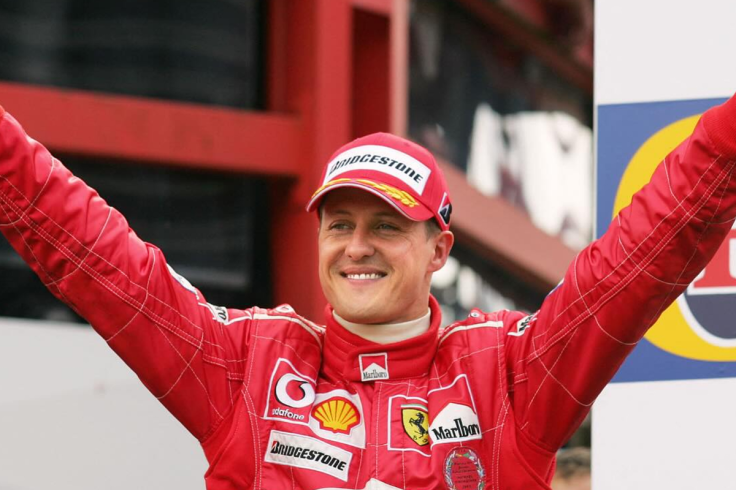
Netflix's new documentary on Michael Schumacher, Schumacher '94, will launch globally on 2 October 2026, the streaming giant has confirmed, revisiting the German's bitterly disputed first Formula 1 world title and the traumatic season that framed it.
The film arrives more than three decades after Schumacher, then just 25, clinched the 1994 crown with Benetton at the season finale in Adelaide, a race that ended in a notorious collision with rival Damon Hill.
That campaign, already stained by the deaths of Roland Ratzenberger and Ayrton Senna at Imola, has long sat uncomfortably in F1's collective memory. Netflix is now betting that enough time has passed for a fuller, and perhaps harsher, reckoning.
Schumacher '94 Revisits a Dark Year for Michael Schumacher and F1
Originally announced in January, Schumacher '94 zeroes in on that first championship season rather than attempting a cradle‑to‑retirement biography. The production, directed by Christin Freitag and produced by LEONINE Documentaries, traces how Schumacher muscled his way to the 1994 title in machinery that many rivals believed was not entirely legal.
After Netflix's previous doc, simply titled Schumacher and released in 2021, offered a broad overview of his life and career but largely steered around the thorniest technical and sporting controversies.
By contrast, this new feature sets the turbulence of 1994 as its backbone, from the Imola weekend that shook the sport to its core to the acrimonious endgame in Australia.
The documentary features fresh testimony from Schumacher's wife, Corinna, whose decision to speak on camera again gives the project an emotional charge that any F1 nerd's deep dive could never match.
Her reflections come against the backdrop of Schumacher's life‑altering skiing accident in the French Alps in late 2013, after which he has not appeared in public. The family's control of information about his condition remains tight, and Netflix has not indicated whether the film will update viewers on his health in any meaningful way.
Alongside Corinna, several heavyweights of the era appear, including former Benetton boss Flavio Briatore, ex‑F1 supremo Bernie Ecclestone, Schumacher's on‑track rival David Coulthard, and his long‑time manager Willi Weber. If those names sound like the makings of a slightly wild dinner party, that is roughly the energy the film seems to be going for.
Inside Michael Schumacher's Contentious 1994 Title Campaign
Schumacher arrived in 1994 as the coming force in Formula 1, leading Benetton's challenge to Williams, the established benchmark team. He went on to claim back‑to‑back titles for Benetton in 1994 and 1995 before his period of domination with Ferrari, where he took five consecutive titles from 2000 to 2004. Yet it is that first crown, the one that should have been the joyous start of an era, that still sparks the most argument.
The Imola weekend sits at the heart of the story. Roland Ratzenberger was killed during qualifying for the San Marino Grand Prix, and Ayrton Senna, already a three‑time world champion and the sport's brightest star, died following his accident in the race. Those deaths turned 1994 into one of the darkest seasons in F1 history and reshaped every conversation about speed, risk and responsibility.
Amid that grief, Schumacher kept winning, but the questions did not stop. Benetton faced intense scrutiny from the governing body, with investigations into traction control software and broader concerns over the legality of the car.
Allegations swirled that the team had retained banned driver aids from the 1993 season, something Benetton always denied. The new Netflix film leans into that climate of suspicion rather than brushing past it.
The title decider in Adelaide remains the flashpoint. Schumacher, leading the standings, hit the wall then moved back onto the racing line as Hill tried to pass. The contact put both cars out, handing Schumacher the championship and leaving Hill and many in the paddock seething.
Whether it was a racing incident, an error under pressure or something more cynical has been argued over for thirty years. Schumacher '94 will not settle that debate, but it will give the central characters yet another platform to re‑litigate it.
From an editorial standpoint, what makes the project interesting is less the crash itself and more how those involved now interpret it with the benefit, and baggage, of hindsight. Briatore and Ecclestone are not exactly known for understatement.
Coulthard raced against Schumacher for years. Weber managed his ascent. Corinna lived through both the triumph and the personal cost. Getting all of them to talk on the record in the same film is no small feat.
A New Lens on a Guarded Legend
The documentary also sits in a different place culturally to 2021's Schumacher. That earlier film was made with clear deference to the Schumacher family, framing Michael as a driven but essentially traditional sporting hero.
Since then, audiences have been conditioned by Drive to Survive and other sports docs to expect something sharper, more candid, sometimes more uncomfortable. A soft tribute piece will not cut through in 2026.

What is clear is that revisiting 1994 through Schumacher's arc is about more than nostalgia. It touches on unresolved questions about how Formula 1 policed itself in a crisis, how the sport processed the death of its greatest icon, and how a generation of fans learned to live with a champion who, to some, embodied both genius and something far less comfortable.
For all the memes and social media hot takes about that Adelaide clash, this was a season lived by real people, some of whom never came home. Turning that kind of year into entertainment is tricky work. Netflix and its interviewees are about to find out just how tricky.
© Copyright IBTimes 2026. All rights reserved.