Michael Schumacher New Investigation Exposes Stolen Records and Extortion Plots Behind 12-Year Silence
Behind the closed doors of Michael Schumacher's long recovery lies a family choosing protection over publicity in the face of intrusion and betrayal.
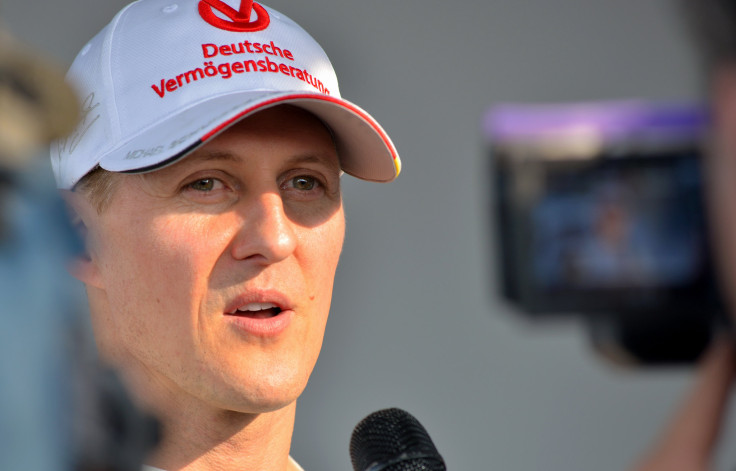
Michael Schumacher's long silence was thrust back into the spotlight this week in France, where a new investigation by sports daily L'Équipe reconstructed what happened to the Formula 1 legend in Grenoble after his 2013 skiing accident and detailed how stolen medical records and alleged extortion plots hardened his family's resolve to keep his condition private.
Michael suffered severe head injuries on 29 December 2013 while skiing off-piste in Méribel and was airlifted to Grenoble University Hospital. Since then, updates on the seven-time world champion have been sparse and tightly controlled by his wife, Corinna, and a small inner circle.
That secrecy has long irritated parts of the media and some fans, who argue a public figure of his stature owes more visibility. L'Équipe's reporting does not offer a health bulletin, but it does reconstruct the first six months after the crash in uncomfortable detail — and, in doing so, makes the family's enduring silence look far less mysterious.

Schumacher Under Siege in Grenoble
L'Équipe's long-form piece follows accounts from doctors, nurses and other staff at Grenoble University Hospital, as well as people who were close to the events in those early days. Schumacher arrived not as the ruthless Ferrari leader or global icon that defined an era of Formula 1, but as a patient whose survival, according to the report, was very much in doubt.
The medical team was racing time. The paper describes frantic efforts to stabilise the 44-year-old after he sustained major head trauma on the slopes. Once his identity leaked, those efforts played out under an intense glare: camera crews outside, reporters pressing for hourly updates inside, and rumours ricocheting around the world faster than doctors could correct them.
Staff interviewed by L'Équipe recalled the strain of treating 'one of the most recognisable people on the planet' while trying to insulate their work from the noise. TJ13, which earlier flagged elements of the French investigation, noted the testimony of the helicopter rescue pilot who lifted Schumacher from the mountain. The resuscitation, the race to Grenoble, the surgery — all of it was instantly transformed into a running global drama.
What stands out, though, is not the medicine but the human geometry around it. Behind the headlines was a family watching a husband and father fight for his life, thrust into a situation for which there is no guidebook and no rehearsal.
Stolen Files, Extortion Attempts and the Logic of Silence
The reality outside the operating theatre, as reconstructed by L'Équipe, was often uglier than the public ever saw. Within hours of the accident becoming public, journalists from across Europe and beyond converged on Grenoble. The demand for information became relentless. Some reports were simply premature; others were wrong. Speculation padded out bulletins that had nothing new to say.
It is here that the story of Michael Schumacher stops being a tale of media pressure and becomes something closer to a crime file. The L'Équipe account, echoed by TJ13's summary, points to episodes in the years that followed that would have rattled any family.
Medical records were stolen, there were alleged extortion attempts linked to those documents, and police opened investigations. Court cases became necessary. Individuals who were supposed to be custodians of private data, or who presented themselves as intermediaries, are reported to have acted in bad faith.
None of this makes for a neat narrative about celebrity access. It does, however, explain why the Schumachers concluded that 'once information leaves a trusted circle, it can no longer be controlled.' Whatever lingering romanticism some observers may have about shared ownership of a sporting hero's story, that principle evaporates quickly when confidential hospital files become bargaining chips.
It should be stressed that L'Équipe's reconstruction does not claim to offer a definitive or current medical assessment. Nothing in the reporting suggests a breakthrough in Schumacher's condition, and there is no fresh on-the-record statement from his family. In that sense, those hoping for a status update will come away frustrated.
Everything beyond the documented events of that first half-year in Grenoble must still be treated with caution; nothing is confirmed about his present-day health, and unverified claims circulating elsewhere remain exactly that.
What the reporting does make clear is the central role played by Corinna Schumacher. People quoted in the investigation describe a family whose focus stayed locked on Michael's care rather than on burnishing a legacy or curating a public narrative. Corinna emerges as the quiet architect of the privacy strategy, consistent from those first days by his bedside to the closely managed environment in which he now lives.
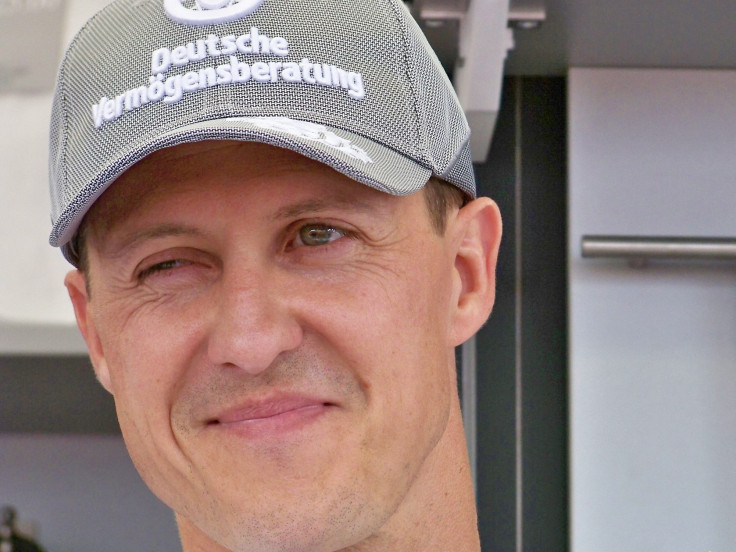
Her stance was articulated publicly, perhaps more candidly than ever, in the Netflix documentary Schumacher. 'Michael is different, but he's here. We live together at home. He always protected us, and now it is we who protect him,' she said at the time. Unverified though the current implications may be, that line has effectively served as the family's final word on the matter.
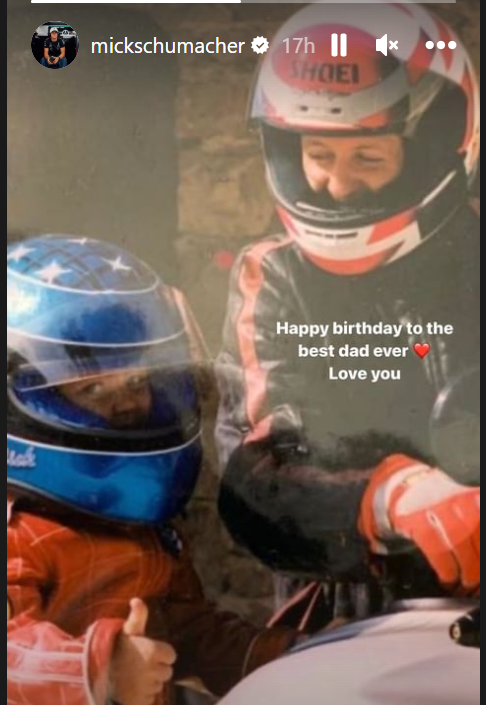
Michael's achievements the seven world titles, the years of domination, the transformation of Ferrari will always belong partly to the public. The story L'Équipe has pieced together suggests his recovery never did. Faced with thefts, legal battles and those willing to monetise his vulnerability, the Schumachers appear to have treated privacy not as a whim, but as a form of defence.
© Copyright IBTimes 2026. All rights reserved.
- Recommended For You