Michael Schumacher Crash Cover-Up? Rescuer Exposes Secret 'GoPro Ban' and Fear of Family Lawyers
One winter flight out of Méribel still hangs over the Alps as the day a global icon vanished from public view but never left the world's imagination.
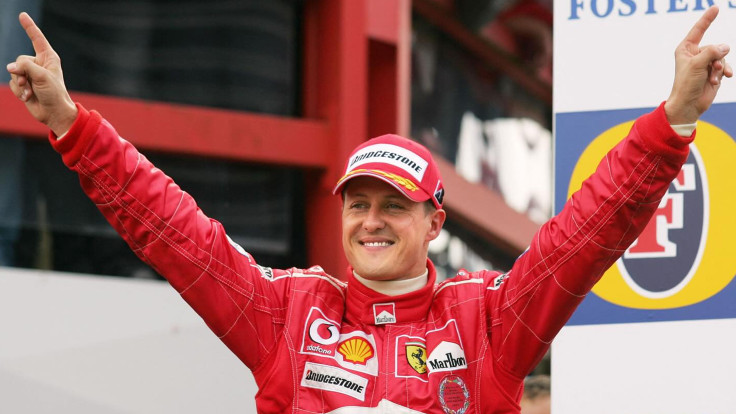
Michael Schumacher was airlifted from the slopes of Méribel in the French Alps to Grenoble University Hospital on 29 December 2013 after suffering catastrophic head injuries in a skiing accident, and now, more than a decade later, the helicopter pilot who flew the seven-time Formula 1 world champion has broken his silence about that day.
Schumacher was skiing off-piste with his son in the winter of 2013 when he struck his head on a rock, sustaining a severe brain injury despite wearing a helmet. He was placed in a medically induced coma for 250 days and has not been seen in public since.
The German driver, widely regarded as one of F1's greatest, is believed to divide his time between family homes in Switzerland and Mallorca, receiving intensive, round-the-clock care. His wife, Corinna, and their children, Mick and Gina-Maria, have enforced one of the tightest privacy shields in modern sport, and almost nothing concrete is known about his condition.
Now, in an interview with French sports newspaper L'Équipe, pilot Yannick Dainese has offered a rare first-hand account of the immediate aftermath of Schumacher's fall and of the unusual precautions taken before the helicopter ever left the mountain.
Pilot Describes 'GoPro' Order in Michael Schumacher Rescue
Dainese was then working for SAF Hélicoptères, a specialist French operator providing medical evacuation and mountain rescue. He was on duty when the call came in from Méribel. The casualty, he was told, was not a nameless tourist but Schumacher. Before he and his crew took off, he says, they were instructed to strip the aircraft of any recording devices.
According to Dainese, staff were told to remove their microphones and GoPro cameras before heading to the accident site. For a rescue team used to documenting missions as a matter of routine, the instruction stood out. It suggested that, from the very first minutes, there was an awareness that this was no ordinary emergency but an incident that would trigger a global media frenzy and potentially, legal battles.
Michael Schumacher, le joli clin d'oeil 🏎️ https://t.co/pKxuy0LuIX
— Sports.fr (@sports_fr) June 16, 2026
Dainese insists he tried to treat Schumacher as 'just another seriously injured person', but acknowledges that the weight of who was lying in the snow was impossible to ignore. 'Subconsciously, of course, the pressure was there because even though I wasn't a Formula 1 fan, I knew people worshipped him like a god,' he told L'Équipe.
He piloted the flight from Méribel to Grenoble in 25 minutes, a rapid transfer by any standard. By the time the helicopter touched down, a full medical team was already in place. That detail alone speaks to the way Schumacher's name could mobilise systems and people in a way that ordinary patients rarely see.

Hospital Scene Turned 'Into a Formula 1 Circuit'
The scale of the reaction only truly hit Dainese a few days later. Returning to Grenoble University Hospital on another mission, he was confronted by a scene he says he had never witnessed in his career. The hospital complex, in his words, had been swallowed by the circus that followed Schumacher wherever he went during his racing years.
'A few days after the accident, I went back to the hospital to transport another injured person,' he recalled. 'What I saw shocked me: there were so many buses, red flags, and people everywhere that the hospital grounds had been transformed into a Formula 1 circuit. It was unbelievable.'
That image of fans, flags and media camped outside a trauma centre underlines how sharply sport and private tragedy collided. For many supporters, Schumacher was still the red-suited Ferrari hero, frozen in memory at full speed. Inside the building, he was simply another critically ill patient, his future uncertain.
🐐 A MICHAEL SCHUMACHER FILM IS COMING!!!
— La Gazzetta Ferrari (@GazzettaFerrari) April 12, 2026
🎬 The Kaiser, portraying the beginning of Michael Schumacher’s career. pic.twitter.com/335SZf6hYO
Fear of Lawyers And a Silence Around Michael Schumacher
Asked why he waited so long to speak publicly, Dainese's answer was blunt. 'I didn't want to speak to the media to avoid problems. Besides, I don't have the same lawyers as the Schumacher family!'
It is a half-joking line with a serious undertone. The Schumacher camp has long been known for its legal muscle and an aggressive defence of the family's privacy. Images from inside the Grenoble hospital were fiercely controlled. Later, when a journalist allegedly faked an interview with the driver using artificial intelligence, the family sued. In that environment, a rescue pilot's reluctance to talk freely is hardly surprising.
Nothing in Dainese's account fundamentally alters what is publicly known about the accident itself. He does not challenge official timelines or medical decisions. What his testimony really exposes is the choreography that unfolded around Schumacher from the moment he fell: the rushed removal of cameras, the swift mobilisation of hospital staff, and the sudden transformation of a French clinic into a de facto F1 paddock.
It also highlights how, more than ten years on, Schumacher remains both everywhere and nowhere. His name is still chanted at circuits and printed on banners, yet details of his condition are sealed away, guarded as tightly as a state secret.
Dainese's story adds one more sliver of human texture to an event that has been pored over for years but never fully seen. Beyond that, little is truly clarified. The precise state of Schumacher's health, his level of consciousness, and what daily life now looks like for him remain unconfirmed. In the absence of official medical updates, any claims about his current condition should be treated with caution.
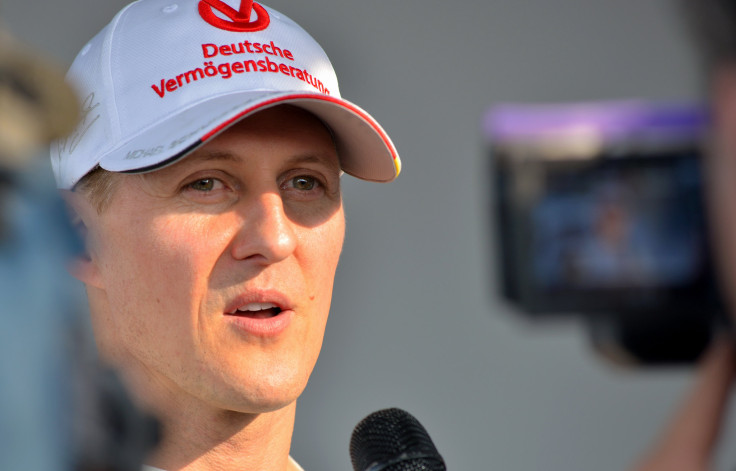
What his rescuer does make clear is that, on that cold day above Méribel, behind the lawyers and the global headlines, there was a helicopter, a critically injured man and a crew just trying to get him down alive.
© Copyright IBTimes 2026. All rights reserved.
- Recommended For You