Onion-Eating Contest Returns as 800-Year Market Town Tradition Brings Tears and Medieval Combat
Ryan Daubney and Jade Basby won the men's and women's contests as the town revived a centuries-old onion tradition through its Newent Celebrates event.
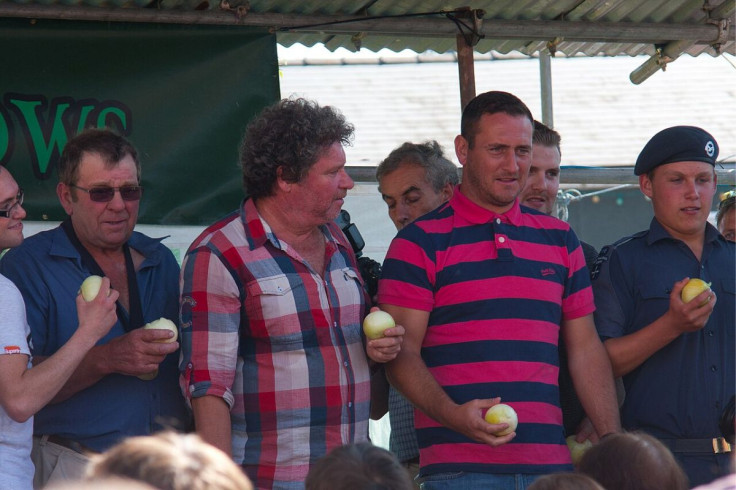
Newent's famous onion-eating contest has returned, bringing raw onions, medieval combat and plenty of tears to the Gloucestershire market town. Thousands of people gathered in the town centre last Saturday for the latest Newent Celebrates event, which draws on the town's 800-year history.
The festivities included medieval re-enactments, full-armour combat, live music and the return of the eye-watering onion contest. Competitors took to a central stage in front of the crowds and were given a rather unconventional starting signal.
Musket fire marked the beginning of the contest, with participants using glasses, goggles and nose pegs in an attempt to deal with the fumes from the raw onions.
Winning Time Seals Raw Onion Challenge
Ryan Daubney won the men's competition after eating a 7oz (198g) raw onion in one minute and five seconds, seeing off a field of twelve male contestants. Andy Offord, a member of the event's organising committee, described the winning time as 'proper competition time'.
Jade Basby took the women's title after eating a 5oz (141g) raw onion in one minute and 24 seconds. She beat five other competitors to claim the crown.
Basby is a 14th-century historical re-enactor from Warminster in Wiltshire. She said she had never done anything like it before, and that she and friends had decided to enter on a whim, only to feel their nerves kick in once they realised they'd be eating onions on stage in front of a crowd. She added that she already enjoys eating raw onions at home.
Basby also revealed that she ate the core first because it had the strongest taste. She plans to return next year to defend her title. Her re-enactment group specialises in 14th-century life, covering subjects including weapons, crafts, herbs and foraging.
Newent's Onion Tradition
The contest is part of a much longer local tradition. Newent has been associated with onion growing for centuries, and the town's market history stretches back around 800 years. The modern Newent Onion Fayre ran from 1996 until the Covid pandemic.
A planned return in September 2022, billed at the time as the fayre's silver jubilee, was ultimately cancelled after organisers said pandemic-related disruption had cost the event the volunteer support it needed to carry on. The tradition was eventually revived under the town's new Newent Celebrates banner.
When the onion fayre was running, the festival offered much more than its headline eating contest. Younger visitors could head to the 'Funion Zone', while the Dog Arena hosted classes and parades for local pooches.
There were also belly dancers, street performers, fairground rides and three stages of live music. Agricultural competitions celebrated local produce, while market stalls offered food, beer, wine, cider and juices.
Despite the fun atmosphere, the onion contest has a serious benchmark. Offord noted that the Guinness World Record for eating a raw onion stands at 29.56 seconds. The record belongs to Japan's Yusuke Yamaguchi.
Offord described himself as a 'casual eater' rather than a speed competitor, adding: 'We're a bit nuts in Newent.' He also said onions remain central to the town's identity. 'Newent is known for its onions, always has, always will,' he said.
From Roman Staple to British Kitchen
Onions have a history in Britain stretching back long before the modern festival. Historians generally trace their arrival to the Roman occupation, after which the vegetable settled firmly into the British larder. It is prized above all for keeping well through the winter months and for its usefulness in almost any dish going.
Early manuscripts are said to have grouped onions with bread and cheese under the name 'Field Fare', the simple rations a farm worker might carry through a long day in the fields.
Onions found their way into medicine as well as food during the medieval period, with herbalists of the time turning to them as a remedy for everything from sore throats to sluggish digestion.
They later became a familiar part of British cooking, forming the base of dishes including shepherd's pie, Lancashire hotpot, stews and stocks. Pickled onions became a familiar accompaniment to cheese and cold meats, while baked onions also featured in older recipes.
© Copyright IBTimes 2026. All rights reserved.
- Recommended For You