

NASA Launches $1 Billion Contest to Build Commercial Space Station Replacing ISS by 2030
The agency wants private firms to run orbit, but no contracts are signed yet, and the winners could shape a huge new market
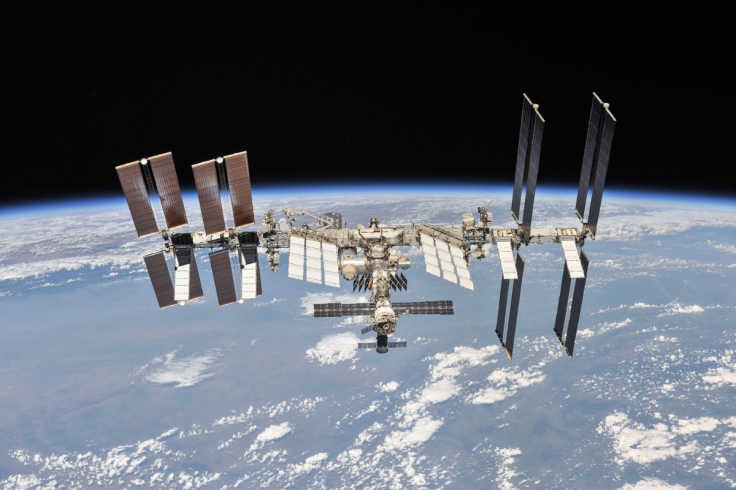
NASA has fired the starting gun on one of the biggest contracts in commercial spaceflight, releasing a draft solicitation on 6 July inviting private firms to design, build, and operate a space station to replace the ageing International Space Station (ISS). The prize is a foothold in a market analysts expect to grow from roughly $4.2B (£3.1B) today to more than $20B (£15B) by the mid-2030s, with the winners becoming the landlords of low Earth orbit.
The draft request for proposals, first reported by the aerospace press and confirmed on NASA's own site, sets out how the agency will pick the companies that succeed the ISS when it is retired in 2030. Industry analysts put the value of this next phase of contracts at $1B to $1.5B (£750M to £1.1B), though the draft itself names no figure. Either way, it is the moment the private space-station race turns from concept to cash.
From Landlord to Tenant
The plan marks a deliberate shift in how NASA operates in orbit. Instead of owning and running a station, the agency wants to buy services from commercial operators, becoming one paying customer among many. NASA has said it expects to spend in the region of $400M (£299M) a year renting time and research space once the new platforms are flying, a fraction of what the ISS costs to run.
The logic is financial as much as strategic. Retiring the ISS is projected to save NASA around $1.8B (£1.3B) a year, money the agency wants to redirect toward the Moon and Mars. By seeding a commercial market now, it hopes private demand from researchers, manufacturers, and even tourists will eventually carry stations that no longer depend on government funding alone.
What the Draft Actually Asks For
The structure is revealing. NASA intends to award firm-fixed-price, multi-award contracts, selecting two or more companies for early development before a competitive task order determines who carries out final design, testing, and certification. Spreading the work keeps competition alive and guards against any single company stumbling.
The timeline is tight. As the post below notes, the draft is only the first step, with an industry briefing on 9 July and feedback due on 27 July.
🛰️ #NASA released a long-awaited draft solicitation July 6 for industry partners to design, build and operate a commercial space station in low Earth orbit (LEO) to succeed the @Space_Station.
— Aviation Week (@AviationWeek) July 7, 2026
🚀 Read more on @NASA releasing draft RFP for ISS replacement plan.…
A final version is expected in late August, with proposals due around 60 days later and a contract award pencilled in for spring 2027. Crucially, the winners must be ready to fly a crewed test flight in 2029, leaving barely two years between award and astronauts in orbit.
The requirements also carry a national-security dimension often missing from commercial space coverage. NASA says the work will involve access to classified information up to Top Secret, and contractors will need to hold facility security clearances, a reminder that these stations are strategic infrastructure, not just laboratories.
A Crowded Field of Bidders
Several well-funded contenders have spent years preparing for this moment. Axiom Space is building modules it plans to attach to the ISS before detaching them to form a free-flying station, and recently raised $350M (£262M) to press ahead. Vast is targeting an early launch of its Haven outpost to claim first-mover status, while Blue Origin's Orbital Reef and the Airbus-backed Starlab consortium round out the leading pack.
The commercial stakes are considerable, and so are the risks. Analysts caution that demand beyond NASA remains unproven, and that the market may not be large enough to sustain several rival stations at once. The company or companies that win NASA's backing will start with a crucial advantage: a guaranteed anchor customer while the wider orbital economy takes shape.
Why It Matters Beyond Space
For all the engineering, this is fundamentally a business story about who controls the infrastructure of low Earth orbit as a trillion-dollar space economy takes shape. The firms NASA selects will not just build hardware; they will set the terms on which research, manufacturing, and tourism will occur off the planet for the next generation.
The draft solicitation is a signpost, not a finish line, and much can change before the final contracts are signed. But the direction is now clear. NASA is stepping back as owner and stepping up as customer, and the businesses that read the moment correctly stand to define the next era of human activity in orbit.
© Copyright IBTimes 2026. All rights reserved.