Nigel Farage Identifies The One 'Vital' Battleground Needed To Become PM
Nigel Farage's path to power hinges less on immigration and more on whether voters trust Reform UK with Britain's fragile economy.
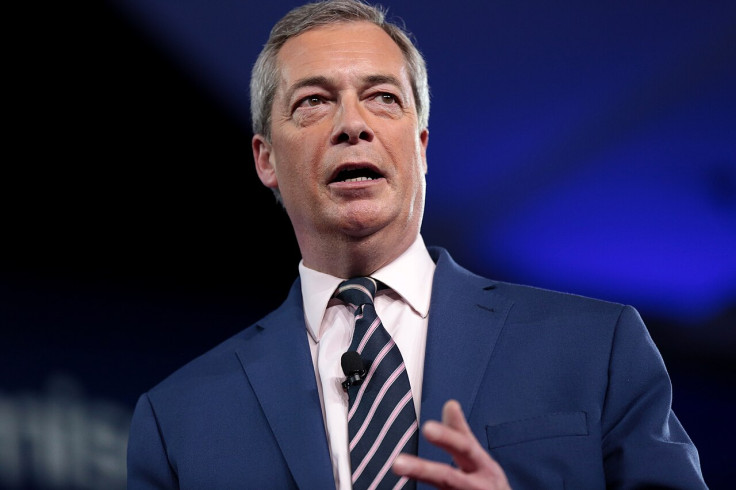
Nigel Farage has never been shy about what animates his politics. For years, his rallies have been lit by the same familiar sparks: borders, Brussels, boats. But listen to him now and something has shifted. The tone is still combative, the grievances intact, yet the conversation keeps circling back to something far less electrifying and far more decisive: money.
Not donors' money or party funding. The country's.
Buried beneath the sloganeering about 'taking back control' lies a blunt realisation that even the most combustible culture war can't get you the keys to 10 Downing Street unless voters also believe you can keep their mortgage payments stable and their pensions intact. That, in Farage's mind, is the real battleground. And it's not immigration.
Nigel Farage and the New 'Vital' Battleground: Economic Credibility
Farage and his Reform UK outfit are attempting a notoriously difficult manoeuvre: morphing from protest movement to plausible government. To do that, they have to win the argument that has defined every British election of the modern era, from Margaret Thatcher to Tony Blair to the cautious technocracy of the present—who can be trusted on the economy.
In a sense, Farage is borrowing from an old American line drilled into political folklore by Bill Clinton's 1992 campaign: 'It's the economy, stupid.' The immigration riffs may fill halls and clog phone-ins, but if he wants to be Prime Minister, he has to look like someone the City of London can lend money to without breaking into a sweat.
Enter Robert Jenrick, Farage's freshly minted 'Shadow Chancellor.' Jenrick, a former Conservative immigration minister who decided his old party had lost its nerve, has been handed the job of calming exactly the people who currently eye Reform with dread: investors, bond markets, and anyone who remembers the pound nosediving during Liz Truss's short-lived economic experiment in 2022.

That Truss-era mini-budget still hangs like a cautionary tale over the British right. It's not just a story of one politician's ideological overreach; it's a warning about what happens when markets decide you're reckless. Farage may rail against 'globalist elites,' but he is not stupid. He knows that the moment Reform looks like it might actually take power, traders and ratings agencies will be sharpening their knives.
So Jenrick's mission is to deliver a paradoxical message: radical change, but with a seatbelt. No threats to scrap the Office for Budget Responsibility. No mutterings about ending the Bank of England's independence. Instead, Reform is suddenly talking the language of 'radical stability' — a phrase that sounds as if it was cooked up in a focus group but betrays a very real anxiety. They want to rip up plenty of rules, just not the ones that stop the bond markets from going feral.
The visual contrast is almost comical. On one side, you have Farage bellowing about net zero as a 'scam' and promising to stop the boats. On the other, you have Jenrick, intentionally dull, performing fiscal responsibility like a man reading from a spreadsheet in a beige conference room. But what this reveals is not confusion. It's a calculated split-screen: keep the base roaring, while whispering to the financial class that there will be adults somewhere near the steering wheel.
The High-Wire Act Behind Nigel Farage's Prime Ministerial Ambition
If this were a straightforward pivot to the centre, it would be almost boring. But Farage is not pivoting. He is doubling down.
While Jenrick tries to pacify the markets, Reform's top team is being stacked with figures who delight in sharpening the axes of the culture war. Zia Yusuf, tapped as Shadow Home Secretary, is not exactly the kind of appointment that suggests a mellowing transformation. Nor is Suella Braverman, given the Shadow Education and Skills brief and visibly eager to take a sledgehammer to the Equality Act. She has made it clear she sees the legislation as a symbol of everything 'woke' Britain has supposedly become.

Add Richard Tice, slated for the Business, Trade, and Energy role, and any faint prospect of a Reform embrace of green energy dies on contact. In policy terms, this is not a party edging toward the soft middle. It is trying to remain a hard-edged insurgency while slapping on a respectable economic façade.
The risk is obvious: voters might simply not buy the combination. A party that wants to torch large parts of the existing social and environmental settlement is asking to be trusted with the nation's balance sheet. Can Farage really persuade the electorate that the same operation promising to 'take an axe' to key equality laws will be prudent with the Treasury's scissors?
Complicating all of this is the fact that Reform is not fighting in a vacuum. The Conservatives, battered and fractured, are not giving up the old Tory badge of 'party of fiscal responsibility' without a nasty struggle. With unemployment at a five-year high and growth stubbornly flat under Labour, the Tories have found fresh attack lines, returning to familiar terrain: business rates, stamp duty, and the promise—however threadbare—of a low-tax future.
Figures like Kemi Badenoch and Sir Mel Stride are already battling to reclaim right-leaning voters who drifted to Reform in protest. Their pitch is simple: you can be angry at Labour and disillusioned with us, but don't hand the national credit card to a party still learning how to hold it.
That tug-of-war over economic authority is where Farage's fate will be decided. Immigration may keep him on the front pages; identity politics may keep the rallies full and social media churning. But if Reform cedes the economic ground—if voters and markets conclude that the Conservatives, for all their failures, are still the 'least risky' pair of hands—then Nigel Farage never gets beyond angry outsider status.
He has perfected the art of lighting the political fire. The question now is whether he can persuade Britain he knows how to manage the furnace without burning the house down.
© Copyright IBTimes 2026. All rights reserved.
- MOST POPULAR IN National