Leaked Space Force Document Reveals Pentagon Guidance to Satellite Firms, Restricted Public Imagery
Pentagon's Guidance to Satellite Firms Limits Public Insight into Iran Conflict

A leaked US Space Force document shows the Pentagon directing private satellite companies to avoid language that would allow the public to assess the damage its military has caused in Iran, while those same companies quietly shut down the open-source imagery that researchers, journalists, and analysts rely on.
The guidance, published on 24 March 2026 by independent journalist Ken Klippenstein, was issued to commercial satellite operators as Operation Epic Fury, the joint US-Israeli military campaign against Iran, which commenced on 28 February 2026.
It instructs firms to avoid language that implies battle damage assessment or operational conclusions, and provides explicit examples of permitted and prohibited phrasing. Simultaneously, the two largest commercial satellite imaging companies, Planet Labs and Vantor, moved to restrict public access to high-resolution imagery of the entire war theatre — a shift that has effectively blinded open-source intelligence (OSINT) analysts, newsrooms, and academic researchers working to independently verify what is happening on the ground.
What the Leaked Space Force Guidance Says
The leaked slides, produced by US Space Force and shared with Klippenstein by military sources, instruct commercial satellite operators on 'language and terms to avoid' when describing conflict-related damage in the Middle East. The document specifically prohibits phrases such as 'target destroyed,' 'target eliminated,' and 'structure rendered inoperable.'
It provides a direct comparison: an 'incorrect example' would be a statement that a strike 'successfully destroyed' a facility, while the 'correct example' replaces that with neutral language stating that 'imagery shows the structure largely collapsed with debris covering the building footprint.' The distinction is functionally significant. The first formulation supports a reader's ability to conclude that a military objective was achieved. The second strips that interpretive layer out entirely.
🚨 US military document leaked to me shows how the Pentagon is working with private companies to manipulate the information you see about the Iran warhttps://t.co/w9G5bz8QZy
— Ken Klippenstein (@kenklippenstein) March 24, 2026
Klippenstein reports that Space Force issued this guidance in written form to 'virtually all' commercial satellite companies, including those whose data feeds open-source materials used by the press, academia, and think tanks. A source familiar with the guidance told him that companies are willing to comply because 'almost everyone makes the vast majority of their revenue from government contracts in this industry.'
The guidance represents an expansion of a pattern that predates the current administration. As Klippenstein noted, the framework for private-sector intelligence cooperation was formalised under Biden-era Director of National Intelligence Avril Haines, whose office signed a directive instructing intelligence agencies to 'routinise' and 'expand' their partnerships with private companies, including in cases involving greater 'risk' to the government due to security or legal concerns.
Planet Labs, Vantor, and the 14-Day Blackout
The imagery restrictions have been sweeping. On 28 February 2026, the day US and Israeli forces launched the opening strikes on Iran, Planet Labs imposed a 96-hour delay on high-resolution imagery of the Middle East for non-government users. On 10 March, the company extended that delay to 14 days, covering the entire war to that point, and expanded the affected area beyond the Gulf states to include all of Iran, nearby allied bases, and existing conflict zones.
In a note to customers shared with CBS News, Planet said it had 'decided to take additional, proactive measures to ensure our imagery is not tactically leveraged by adversarial actors to target allied and NATO-partner personnel and civilians.' The company said it had consulted with both government and external experts and that the decision was its own.
Vantor, formerly known as Maxar, took a different approach. The company told CBS News that it had placed controls on imagery from parts of the Middle East, limiting who could request new images or purchase historical imagery 'over areas where US, NATO, and other allied and partner forces are actively operating, as well as over areas that are being actively targeted by adversaries.'
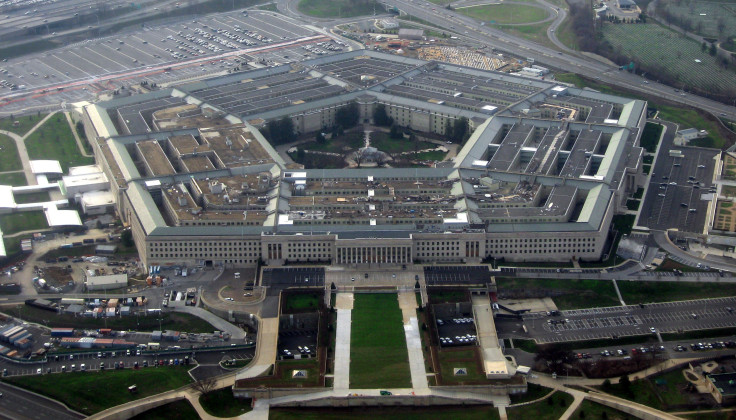
The Economist reported that a researcher noted on 6 March that satellite images of Iran's coastline which had been accessible the previous day were suddenly no longer available.
Business-intelligence firms that rely on Planet's data for commercial applications expressed anger at the extended blackout. The vacuum left by restricted commercial imagery has simultaneously been filled by AI-fabricated satellite images, which AFP and OSINT researchers documented circulating widely on X and Instagram within days of the restrictions taking effect — including Iranian state-aligned media publishing AI-manipulated imagery purporting to show 'destroyed' US radar equipment that was, in fact, taken from unrelated Google Earth images.
Anthropic's Stand and the Wider Pattern of Private Sector Compliance
The Space Force guidance fits into a broader pattern of the Trump administration attempting to bring private technology companies into line with its war strategy. The most high-profile confrontation involved Anthropic, whose AI model Claude had been the only one deployed on the Pentagon's classified networks.
Negotiations broke down in February 2026 over a single contractual clause: the Pentagon demanded language authorising Claude for 'any lawful use,' a formulation Anthropic read as permitting its deployment for mass domestic surveillance and lethal autonomous weapons without human oversight. Anthropic CEO Dario Amodei publicly refused. 'We cannot in good conscience accede to their request,' he said in a statement.
Defence Secretary Pete Hegseth issued Anthropic an ultimatum: comply by 17:01 EST on 28 February or face consequences. When no agreement was reached, the Pentagon formally designated Anthropic a 'supply chain risk to national security' on 5 March 2026, the first such designation ever applied to an American company, a status normally reserved for foreign adversaries. Anthropic has said it will sue.
The Klippenstein source framing is telling in this context. Commercial satellite firms, unlike Anthropic, did not resist. Their compliance with the Space Force guidance, whether legally compelled or commercially motivated, means that the information infrastructure underpinning independent war coverage is now operating under Pentagon-shaped constraints.
The Conversation reported that Planet Labs' US military clients continue to receive imagery without any delay, it is the public tier, the one that feeds newsrooms, researchers, and think tanks, that has been shut down. The US military, in other words, retains full situational awareness over a war theatre from which the public has been largely blinded.
When private companies control what the world is allowed to see of a war, and when governments write the instructions for what language those companies are permitted to use, the question of who is conducting information warfare becomes considerably harder to answer.
© Copyright IBTimes 2026. All rights reserved.
- MOST POPULAR IN World