Sam Altman Says He Was 'Tricked' Into Goldman Sachs Internship, Now It's Helping Take OpenAI Public
The potential IPO could be one of the largest tech listings ever, with OpenAI valued at around $852 billion

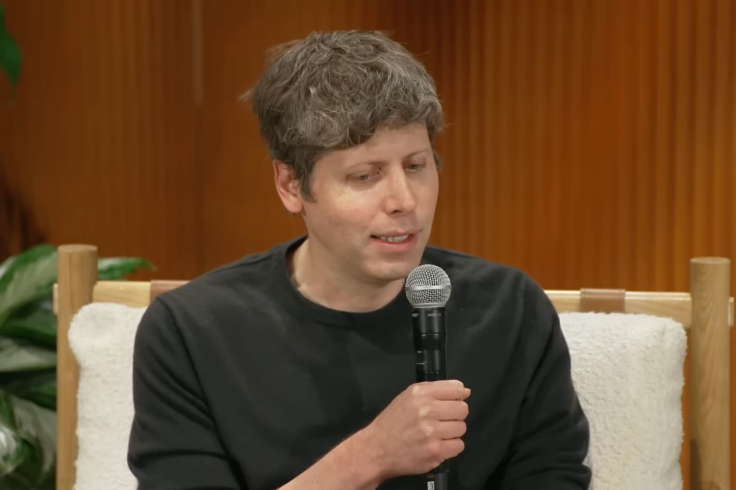
Sam Altman once thought a Goldman Sachs internship was the obvious next step for a high-achieving college student. He now runs one of the world's most valuable AI companies, and now Goldman Sachs is helping prepare that company for a potential stock-market debut.
Speaking at the Internapalooza Conference last month, the OpenAI CEO said he was 'peer pressured and kind of tricked' into applying for the prestigious investment banking internship during his sophomore year.
'At the time, that was the cool thing. That was what everybody wanted to do,' Altman said. He got the offer and recalled feeling 'really cool' about it, but eventually turned it down.
Instead, Altman focused on his startup Loopt, which he co-founded while still at Stanford. He later joined Y Combinator's first batch and eventually became president of the accelerator before launching OpenAI.
The irony is striking. Nearly two decades after rejecting Goldman Sachs, Altman's company is now working with the Wall Street giant on a potential initial public offering.
OpenAI confidentially filed draft IPO paperwork in June, giving it the option to access public markets while stressing that it had not committed to a specific timetable. Goldman Sachs and Morgan Stanley have been involved in preparations for the potential listing, while Citigroup and JPMorgan have also been discussed as possible additions to the banking group.
The potential IPO could become one of the biggest technology listings ever. OpenAI was reportedly valued at about $852 billion in its latest funding round, although the company has not committed to a public-market valuation or launch date.
People Don't Need to Wait for a Big Company to Give Them Credibility
Altman's criticism of traditional corporate career paths has become increasingly relevant as artificial intelligence lowers the barriers to starting companies. He argued that young people no longer need to wait for an established institution to give them credibility. With AI tools, he said, someone can potentially build a company all 'by yourself in a room' with little more than access to AI and the willingness to execute.
That philosophy is particularly notable because OpenAI is simultaneously pulling Wall Street expertise into the AI industry.
In 2025, Bloomberg reported that over 100 former investment bankers from Goldman Sachs, JPMorgan, and Morgan Stanley were helping OpenAI train AI systems to perform financial modelling and other tasks traditionally handled by junior bankers. The project, reportedly codenamed Mercury, included work on transactions such as restructurings and IPOs.
The relationship between OpenAI and finance has therefore come full circle. Altman rejected the traditional banking route as a student; his company is now hiring the people trained by that system to teach AI how Wall Street works.
OpenAI's own use of AI internally is also accelerating. The company says Codex became the primary AI tool across every department, including Finance and Recruiting, by April 2026.
Meanwhile, OpenAI is expanding rapidly. It reportedly plans to nearly double its workforce from roughly 4,500 to 8,000 employees by 2026-end.
In all, Altman may have rejected investment banking, but as OpenAI heads towards public markets, Wall Street is coming to him.
© Copyright IBTimes 2026. All rights reserved.
- Recommended For You