Former Facebook VP Says Zuckerberg 'Profoundly Failed' in AI Race, Allowing Nvidia to Win
Palihapitiya says Nvidia built the AI ecosystem, while Meta's large user base could have been a major advantage it missed


Meta helped shape the modern internet. Its platforms connect billions of people every day, and for years the company invested heavily in artificial intelligence before generative AI became the technology industry's biggest battleground. Yet one of Facebook's most influential former executives believes the company failed to turn those advantages into leadership.
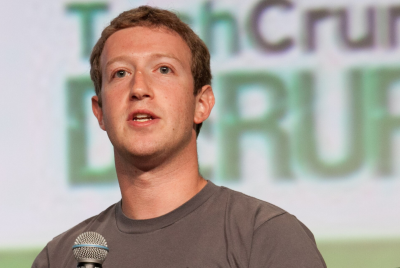
Speaking on The Axios Show, former Facebook executive and venture capitalist Chamath Palihapitiya said Meta chief executive Mark Zuckerberg and the company 'completely fumbled' what he viewed as a defining opportunity in AI. He argued that the company failed to move decisively during the early days of the generative AI boom, allowing Nvidia and chief executive Jensen Huang to establish themselves at the centre of the AI ecosystem.
A Sharp Critique From a Former Insider
Palihapitiya was an early Facebook executive who played a major role in expanding the platform's global user base. His latest comments offer one of the strongest public criticisms of Meta's AI strategy from someone who helped build the company. Asked by Axios how Meta lost the advantage he believed it once had, Palihapitiya said he could not explain the company's internal decisions.
'I don't know the organisation well enough, nor do I understand the political dynamics to understand why they failed as miserably as they have. But they've profoundly failed,' he said. He stressed that he was not speculating about why Meta made those decisions because he no longer has insight into the company's internal leadership.
A Familiar Pattern
Palihapitiya compared today's AI race with an earlier chapter in Facebook's history. He recalled trying to persuade the company to build its own smartphone platform while he worked there. At the time, he believed Facebook could have become a third major mobile ecosystem alongside Apple's iOS and Google's Android.
'When I left Facebook, I was very frustrated because I wanted to build a phone. I was in the midst of trying to build a phone and I thought, 'Hey, here's this third leg of the stool.' There's Google and Android, there's Apple and iOS, and there should be Facebook and this Facebook operating system.' That effort never succeeded. Looking back, Palihapitiya said he sees similarities between that missed opportunity and Meta's handling of AI. 'We made a bunch of technical decisions and, you know, I lost. Somebody else won. I left. In a weird way, I think we're seeing this again.'
Why He Believes Nvidia Took the Lead
Palihapitiya argued that Meta had the chance to become the leading American company behind open-weight AI. Instead, he believes Nvidia recognised the opportunity more quickly. 'Now, there is a company that has met that moment, which is Nvidia. I think Jensen has done an incredible job.'
According to Palihapitiya, Nvidia did more than supply graphics processors. He argued that the company built the infrastructure and ecosystem that developers increasingly rely on to build AI applications. He also suggested Meta had one advantage Nvidia could never match.
Billions of Users, but a Missed Opening
Meta owns Facebook, Instagram and WhatsApp, giving it access to billions of users worldwide. Palihapitiya argued that this global reach could have allowed Meta to introduce AI products to an enormous audience almost instantly. 'What I mean by that is, Mark can turn around tomorrow and all of a sudden light up 2.5 billion people on WhatsApp, and some number of billion people on Instagram and Facebook.' He argued that Meta could have used that distribution power to establish itself as the leading American company supporting open-weight AI models, creating an alternative to closed models from companies such as OpenAI and Anthropic.
Instead, Palihapitiya argued that Nvidia became the company that unified developers, researchers, and businesses around the open-weight AI ecosystem.
Meta Has Continued to Invest
Although Palihapitiya criticised Meta's early response, the company has continued to invest heavily in AI. Meta has expanded its AI infrastructure, purchased large numbers of graphics processors and developed its Llama family of large language models.
According to Meta, Llama is an open-weight AI model because the company has released the trained model parameters, although it has not released all of the training data or processes needed to reproduce the models from scratch. Those investments have kept Meta among the industry's leading AI companies. However, Palihapitiya argued that the company missed its chance to define the direction of the broader AI ecosystem when generative AI first captured public attention.
© Copyright IBTimes 2026. All rights reserved.
- Recommended For You