

Trump's Food Stamp Bombshell: 6.3 Million Americans Could Lose Grocery Aid Under New Crackdown
Trump's proposed food stamp overhaul could strip 6.3 million Americans of grocery assistance, putting millions of households at risk of losing vital support
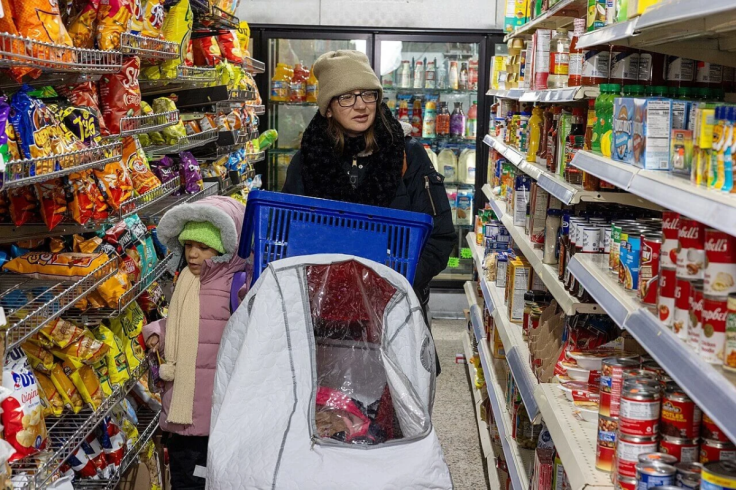
As many as 6.3 million Americans could lose food assistance under a proposed Trump administration rule, according to the US Department of Agriculture (USDA). The plan could also change how nearly 1.8 million children qualify for free school meals, although most are still expected to remain eligible.
The USDA estimates that 6.3 million people across 3.2 million households could lose Supplemental Nutrition Assistance Program (SNAP) benefits by fiscal year 2029 if the rule takes effect. It also projects that approximately 1.78 million children would lose automatic eligibility for free school meals.
Losing automatic eligibility would not necessarily mean losing free meals. The children could still qualify through a separate application, based on their household income and resources.
One week after the election, USDA proposed two rules that would make SNAP harder to get and easier to lose. By its own count, 6.3 million people would be cut off.
— Danielle Nierenberg, Food Tank (@DaniNierenberg) November 11, 2026
Read the full statement from @MAZONusa : https://t.co/Gm0F5qHdsK pic.twitter.com/o9E0uEu4vx
Why Is the Trump Administration Targeting SNAP Eligibility?
Published on 10 November, the proposal would narrow a policy known as broad-based categorical eligibility (BBCE).
It allows states to use participation in certain programmes funded through Temporary Assistance for Needy Families (TANF) to help households qualify for SNAP, without a separate assessment of every income and resource requirement.
Under the proposed changes, states could no longer use certain non-cash TANF-funded services to confer automatic SNAP eligibility. The rule would restrict this route to households receiving qualifying TANF assistance under the federal definition. That includes cash, vouchers and certain other support intended to meet ongoing basic needs.
The USDA says the change would bring SNAP eligibility closer to federal requirements and prevent states from extending access through programmes that, in the department's view, do not adequately establish financial need.
The proposal would alter the route by which some households qualify; the estimates do not mean that every affected household would have no other way to qualify for assistance. The projected effects on school meals also depend on how families and school districts respond to the change.
1.78 Million Children Face a School Meal Eligibility Shake-Up
The USDA estimates that approximately 1.78 million children would lose categorical eligibility for free school meals if the proposal is implemented. Categorical eligibility allows children to qualify through their household's participation in certain assistance programmes, rather than through a separate school-meal application.
The department estimates that around 97 per cent of these children would still qualify for free or reduced-price meals based on their household income, provided they complete the separate certification process.
NEW Trump Admin Proposal Touts 6.3M People Losing SNAP Would Save $45B Federal, $5.2B State Funds 1/ pic.twitter.com/Z7kSInJZS8
— Lotus Flower (@LtsFlwr70) November 12, 2026
Its analysis projects that approximately 1.66 million children would continue receiving free meals, while 93,000 would move from free to reduced-price meals. Another 28,000 would have to pay full price based on their household resources.
The USDA's figures therefore point to two different possible effects: a change in meal eligibility for some children, and additional paperwork for families whose children could still qualify.
The department estimates that school districts would need to process an additional 197,000 meal applications, requiring around 30,000 extra hours of work. It projects costs of approximately $6.3 million (£4.7 million) over fiscal years 2027 to 2031.
Billions in Savings, But Who Bears the Cost?
The USDA estimates that the proposed changes would reduce federal SNAP benefit spending by approximately $44.65 billion (£33.67 billion) over five years, from fiscal year 2027 through 2031. This is a forecast of lower government spending, not money already saved.
The department also estimates a net reduction of about $5.24 billion (£3.95 billion) in state SNAP spending over the same period, alongside higher state administrative costs.
The proposal is not yet law. The USDA is accepting public comments until 10 December 2026, after which it can consider feedback before deciding whether to issue a final rule. The policy could change before that process is complete.
The estimates describe the potential effects if the proposal is implemented. For households, the key questions are whether they would remain eligible for SNAP under the revised rules and whether families whose children lose automatic school-meal eligibility complete the additional application process.
© Copyright IBTimes 2026. All rights reserved.