

Judge Strikes Down Trump Rule Forcing Seriously Ill Medicaid Patients to Prove They Cannot Work
The decision protects access to the medically frail exemption but leaves the broader work and community engagement requirements due to begin in January 2027 intact
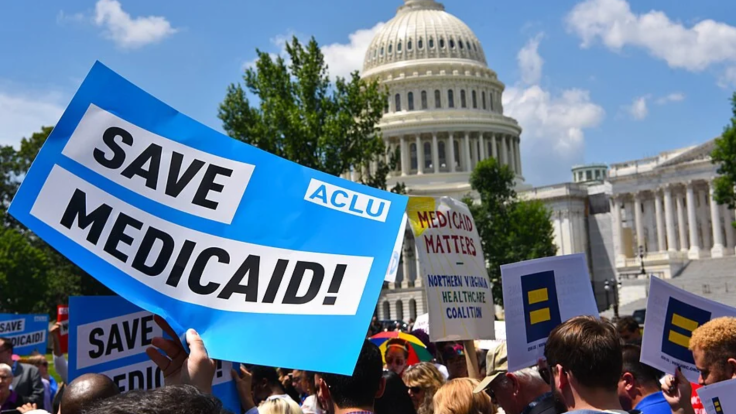
Seriously ill Americans covered by Medicaid will not have to prove that their conditions prevent them from meeting new work requirements to qualify for the programme's medical exemption, after a federal judge in Boston struck down a key part of the Trump administration's rules on Thursday. The ruling gives a partial victory to 25 states and the District of Columbia, which challenged the policy ahead of its planned implementation in January 2027.
US District Judge Richard Stearns ruled that the Centers for Medicare & Medicaid Services (CMS) unlawfully narrowed the definition of 'medically frail'. The decision does not invalidate the work requirements themselves, but blocks the administration from enforcing its stricter definition.
What the 'Medically Frail' Test Demanded
The One Big Beautiful Bill Act, signed by President Donald Trump in July 2025, requires most adults aged 19 to 64 covered through Medicaid expansion to complete 80 hours a month of qualifying work or community engagement activities, or attend an education programme at least half-time, beginning on 1 January 2027. People who meet statutory exemptions, including those who are medically frail or have special medical needs, are excluded.
In June 2026, CMS issued an interim rule restricting the medical exemption to people whose 'physical, mental, or other behavioral health condition significantly impairs' their ability to comply with the requirements. Under that definition, having a qualifying medical condition alone would not necessarily be sufficient.
Massachusetts Attorney General Andrea Joy Campbell, who co-led the legal challenge with California and New Jersey, argued that the rule undermined protections Congress intended for people with serious illnesses and disabilities. In a statement announcing the lawsuit, Campbell said Congress had made clear that people with serious medical conditions should not lose coverage.
NEW: A court just sided with us and ruled that the Trump Admin violated the law by limiting Medicaid for people with serious health conditions.
— Attorney General Jennifer Davenport (@NewJerseyOAG) October 29, 2026
This win will help millions of people stay on Medicaid and keep their health care.
Proud to stand up for affordable health care.
Judge Rejects the Narrower Definition
The states argued that CMS had exceeded its authority by adding restrictions to the statutory exemption. Stearns agreed that the agency's definition was unlawful, finding that enforcing it could cause eligible beneficiaries to lose coverage and disrupt continuity of care.
In his ruling, Stearns wrote that the states and the public faced the potential for significant hardship without an injunction because enforcement could lead to the disenrolment of otherwise eligible people relying on Medicaid. The court consequently issued a permanent injunction against the challenged definition.
The decision followed an earlier setback for the states. In July, Stearns declined to temporarily block the rule, finding that the states had not demonstrated irreparable harm at that stage of the proceedings.
Thursday's ruling was not a complete victory for the coalition. The judge upheld other challenged provisions, including restrictions concerning older medical-frailty determinations and the use of self-attestation.
Judge strikes down Trump admin's definition of 'medically frail' in Medicaid work rules https://t.co/gZGBJZyVYX
— POLITICO (@politico) October 29, 2026
Work Requirements Still Loom in January
The ruling does not remove the work requirements scheduled to begin on 1 January. Eligible adults who do not qualify for an exemption will still need to meet the applicable activity requirements, while states must continue preparing to administer the programme in accordance with the law and the court's order.
The potential impact is substantial. A March 2026 Urban Institute analysis published by the Robert Wood Johnson Foundation projected that between 3 million and 7 million people could lose Medicaid coverage in 2028 because of the work requirements alone.
The same research estimated that between 19 and 37 per cent of people who already work could lose coverage, including some who struggle to document their hours. Researchers also warned that people who qualify for exemptions could lose coverage because of administrative barriers rather than ineligibility.
For people managing serious or complex medical conditions, the ruling removes one additional hurdle to obtaining an exemption. However, beneficiaries may still need to meet other applicable eligibility and documentation requirements. The decision also leaves states working to adapt their systems to the court's ruling as the January implementation deadline approaches.
© Copyright IBTimes 2026. All rights reserved.