Donald Trump Is 'Much More Distractible' and Really Wants To Be Liked by XI Jinping, Psychologist Claims
Dr John Paul Garrison interpreted differences in the leaders' demeanour, while acknowledging that his assessment was opinion rather than medical evidence

US President Donald Trump appeared 'much more distractible' and keen to win Chinese leader Xi Jinping's approval during their recent meeting, psychologist Dr John Paul Garrison claimed in a YouTube video analysing the two leaders' body language.
Garrison, a clinical and forensic psychologist, has previously raised concerns about Trump's health in videos examining his public appearances.
His latest commentary focused on power dynamics, contrasting what he described as Trump's desire for acknowledgement with Xi's apparent composure.
Donald Trump's Search for Approval
Garrison said Trump seemed increasingly excited by Xi as the second day of the visit progressed. He interpreted the president's demeanour as indicating that he wanted the Chinese leader to like him and show some recognition of that interest.
'And it seems like what he wants is some acknowledgement,' Garrison said. The psychologist took a different view of Xi. In his assessment, the Chinese president appeared less concerned about whether Trump liked him, although Garrison explicitly qualified that reading as his opinion.
'President Xi seems somewhat ambivalent, at least in my opinion, about whether or not President Trump likes him,' he said.
Garrison also claimed Trump seemed to be struggling with attention more than previously. His comparison rested on the footage he reviewed, including the leaders' behaviour while speaking and listening. It did not establish what either man privately thought about the encounter.
Assessing Donald Trump's Body Language
Garrison placed those observations within what he described as changes in Trump's public behaviour.
He argued that the president's body language differed from earlier appearances and that difficulty controlling his movements could affect his efforts to project strength in front of another world leader.
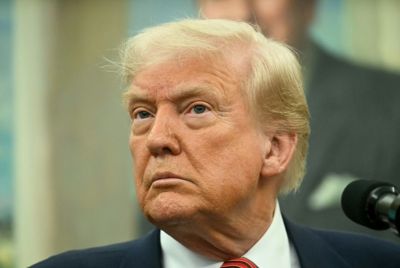
During pauses for Chinese translation, Garrison noted that Trump raised his chin. He described the movement as a familiar way to signal strength, suggesting that exposing the neck can convey a lack of concern about vulnerability.
Trump also appeared unable to remain still at points, according to Garrison. He suggested other world leaders could interpret those movements as discomfort or unease, complicating the impression of authority the president was trying to convey.
The psychologist further described some movements as involuntary spasms. In his reading, managing them would leave Trump 'focused on trying to control his body rather than anything else', making it harder to concentrate on what was happening around him during the diplomatic visit.
That explanation was Garrison's interpretation. The supplied account provides no medical findings establishing the cause of the movements he identified.
When Xi listened to Trump, Garrison pointed to nodding during the translation and a gaze that moved without appearing either fixed or disengaged.
He described that response as typical of what he would expect from a world leader in such a setting.
Xi's speaking style also drew his attention. Garrison said the Chinese leader showed little visible emotion and limited movement, describing his delivery as disciplined and controlled.
'He appears attentive while President Trump is speaking,' Garrison said of Xi. 'He's nodding while he's listening to the translation.'
'He certainly isn't moving around a lot,' he said. 'Basically, everything is as you would expect from someone who has a very disciplined and controlled way to provide speeches.'
© Copyright IBTimes 2026. All rights reserved.
- Recommended For You