

Arnold Schwarzenegger Defends Political Stance, Says 'It Doesn't Mean That I Have To Change My Philosophy'
The former California governor cited the party's historical record and past environmental policies while discussing Donald Trump, healthcare and the US midterm elections
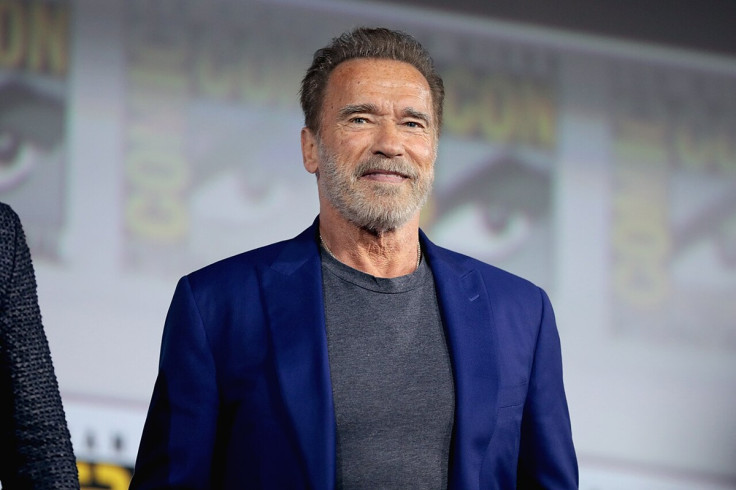
Arnold Schwarzenegger said he would not change his political philosophy despite the Republican Party's evolution, defending his continued allegiance on Jimmy Kimmel Live! on Wednesday, 11 November 2026.
Host Jimmy Kimmel questioned whether the former California governor's values still reflected Republican politics today.
The discussion followed Democratic victories in the US midterm elections, which Schwarzenegger later described as a 'tsunami'. He argued that electoral victories alone would not resolve longstanding policy disputes.
Schwarzenegger appeared on the ABC programme to promote his Christmas film, The Man with the Bag, which premieres on Prime Video on 2 December.
The conversation soon moved from the film to his political identity and his relationship with President Donald Trump. Kimmel asked whether Schwarzenegger still considered himself a Republican, prompting him to refer to the party's history and to politicians whose policies he said reflected his values.
Historical Republican Roots
'Yeah, I'm a Republican, absolutely,' Schwarzenegger told Kimmel when asked whether he still belonged to the party.
He cited the Republican Party's historical role in abolishing slavery and extending citizenship and voting rights to formerly enslaved Americans. Those remarks referred to the party's Reconstruction-era record, rather than its present-day positions. Kimmel questioned whether those principles reflected what Republicans stood for now.
'Yeah, but it doesn't mean that I have to change my philosophy,' Schwarzenegger replied.
He pointed to former President Ronald Reagan, who signed legislation establishing California's State Air Resources Board in 1967 to tackle air pollution. Schwarzenegger also praised Republican President Richard Nixon, whose administration established the Environmental Protection Agency in 1970.
For Schwarzenegger, those environmental measures illustrated the Republican tradition he continues to identify with. He highlighted earlier politicians' willingness to cooperate across party lines, rather than treating compromise as a political defeat.
'Those are the kind of Republicans that used to go and work together with the Democrats and got things done,' he said.
Kimmel suggested Schwarzenegger might be the only Republican left with that outlook. Schwarzenegger disagreed, arguing that changing political circumstances were no reason to abandon cooperation. He presented cross-party work as a means of addressing policy problems, rather than a change in his own political beliefs.
Modern Politics and Bipartisanship
Schwarzenegger also recalled declining Trump's request for an endorsement during the 2016 presidential campaign. He said they had previously been close friends, but Trump's positions on climate change and pollution prevented him from offering support.
'I cannot go with you because of that issue alone,' Schwarzenegger recalled telling Trump. Asked how Trump responded, he said the future president understood his decision.
His opposition continued beyond that election. On 30 October 2024, Schwarzenegger endorsed Democrats Kamala Harris and Tim Walz, despite openly acknowledging disagreements with their platform. His support for Democratic candidates contrasts with his continued identification as a Republican.
Returning to the midterms, Schwarzenegger called the Democratic gains a 'tidal wave or a tsunami'. He argued that successive congressional majorities had failed to deliver lasting solutions on immigration, the national debt and healthcare coverage.
Kimmel raised the Affordable Care Act, commonly called Obamacare, as an example of progress. Schwarzenegger described it as a 'good attempt' but criticised rising healthcare costs and the lack of bipartisan cooperation.
'What you have to do is the Democrats and the Republicans have to work together,' he said, citing his experience governing California. He argued that public service required practical agreement, not simply victory for one party.
His comments returned to the point he made at the start of the discussion: he still identifies as a Republican, but does not believe that means he must change his political philosophy.
© Copyright IBTimes 2026. All rights reserved.