

Social Security Scam Alert: 4 Demands That Should Make You Hang Up Immediately
Scammers may threaten benefit suspension, arrest, or legal action to pressure Social Security beneficiaries into paying immediately

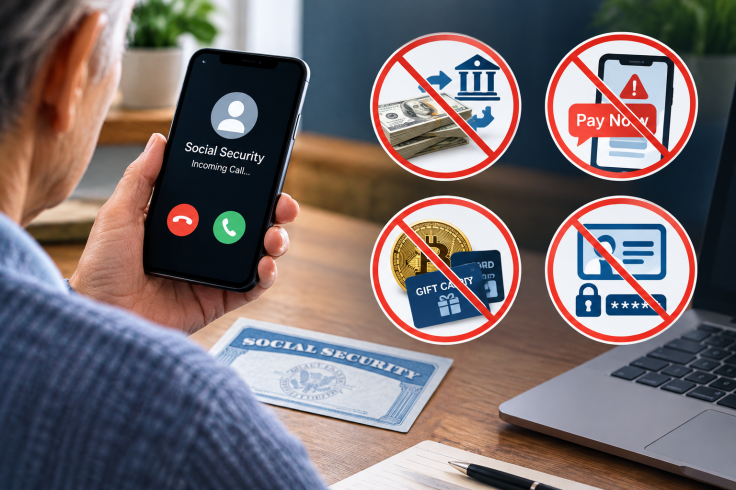
A call claiming to be from Social Security could put your savings and personal information at risk. Scammers may say there is a problem with your benefits or Social Security number, then pressure you to move your money, make an immediate payment or hand over sensitive details.
For Social Security beneficiaries, these calls can create fear and urgency. But federal officials warn that certain demands are major red flags. The Social Security Administration's Office of the Inspector General says legitimate government employees will not tell people to move their money to protect it, demand immediate payment through unusual methods or unexpectedly ask for personal information.
The warning comes as government impersonation scams continue to cause significant financial losses. Between January 2025 and July 2026, the FBI's Internet Crime Complaint Center received nearly 61,000 complaints involving law enforcement or government impersonation scams, with reported losses exceeding $1.6 billion.
1. Move Your Money to Protect It
A caller may claim that your bank account or savings are at risk and instruct you to transfer the money to another account. SSA OIG has warned about scammers who impersonate bank or government employees and tell Social Security beneficiaries that moving their money will protect it.
In one recent scam described by the agency, criminals kept victims on the phone and guided them through the transfer process, sometimes claiming to be helping them protect their accounts from fraud. Social Security and other government agencies will not help you move money to protect it. If an unsolicited caller gives you this instruction, hang up and contact your bank directly using the number on your card or statement. Do not rely on a number provided by the caller.
2. Pay Now or Lose Your Benefits
Another major warning sign is a demand for immediate payment backed by a threat. Scammers may claim that your Social Security benefits will be suspended, that there is a problem with your Social Security number, or that you face arrest or legal action unless you pay immediately.
SSA OIG says legitimate government officials will not threaten arrest or legal action because someone does not immediately send money. The agency also says Social Security will not demand immediate payment to resolve an alleged problem with a beneficiary's account. An unexpected caller who creates a sense of urgency and demands money should therefore be treated as suspicious.
3. Pay With Cryptocurrency or Gift Cards
The payment method can provide another warning. SSA OIG says scammers may demand payment through gift cards, prepaid debit cards, cryptocurrency, wire transfers, cash or other methods that are difficult to trace. The agency has repeatedly warned that Social Security will not require people to pay through these methods.
More recent scams can also involve QR codes and barcodes. In September 2026, SSA OIG warned about schemes in which callers send victims a barcode or QR code and instruct them to load money onto it at a retail store. If an unsolicited caller claiming to represent the government tells you to buy gift cards, send cryptocurrency, transfer money or load a barcode with cash, end the conversation.
4. Send Money or Personal Information Through a Message
Government impersonation scams are not limited to phone calls. The FBI says scammers can also use text messages, emails, and other communications while impersonating government officials. Criminals may spoof legitimate phone numbers, email addresses, employee names, and credentials to make their messages appear genuine. SSA OIG has also warned that criminals can use real employee names, fake badges, and spoofed phone numbers to make impersonation attempts appear legitimate.
An unexpected message requesting your Social Security number, bank information, account access or money should not be treated as legitimate simply because it appears official. The FBI has also warned that criminals are using artificial intelligence to support impersonation schemes, including appearing as government officials during video calls.
What to Do if You Receive a Suspicious Call
Do not let an unexpected caller pressure you into sending money or sharing personal information. If someone claims to represent Social Security, hang up and contact the agency directly using official contact details. If you have already sent money, contact your bank or financial institution immediately.
Report Social Security-related scams to SSA OIG and government impersonation scams to the FBI's Internet Crime Complaint Center. The key warning: If a caller demands money, unusual payment methods or sensitive information, stop the conversation and verify the claim independently.
© Copyright IBTimes 2026. All rights reserved.