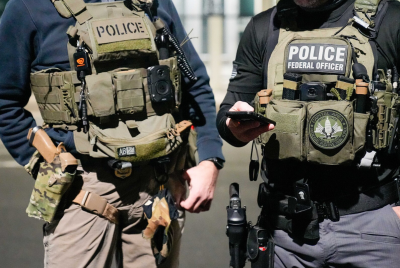
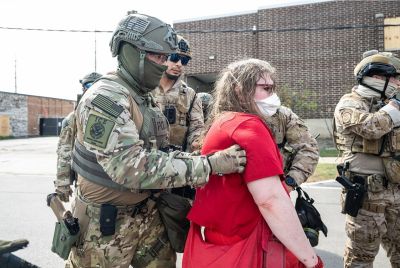
ICE Claimed It Targeted 'Worst Of The Worst' In Ohio, While Data Shows Fewer Than 7% Had Any Criminal Convictions
ICE's Operation Buckeye in Ohio: A Closer Look at the Arrests and Their Implications
Federal immigration agents arrested more than 280 people across Ohio in six days, calling it a strike against the 'worst of the worst,' but data shows fewer than 7% of those detained had any criminal conviction at all.
Operation Buckeye, launched on 16 December 2025 and running through 21 December, was touted by the Department of Homeland Security as a targeted crackdown on violent criminals. ICE publicised ten individuals by name as evidence of its mission, profiling convictions for drug trafficking, firearms offences, and assault. Analysis of the operation's full arrest data by the Deportation Data Project, a joint initiative of UC Berkeley Law School and UCLA that obtains individual-level ICE arrest records through Freedom of Information Act requests, tells a considerably different story.
Fewer than 7% of those swept up during the December surge had a criminal conviction on record, according to the Dispatch's reporting on that data. The Ohio Immigrant Alliance's independent examination of jail rosters reached a near-identical conclusion: of 214 detainees it could identify, the group found only 10 with documented criminal histories, fewer than 5%, and noted that at least three of those ten were arrested before Operation Buckeye even began.
ICE Named Ten Criminals. The Other 270-Plus Were Not Mentioned
The gap between the operation's marketing and its reality is visible in ICE's own communication strategy. In its 20 December 2025 press release, the agency named ten individuals with criminal histories and described convictions that ranged from felony robbery and drug trafficking to DUI and contempt of court. ICE Director Todd M. Lyons said agents had 'arrested drug traffickers, spousal abusers, thieves and worse.' The agency provided no information whatsoever on the remaining approximately 270 people in custody.
ABC6's local investigation, published 23 December 2025, searched Franklin County court records for each of the ten individuals ICE had publicly highlighted. Its findings were striking. For most of the featured detainees, no matching criminal records appeared in the county system. Abdirisiq Hassan Mohamed, listed by ICE as having multiple drug possession convictions, showed only a traffic citation.

Ignacio Giron-Giron, described as having assault and DUI convictions, appeared in four minor cases going back to 2012, including public urination and driving without a licence. ICE did not respond to ABC6's request for the names of the courts or agencies involved in any of the cases.
DHS Assistant Secretary Tricia McLaughlin said in January that 'Operation Buckeye resulted in the arrest of more than 280 illegal aliens, including criminals convicted of assaulting a police officer, criminal firearm possession, and drug trafficking. Thanks to our law enforcement, Ohio neighborhoods are safer with these criminals behind bars.' She did not address what crimes, if any, the overwhelming majority of those arrested had committed.
National ICE Data Shows A Systematic Shift Away From Criminal Arrests
Ohio's numbers fit a documented national pattern. FactCheck.org's analysis of Deportation Data Project records found that in Trump's first three months in office, 21.9% of those arrested by ICE had no criminal record meaning no conviction and no pending charge. By the three months ending in mid-October 2025, that proportion had nearly doubled to 40.5%. By January 2026, the figure had risen to approximately 43%, per ICE's own publicly available detention data.
The Cato Institute's analysis of nonpublic ICE data, leaked to the libertarian think tank, produced findings that directly contradict the administration's stated priorities. Published in November 2025, the Cato data showed that of all people booked into ICE custody since 1 October 2025, 73% had no criminal conviction. Only 8% had a violent or property crime conviction. Only 5% had a violent criminal conviction specifically. A majority of those who did have convictions were for immigration violations, vice offences, or traffic offences, not the violent felonies repeatedly cited by administration officials.
Cato's David Bier, director of immigration studies, said in a radio interview with KPFA that violent criminal convictions 'includes very minor assaults. I mean, not like rape and murder. These are someone had an altercation at a bar or things like that.' Bier described the overall approach as 'indiscriminate,' saying the administration replaced Biden-era prioritisation with 'a policy of arresting people who are the most convenient to arrest.'
The administration's public position relies on a different accounting. DHS Secretary Kristi Noem said on CBS 'Face the Nation' on 18 January 2026 that 'approximately 60% to 70% of people that are arrested are criminals.' Border czar Tom Homan used the same range on NBC's 'Meet the Press.' But that figure bundles together people with actual convictions and those with merely pending charges — meaning charges not yet adjudicated in court. Lauren-Brooke Eisen of the Brennan Center for Justice told FactCheck.org directly: 'A charge is not a conviction. People are innocent until proven guilty.'
A 3,000-Arrest Daily Quota And Its Documented Consequences In Ohio
Analysts point to a structural explanation for the widening gap between the 'worst of the worst' rhetoric and the data. In May 2025, White House senior adviser Stephen Miller stated on Fox News that the administration's goal was 'a minimum of 3,000 arrests for ICE every day.' That quota, confirmed by FactCheck.org and cited in the ACLU lawsuit, creates institutional pressure to prioritise volume over targeting. The lawsuit alleged that agents and their supervisors were 'ignoring warrant and probable-cause requirements in a rush to meet it.'
The Ohio Immigrant Alliance counted more than 701 people arrested by immigration agents in central Ohio in 2025, once Operation Buckeye's 280 arrests were added to the year's total. Cincinnati recorded 849 arrests, and the rest of Ohio saw another 2,799.
The Trump administration has maintained that many of those without US criminal records have convictions or pending charges in their home countries. DHS has not released any data to substantiate that position. As Graeme Blair, associate professor of political science at UCLA and co-director of the Deportation Data Project, told KTLA 5 News, 'We're not aware of data that DHS holds... I think that's, frankly, a lot of bluster.'
ICE targeted more than 280 people in Ohio in six days, named ten as evidence of its mission, and has yet to account publicly for the criminal histories — or the absence of them — of anyone else.
© Copyright IBTimes 2026. All rights reserved.
- Recommended For You