Trump's Supreme Court Appearance Backfires as Asian Immigrants Face Greatest Threat from Birthright Citizenship End
If upheld, over 250,000 babies born in the US each year could be stateless, risking a brain drain as skilled workers consider relocating for clearer citizenship paths

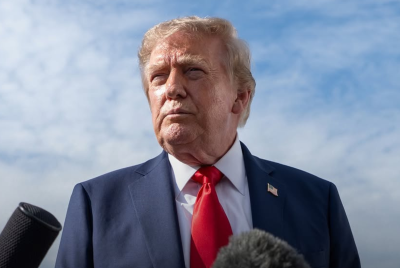
Donald Trump became the first sitting US president to attend Supreme Court oral arguments on Wednesday, but the appearance backfired as justices across the ideological divide expressed deep scepticism of his push to end birthright citizenship.
A Penn State University study published March 31 found that while Latinos face the largest total impact, the policy would most sharply increase birth rates without citizenship among Asian families. Unlike the undocumented Latino population most assume is the target, this change would disproportionately hit legal Asian immigrants on temporary visas.
The case, Trump v. Barbara, challenges an executive order Trump signed on his first day back in office on 20 January 2025. The order would strip automatic citizenship from babies born in the US to undocumented immigrants and to parents on temporary visas, including student and work permits.
Justices Push Back on 'Quirky' Legal Theory
Chief Justice John Roberts questioned the administration's argument, calling the examples used to justify exceptions to the 14th Amendment 'very quirky'. He pointed to narrow historical exceptions for children of ambassadors and those born during enemy invasions and asked how the government could expand those to cover millions of people.
Conservative justices Neil Gorsuch and Amy Coney Barrett, both Trump appointees, also challenged the government's position. Justice Elena Kagan told Solicitor General D. John Sauer that the administration's stance was 'a revisionist one with respect to a substantial part of our history.'
American Civil Liberties Union (ACLU) National Legal Director Cecillia Wang, herself a birthright citizen born in Oregon to Taiwanese parents who were on student visas, argued that the 14th Amendment was designed to put the citizenship question 'out of the reach of any government official.'
Asian Families Would Bear the Sharpest Blow
The Penn State researchers projected roughly 41 births without citizenship per 1,000 Asian residents lacking permanent status. That is more than double the 17 per 1,000 rate among Latinos.
The gap exists because about 70% of Asians in the US without permanent residency hold temporary work or student visas. Among Latinos, that figure is less than 10%. The extension of Trump's order to temporary visa holders, not just undocumented immigrants, drives the outsized impact on Asian communities.
'We would be creating an undocumented population of Asians out of thin air,' said Jennifer Van Hook, distinguished professor of sociology and demography at Penn State.
The study found that up to 6.4 million US-born children could lack legal status by 2050 if the order takes effect.
Bondi's 'Privilege' Remark Adds Fuel
Attorney General Pam Bondi, who sat in the front row with Trump and Commerce Secretary Howard Lutnick during Wednesday's arguments, drew backlash last week after telling Fox News that 'being a citizen in our country is a privilege, not a right.'
The 14th Amendment, ratified in 1868, explicitly guarantees citizenship to all persons born or naturalised in the US.
Trump left the courtroom after roughly 90 minutes and posted on Truth Social shortly after. 'We are the only Country in the World STUPID enough to allow Birthright Citizenship!' he wrote. More than 30 other countries also grant it.
What Comes Next
Every lower federal court that has weighed Trump's executive order has ruled against the administration. The Supreme Court's decision is expected by the end of June or early July.
If the order is upheld, more than 250,000 babies born in the US each year won't receive citizenship, according to research from the Migration Policy Institute and Penn State's Population Research Institute.
The researchers warned the policy could trigger a brain drain, with skilled workers choosing to start families in countries that offer clearer paths to citizenship for their children.
© Copyright IBTimes 2026. All rights reserved.
- Recommended For You