Suspected WWII Bomb Explodes In Indonesia's Papua Region, Killing Five And Destroying Stilt Homes
Police said they strongly suspect a WWII bomb based on the type of ordnance found and the area's history of leftover wartime munitions.
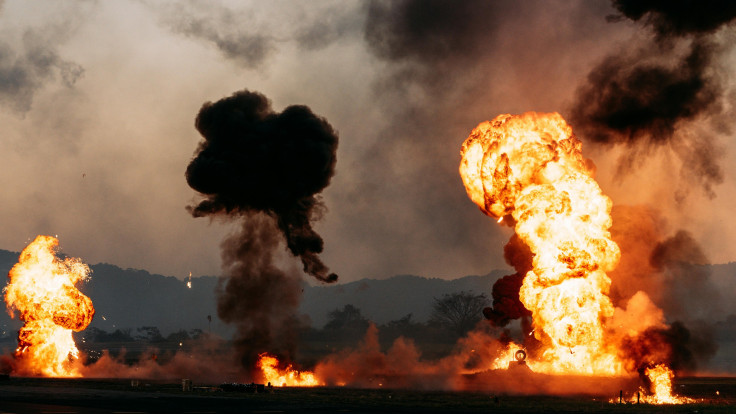
A suspected World War II-era shell exploded beneath a stilt house in a fishing village in Indonesia's eastern Papua region on Sunday, killing five people, injuring nearly 20 others, and destroying several homes.
The powerful blast sent shockwaves through the community, startling residents with a thunderous boom, followed by flames and thick smoke, as authorities believe the explosion was caused by a bomb or mortar left behind from the Second World War, a conflict that left large quantities of unexploded ordnance scattered across former battle zones.
Police have launched an investigation into the incident while search efforts continue for those still unaccounted for. Officials say further updates will be provided once the search operation and investigation have been completed.
The blast has once again highlighted the lingering danger posed by wartime explosives, many of which remain buried decades after the conflict ended.
Suspected WWII Shell Triggers Deadly Blast
The explosion occurred on Sunday afternoon beneath a stilt house in a fishing village in Papua, Indonesia's easternmost region. According to CBS News, the blast killed five people and left at least 19 others with minor injuries.
Footage broadcast by Kompas TV showed the dramatic aftermath of the incident. Residents witnessed a huge fireball erupt into the air before a thick column of smoke rose above the village. The force of the explosion caused extensive destruction, reducing nine homes to rubble.
Papua police spokesman Cahyo Sukarnito said investigators strongly believe the blast was caused by wartime ordnance that had remained hidden for decades.
'The source of the explosion is strongly suspected to have been a bomb or mortar left over from World War II,' Cahyo told AFP.
The impact of the blast extended beyond the confirmed fatalities. Authorities said three people remain missing following the incident, although efforts to establish an exact casualty count are continuing.
Cahyo noted that investigators are still working through the aftermath because several body parts recovered from the scene have not yet been identified.
Emergency responders treated at least 19 people for minor injuries sustained during the explosion. Search teams have continued combing through the devastated area as officials attempt to determine whether additional victims may be trapped beneath debris.
'We will provide further updates once the search for victims and the investigation have been completed,' Cahyo said.
The incident has left the small fishing community dealing with significant damage as residents assess the destruction caused by the blast.
Wartime Explosives Continue To Pose Risks
The suspected cause of the explosion has drawn attention to the enduring threat posed by unexploded munitions from World War II. Indonesia was a major battleground during the conflict when Japanese forces occupied the territory, then known as the Dutch East Indies, and Allied forces fought to regain control.
Although the war ended more than eight decades ago, unexploded bombs, shells, and other munitions continue to be discovered in former combat zones around the world. In some cases, they remain buried underground for decades before being uncovered accidentally or detonating unexpectedly.
The Papua explosion is the latest example of the dangers associated with these remnants of war. Similar incidents have been reported in several countries in recent years.
In March, authorities in the German city of Dresden successfully defused an unexploded World War II bomb after thousands of residents were evacuated from the surrounding area.
Last October, two men in Poland were hospitalised after a World War II artillery shell exploded. One of the men had reportedly discovered the shell in a forest and taken it home before the detonation occurred.
More discoveries followed in 2025. In March, a World War II bomb was found near the railway tracks serving Paris' Gare du Nord station. A month earlier, more than 170 bombs were discovered near a children's playground in northern England.
Japan also experienced a wartime ordnance incident in 2024 when an unexploded American bomb buried at an airport detonated. The explosion created a large crater in a taxiway and led to the cancellation of more than 80 flights.
In England, authorities dealt with another incident in 2023 when a World War II bomb exploded during what officials described as an 'unplanned' detonation.
Indonesia itself has experienced deadly explosions involving munitions in recent years. Last year, 13 people, including nine civilians, were killed in West Java province when an explosion occurred while Indonesian troops were attempting to dispose of rejected munitions by detonating them in a pit.
© Copyright IBTimes 2026. All rights reserved.
- Recommended For You