

Tesla Replaces Cybertruck With Cybercab: Texas Factory Production To Wind Down Amid Plunging Sales
Tesla's futuristic pickup faces an uncertain future as Elon Musk places a bigger bet on driverless transport
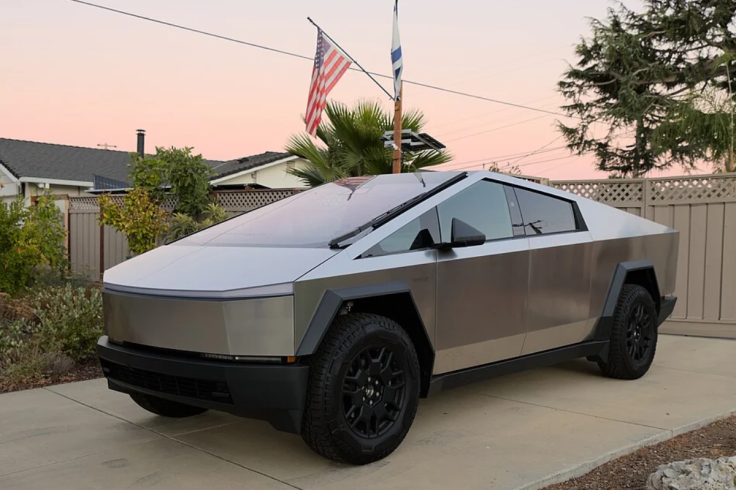
Tesla will wind down Cybertruck production at its Gigafactory Texas plant near Austin around mid-2027 after US sales of the stainless-steel electric pickup fell by nearly half in 2025, CEO Elon Musk announced on Friday, 6 November 2026.
The move would free factory capacity for the Cybercab robotaxi following a sharp decline in Cybertruck demand.
The announcement stops short of ending the Cybertruck outright. Musk has not said whether manufacturing will move elsewhere or cease permanently, leaving prospective buyers uncertain about how long new vehicles will remain available.
In a post on X, Musk said the change would 'make room for increased Cybercab production'. Tesla unveiled the angular Cybertruck in 2019 and began delivering it to customers in November 2023.
Tesla will be winding down production of the Cybertruck at Gigafactory Texas around the middle of next year to make room for increased Cybercab production
— Elon Musk (@elonmusk) November 6, 2026
Cybertruck Sales Slump as Capacity Sits Idle
Kelley Blue Book estimates Tesla sold 38,965 Cybertrucks in the United States in 2024. Sales fell to 20,237 in 2025, a decline of 48.1%. Those figures are industry estimates, not a separate Cybertruck sales total published by Tesla.
The decline continued this year. Estimated US sales reached 11,586 between January and September 2026, compared with 16,097 during the same nine months of 2025. That represents a further 28% fall, rather than a comparison between a full year and a partial year.
The results are far below Musk's earlier expectation of approximately 250,000 Cybertruck sales annually. Tesla's third-quarter 2026 update lists installed annual manufacturing capacity exceeding 125,000 vehicles each for Cybertruck and Cybercab at the Texas plant. The company cautions that installed capacity does not reflect actual production rates.
Safety recalls have also brought scrutiny, although they do not establish why sales declined. An April 2026 recall covered 173 potentially affected Cybertrucks from model years 2024 through 2026 fitted with 18-inch steel wheels.
According to the US National Highway Traffic Safety Administration, cracks could develop around brake rotor stud holes, potentially allowing wheel studs to separate and increasing collision risk. The recall did not cover every Cybertruck, nor did it establish that all 173 vehicles had the defect.
The pickup's design poses a different challenge overseas. Former Aston Martin chief executive Andy Palmer told Reuters that European pedestrian-impact requirements created substantial obstacles to approval. His assessment was not a formal regulatory ruling.
Cybercab Rollout Takes Centre Stage
Tesla is making more room for a vehicle built around a different business model. Cybercab has two seats and is designed for autonomous passenger journeys without a conventional steering wheel or pedals.
Tesla says Cybercab rides began in Austin on 3 September 2026. The launch represents an early deployment, not evidence that the service is operating at scale.

On 4 September, the National Highway Traffic Safety Administration opened an audit of Tesla's process for certifying Cybercab's compliance with federal vehicle safety standards. An audit does not, by itself, establish wrongdoing.
Cybertruck lead engineer Wes Morrill called the pickup 'an incredible technology development platform' and said its legacy would continue through Cybercab.
When an X user characterised the move as the end of an era, Musk replied that existing Cybertrucks would remain on the road for a long time. He has not named another assembly site, set a final production date or announced when orders might close.
© Copyright IBTimes 2026. All rights reserved.