Trump's Media Ban Reportedly Came Hours After Natalie Harp Showed Him Critical MS Now Clips
A report about critical TV clips places Natalie Harp in the timeline of Trump's White House press ban as outlets fight for access

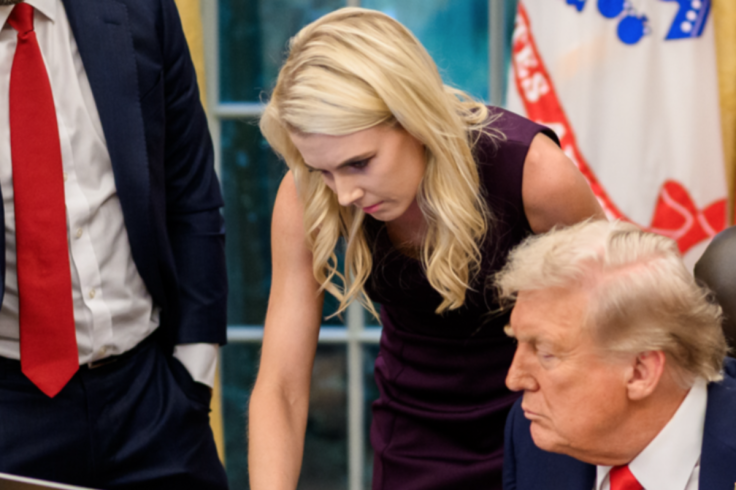
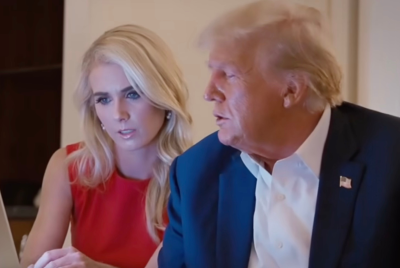
President Donald Trump's White House press ban followed a reported viewing of critical television clips that aide Natalie Harp showed him, according to the Daily Beast.
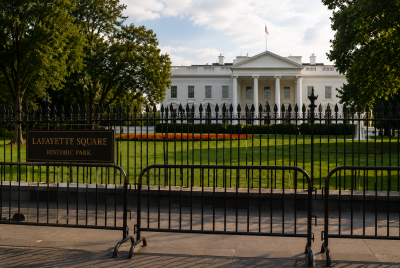
Trump announced the restrictions on Friday, 18 September, targeting CNN, MS NOW and Politico.
The dispute concerns journalists' access to the White House in Washington. Reporters from all three organisations were turned away on Saturday, 19 September. On Monday, 21 September, the outlets announced a legal challenge seeking to restore their access.
The Daily Beast, citing The Wall Street Journal, reported that Harp had shown Trump critical MS NOW coverage before his announcement. That reported sequence does not establish that she recommended or caused the restrictions.
What Preceded Trump's White House Press Ban
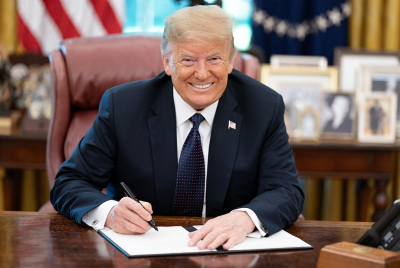
Trump announced the ban on Truth Social, accusing the three organisations of publishing 'FICTION and LIES.'
He said the restrictions would take effect immediately and warned that other media outlets could follow. He described the accusations as his characterisation of their reporting.
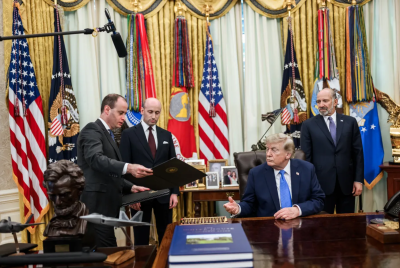
Speaking in the Oval Office on Friday, Trump attributed the decision to accumulated dissatisfaction with coverage. 'It's really just cumulative stories over the past few years,' he said, Reuters reported.
Asked which other organisations might face restrictions, Trump named The New York Times and The Washington Post. His remarks identified possible further targets; they did not announce that either publication had already been excluded.
“The White House is not instituting an assault on the Free Press, something which I cherish. It is instituting an assault on the FAKE NEWS, something that has grown like Cancer in our beloved United States of America…” - President Donald J. Trump pic.twitter.com/MVb0BHpGWZ
— The White House (@WhiteHouse) September 21, 2026
Politico reported that some senior White House staff were surprised by the directive and learned about it from Trump's social media post.
Its account, reproduced by Business Insider, attributed that information to three people familiar with conversations in the West Wing. The same reporting said White House chief of staff Susie Wiles was out of town when the announcement emerged.
It also described an earlier attempt by Trump to impose media restrictions that advisers had persuaded him to abandon.
Journalists were still working inside the White House on Friday after Trump's announcement, according to contemporaneous reporting. By the following morning, reporters arriving for work were describing deactivated passes and encounters with security officers at the entrance.
Reporters Challenge Trump's White House Press Ban
MS NOW reporter Akayla Gardner described passing through the first two entrance gates before attempting to scan her badge near the security screening area. She said the scanner showed a red light and beeped, and an officer asked her to surrender the badge.
Gardner said the officer told her it had been disabled. She also said a photographer's badge was taken, while an MS NOW producer's pass worked and the producer was admitted.
When Gardner questioned the different treatment, she said officers were unsure what was happening. Her account shows that access was not handled the same way for every member of the network's team that morning.
CNN reporter Betsy Klein also reported being denied entry after her press badge was deactivated. Politico said its reporter Cheyenne Haslett was turned away and had her badge confiscated, according to The Associated Press.
Joint statement from CNN, MS NOW and POLITICO: pic.twitter.com/ZBt2qioLD8
— CNN Communications (@CNNPR) September 21, 2026
In their joint statement on Monday, the organisations said they had notified the government that they were filing a lawsuit to defend their First Amendment rights. They alleged that the White House had revoked journalists' credentials without notice or a process because it objected to their reporting.
The outlets argued that allowing those restrictions to stand would threaten press freedom and the public's access to independent journalism. Those statements set out their position in the dispute.
White House Correspondents' Association President Jacqui Heinrich called for the three organisations' access to be restored immediately. She warned that excluding an outlet because of its coverage could set a standard later applied to others, AP reported.
Heinrich said the public must be able to scrutinise elected officials through an independent press, regardless of whether those officials welcome the coverage.
© Copyright IBTimes 2026. All rights reserved.
- Recommended For You