

Trump's Face Mysteriously Blacked Out in Epstein Files as DOJ Triggers Firestorm Over 'Bizarre' Redaction
2019 Epstein–Bannon text exchange reveals redacted image of President Trump
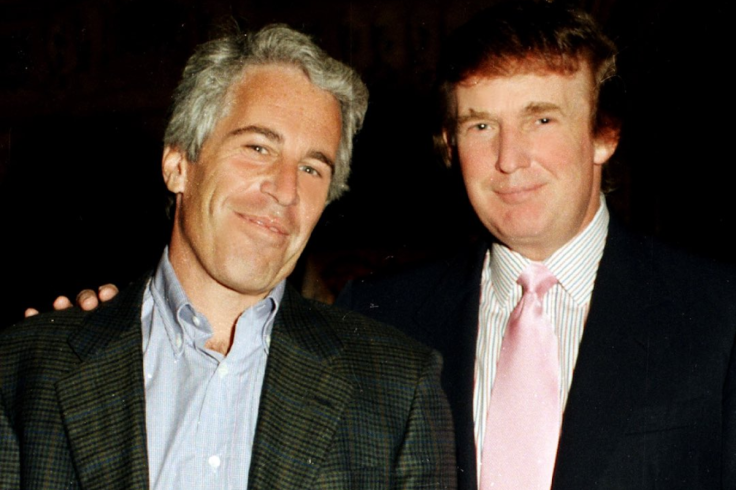
A newly released Department of Justice file containing a 2019 text exchange between Jeffrey Epstein and former Trump adviser Steve Bannon has ignited fierce controversy after an image of President Donald Trump appeared with his face conspicuously blacked out. The disputed redaction surfaced within the latest tranche of Epstein-related materials released under federal court supervision, part of a broader effort by the Justice Department to make public long-sealed records tied to Epstein's network and communications.
Whilst the department has said redactions are limited to protecting victims and private individuals, the selective obscuring of Trump's face in a publicly sourced photograph has raised serious questions about consistency, transparency, and judgement. At the centre of the firestorm is a single image embedded in a text message exchange from 2019, now emblematic of broader mistrust surrounding the handling of the Epstein files.
The 2019 Epstein-Bannon Exchange
Among the newly disclosed materials is a series of text messages exchanged in 2019 between Jeffrey Epstein and Stephen Bannon, who previously served as a senior adviser to Donald Trump during his presidency. The messages form part of Epstein's preserved digital communications seized during federal investigations following his arrest that year.
Within that exchange is an image depicting President Donald Trump speaking at what appears to be a public event. The photograph shows Trump at a podium, addressing an audience, in a setting consistent with a campaign or public appearance. However, in the version released by the Department of Justice, Trump's face is covered by a solid black redaction box, while the rest of the image remains visible.
No explanatory note accompanies the redaction, and no indication is given that the photograph contains a victim, a minor, or any legally protected individual. Legal analysts reviewing the file noted that obscuring a face in an otherwise public photograph falls outside standard redaction practices typically applied to court records.
Wow I wonder who is in this redacted photo pic.twitter.com/15hRsmAqMa
— MeidasTouch (@MeidasTouch) February 2, 2026
DOJ Standards Called Into Question
The Department of Justice has repeatedly stated that its redactions in the Epstein files are narrowly tailored to protect victims of sexual abuse, minors, and individuals whose privacy is protected under federal law. Names of prominent figures, according to the department's own guidance, are not redacted solely based on public sensitivity or political status.
That makes the blacking out of Trump's face particularly striking. The photograph does not depict alleged wrongdoing, nor does it appear to identify a victim. Trump's presence in Epstein-related records has long been acknowledged through flight logs, social interactions, and publicly documented encounters in the 1990s and early 2000s.
The redaction applied here targets only Trump's face, leaving context intact while removing the most recognisable element of the image. Former federal prosecutors have described the approach as inconsistent with both victim-protection logic and evidentiary clarity. The Department of Justice has not issued a detailed public explanation for this specific redaction.
Political Fallout Intensifies
The release of the redacted image quickly drew attention from lawmakers, legal commentators, and open-records advocates, many of whom argued that the move undermined public confidence in the integrity of the document release. Critics from across the political spectrum questioned why a president's face would be obscured in a historical document when other names and images of powerful figures appear unredacted elsewhere in the files.
The controversy was amplified by the broader context of the Epstein files release, which has already drawn criticism for inconsistent redactions, missing documents, and delayed uploads. Several advocacy groups representing Epstein's victims have separately warned that the chaotic rollout risks both re-traumatising survivors and eroding trust in the justice system.

What the Image Shows
Importantly, the redacted photograph does not accuse Trump of criminal behaviour, nor does it establish any illegal conduct. The image merely confirms that Epstein and Bannon exchanged an image of Trump during their communications in 2019, years after Epstein's first conviction and shortly before he died in federal custody.
There is no evidence in the released materials that Trump participated in Epstein's crimes, and no charges have ever been brought against him in connection with Epstein's trafficking operation. By choosing to obscure Trump's face rather than redact the image entirely or leave it unaltered, the Department of Justice created an interpretive vacuum that has since been filled by speculation.
Transparency Under Scrutiny
The Epstein files were released under intense public pressure for openness following years of secrecy surrounding Epstein's associates and enablers. Each redaction decision carries symbolic weight, particularly when it involves figures as politically consequential as a US president.
Whether President Trump's image redaction was the result of caution, error, or internal inconsistency, it has become a focal point for criticism of the DOJ's approach. Transparency advocates argue that unexplained redactions, even when legally permissible, damage credibility when they appear arbitrary. The department has indicated that further reviews and updates to the archive may follow.
© Copyright IBTimes 2026. All rights reserved.