

Donald Trump Reportedly 'Appears More in Epstein Files Than Jesus in the Bible'
A provocative claim that Donald Trump is mentioned in the Epstein files more often than Jesus in the Bible reveals more about modern political theatre than it does about the evidence itself.

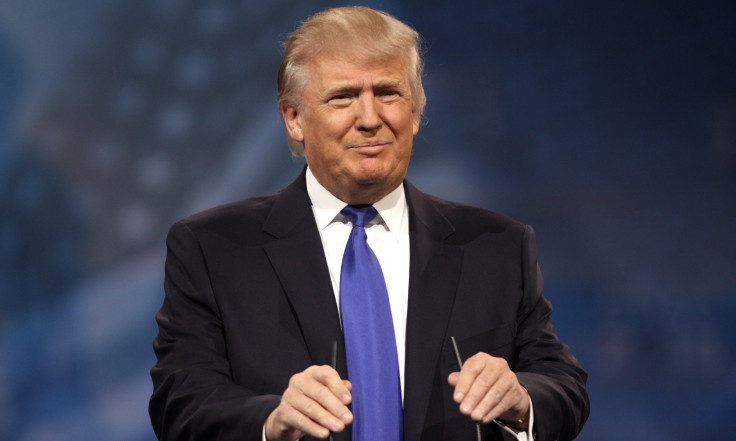
The comparison was designed to sting. In a packed congressional hearing room in Washington, Democratic congressman Jared Moskowitz leaned into his microphone and claimed that Donald Trump's name appears in the Jeffrey Epstein files 'more than Jesus in the Bible.'
It was an absurd image, and that was the point. Within hours, the line was ricocheting around social media, boiled down into memes and weaponised hashtags. In an era that thrives on spectacle rather than nuance, the remark landed exactly as intended: Trump, Epstein, and a blasphemous-sounding comparison, all folded into a single viral soundbite.
Beneath the noise, however, sits something more serious – and more uncomfortable. The latest and, according to the US Department of Justice, 'final' batch of Epstein-related material is vast: 3 million documents, 180,000 images and 2,000 videos released at the end of January, following the Epstein Files Transparency Act passed in November. The archive is a grim map of proximity to a convicted sex offender who died by suicide in 2019 while awaiting trial on sex trafficking charges. Trump's name is all over it.
Epstein Files and Trump: A Tangle of Mentions
What the Moskowitz quip obscures is that no one actually knows how many times Trump is referenced across the entire 3.5 million-document trove that has been released in waves. The congressman's claim was not grounded in a forensic word count. Nor was a similar flourish from Jamie Raskin, the senior Democrat on the House Judiciary Committee, who suggested Trump was mentioned 'over a million times' in the material.
Those figures are, to put it politely, rhetorical devices rather than audited statistics. What is verifiable is still striking enough.
Sky News reports that searching for Trump across the newly searchable database returns 5,176 results, with more than 38,000 varied mentions of his name embedded in documents. The New York Times says it has identified more than 5,300 references to Trump in the public files it examined, including mentions of his Mar-a-Lago resort in Florida and his wife, Melania Trump, as noted by ABC.
Donald Trump is mentioned 38,000+ times so far in the Epstein files. pic.twitter.com/AZTm0n0LP4
— MAGA Cult Slayer🦅🇺🇸 (@MAGACult2) February 3, 2026
Trump's name appears in emails, flight logs, contact lists and interview notes. He shows up in photographs alongside Epstein from the late 1990s and early 2000s, when both men moved in the same celebrity and real-estate circles. In that sense, the files do not reveal a secret friendship so much as document a social world that was always hiding in plain sight.
Trump himself has long admitted that he knew Epstein. He once described him, in a now-notorious 2002 quote to New York magazine, as a 'terrific guy' who liked women 'on the younger side.' In more recent years, however, the president has insisted they had a falling out long before Epstein's 2008 conviction involving a minor. The details of that supposed break remain fuzzy; the distancing, politically convenient.
Donald Trump is mentioned hundreds of times in latest Epstein files. Among new documents is a list compiled by FBI last year of allegations made against Trump by callers to its national Threat Operation Center tip line. The list includes claims of sexual abuse made against Trump pic.twitter.com/zhM4k0sV9Z
— Victoria Derbyshire (@vicderbyshire) January 31, 2026
How the Epstein Files Are Being Used – and Misused
It is worth pausing on what the Epstein files actually are. They are not a single tidy report but a sprawling repository of raw federal material: FBI tips, interview summaries, court exhibits, scraps of correspondence. Some are well-documented and corroborated. Others are little more than untested allegations, rumours submitted to law enforcement in the febrile run-up to the 2020 election.
The BBC notes that a substantial share of the Trump references in the files are unverified and unsupported by evidence. The Justice Department itself has tried, somewhat belatedly, to draw a line. 'Some of the documents contain untrue and sensationalist claims against President Trump that were submitted to the FBI right before the 2020 election,' it said previously. 'To be clear, the claims are unfounded and false, and if they have a shred of credibility, they certainly would have been weaponised against President Trump already.'
This document is an FBI Crisis Intake report: not an indictment, a sworn testimony nor corroborated evidence.
— 💎 𝐋𝐋 𝐂𝐎𝐎𝐋 𝐉𝐙 💎 (@holahovitaaa) January 31, 2026
ANYONE can call,
The clams are UNVERIFIED
The FBI explicitly states that these report DO NOT ESTABLISH FACTS. pic.twitter.com/r9Yykx1rGk
There is a blunt political truth in that last line. If US prosecutors or Trump's opponents had possessed hard, prosecutable material tying him to Epstein's crimes, it is difficult to imagine it lying dormant through two presidential campaigns and a relentless cycle of legal warfare.
That has not stopped Democrats seizing on the sheer volume of references to underline how entangled Trump was, at least socially, with Epstein's world. Nor has it constrained Trump's own response, which has veered between impatience and indignation.
'I have nothing to do with Jeffrey Epstein,' he told reporters at a White House press conference earlier this month, before taking aim at the Justice Department for devoting so much time to the document release. 'It's like this is all they're supposed to be doing. And, frankly, the DOJ, I think should just say, "We have other things to do."'
Jesus, Trump and the Temptation of the Meme
This is where the Jesus comparison comes back into view. As a factual statement, it collapses under the lightest scrutiny. Nobody has sat down with the New Testament, tallied every appearance of the word 'Jesus,' then painstakingly cross-referenced that against the total number of Trump citations across millions of Epstein-related pages, including heavily redacted sections that the public has never seen.
Theologically, it gets even messier. The Bible uses numerous titles and names for Jesus – 'Lord,' 'Saviour,' 'Shepherd,' 'Almighty' – and, for many Christians, Jesus and God are understood as one. Attempting a neat numerical comparison is not just impossible; it is faintly ridiculous.
But of course, no one in that hearing room was conducting a Bible study. The claim was deliberately exaggerated, a way of conveying that Trump's presence in the files is not incidental or fleeting but constant and undeniable. It is meant to shock, not to stand up in a footnote.
What the episode really exposes is the way the Epstein saga has been folded into America's broader culture war. There is a perfectly serious story to be told about power, impunity and the circles Epstein moved in – a story that implicates people from both political parties and far beyond politics. Yet time and again, that complexity is flattened into memes, slogans and partisan ammunition.
Trump's defenders point to the Justice Department's disclaimer and the lack of concrete charges. His critics point to the photos, the guest lists, the thousands of references. Both sides, more often than not, talk past the thing that should unsettle everyone: how easily a man like Epstein insinuated himself into the highest echelons of public life, and how many looked the other way.
🚨 BREAKING: Ted Lieu says Donald Trump appears thousands of times in the Epstein files.
— Brian Allen (@allenanalysis) February 4, 2026
He says the allegations in those records are “highly disturbing” and demand full accountability.
Ted Lieu is a F*CKING SAVAGE pic.twitter.com/u4qthrKR51
In that sense, perhaps the most revealing detail in this saga is not how often Trump's name appears in the files, but how quickly a comparison with Jesus became the headline. The spectacle, once again, swallowed the substance.
© Copyright IBTimes 2026. All rights reserved.