

Bondi Accused of Burying Epstein Files as DOJ List Bizarrely Names Marilyn Monroe Among Other 'Politically Exposed Persons'
Critics accuse the DOJ of obscuring accountability with a confusing list of names in the Epstein files disclosure.

A sweeping Justice Department disclosure meant to close the chapter on the Jeffrey Epstein scandal has instead ignited a fresh political storm, with critics accusing Attorney General Pam Bondi of obscuring accountability behind an expansive and confusing list of names.
The controversy erupted after the Department of Justice (DOJ) submitted a legally mandated report to Congress outlining redactions in newly released Epstein-related documents. The six-page letter included a catalogue of 'government officials and politically exposed persons' referenced across millions of pages of investigative material. The disclosure has intensified long-running demands for transparency surrounding Epstein's network, particularly as large portions of the underlying files remain heavily redacted.
DOJ Release Required Under Transparency Law
The list stems from the Epstein Files Transparency Act, signed into law in late 2025, which required the DOJ to publish unclassified investigative records and provide Congress with an accounting of all redactions. The statute also mandated a comprehensive inventory of every government official or 'politically exposed person' named or referenced in the materials, regardless of context.
JUST IN: DOJ sends Hill a letter purporting to fulfill requirement in Epstein Files Transparency Act for an explanation of all redactions from released files. The six-page letter is a lot less detailed than 1 would get in run-of-the-mill #FOIA case. Doc: https://t.co/5PT7HWgJ0N
— Josh Gerstein (@joshgerstein) February 15, 2026
According to the department's letter, reviewers were instructed to include any qualifying individual whose name appeared at least once in released documents, including emails, images, or press clippings embedded within investigative files. Justice Department officials stated that names appear in 'a wide variety of contexts,' ranging from direct communications with Epstein or associate Ghislaine Maxwell to incidental mentions contained within unrelated reporting or archival material.
That broad inclusion standard produced a list numbering in the hundreds. High-profile politicians, celebrities and historical figures appeared together without explanation of whether their inclusion reflected contact, investigation, or mere reference.
Inclusion of Historical Figures Fuels Confusion
Criticism intensified when lawmakers discovered that figures who died decades before Epstein's criminal activity were listed among politically exposed persons. The presence of Monroe, along with other long-deceased public figures cited in congressional reactions, prompted accusations that the DOJ had diluted meaningful disclosures by flooding the record with irrelevant names.
The #DOJ claims to have released a full #Epsteinlist but if that’s true then why is Marilyn Monroe there if #Epstein was 9 years old when she died? That’s not a list from the #EpsteinFiles it’s a distraction for @AGPamBondi release the files enough distractions #Legion #Anonymous pic.twitter.com/guagQ14Ks9
— Legion-Anonymous Operations (@IAmAnonLegion) February 15, 2026
The department has not publicly clarified why such individuals were included beyond citing statutory requirements. Its letter emphasised that inclusion does not imply wrongdoing and may reflect only indirect references, such as news articles attached to investigative files.
Legal analysts note that the term 'politically exposed person' lacks a precise definition within the law itself, leaving the DOJ broad discretion in compiling the list. Critics argue that the absence of explanatory annotations undermines the purpose of transparency by leaving the public unable to distinguish between alleged associates and incidental mentions.
The confusion has also raised reputational concerns for individuals whose names appear without context, particularly as the list circulates widely online detached from the accompanying legal explanation.
Lawmakers Accuse DOJ of 'Muddying the Waters'
Among the most vocal critics has been Ro Khanna, a co-sponsor of the transparency legislation. Khanna accused the department of intentionally blurring distinctions between perpetrators and unrelated figures.
The DOJ is once again purposefully muddying the waters on who was a predator and who was mentioned in an email.
— Ro Khanna (@RoKhanna) February 15, 2026
To have Janis Joplin, who died when Epstein was 17, in the same list as Larry Nassar, who went to prison for the sexual abuse of hundreds of young women and child… https://t.co/kM0toLsitd
He stated publicly that the DOJ was 'purposefully muddying the waters on who was a predator and who was mentioned in an email,' arguing that placing unrelated historical figures alongside convicted offenders obscures accountability rather than advancing it.
Members of Congress who reviewed unredacted material at DOJ facilities reported that significant portions of the archive remain concealed. Some lawmakers estimate that a substantial share of documents still contain redactions despite statutory deadlines requiring disclosure.
Khanna and Republican Representative Thomas Massie have previously sought court intervention, requesting the appointment of an independent special master to oversee releases, citing concerns that the department cannot be trusted to determine disclosure on its own.
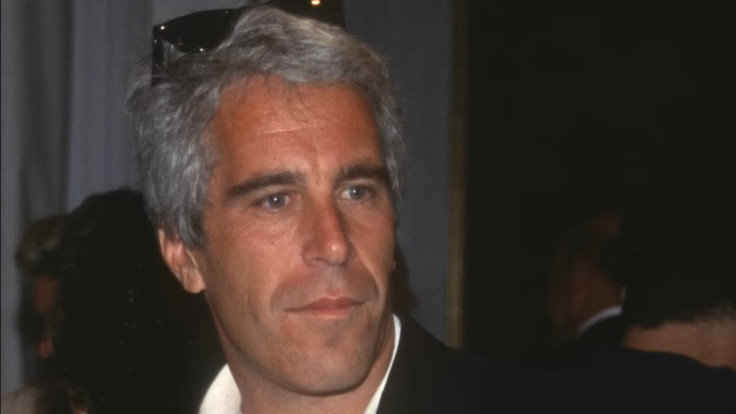
Justice Department officials have defended their approach, arguing that redactions are necessary to protect victims' identities and preserve ongoing investigative interests. They maintain that no material was withheld due to political sensitivity or reputational risk.
Transparency Debate Overshadows Epstein Accountability
The Epstein files have remained a focal point of public distrust since the financier's 2019 death in federal custody. Survivors' advocates and lawmakers across party lines have repeatedly argued that incomplete disclosures risk shielding powerful figures who may have facilitated or ignored abuse.
Instead of settling those questions, the latest release appears to have deepened scepticism. Critics contend that presenting a vast, context-free index creates informational noise that obscures meaningful investigative leads.
For many observers, the central issue is no longer whether documents exist, but whether the public will ever see a coherent account of Epstein's network and the institutions that enabled him.
Until the remaining redactions are resolved, the DOJ's attempt to close the file may instead ensure that the Epstein scandal continues to reverberate through Washington and beyond.
© Copyright IBTimes 2026. All rights reserved.