

Trump's Own Staff Are Questioning His Mental Stability After 'Merciless Disparagement' of Reiner
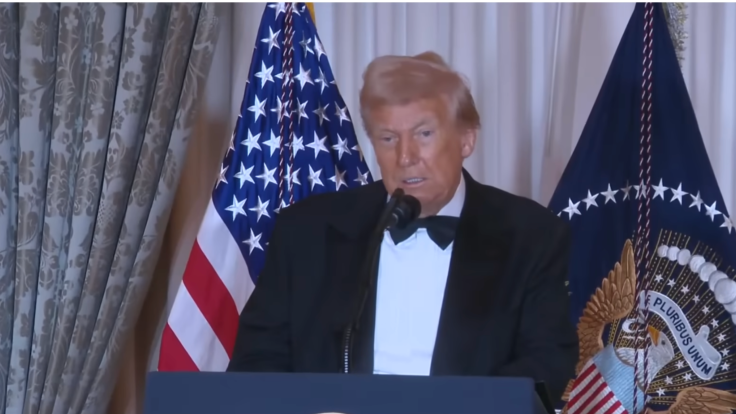
Donald Trump's response to the shocking deaths of filmmaker Rob Reiner and his wife Michele has triggered a fresh political storm, with critics accusing the president of exploiting tragedy for partisan attack.
According to veteran political commentator Michael Wolff, the controversy has gone further, prompting quiet but serious concern inside the White House about Trump's emotional judgement and mental fitness.
The backlash centres on a Truth Social post in which Trump linked Reiner's murder to 'Trump Derangement Syndrome', a pejorative term, despite no evidence of any political motive.
In the post, Trump described Reiner as having 'driven people CRAZY by his raging obsession' with him and implied that Reiner's death was connected to this alleged affliction.
Staff Concerns And Internal Friction
Michael Wolff, author and host of the Inside Trump's Head podcast, claimed that Trump's own aides are increasingly unsettled by such behaviour. On the podcast and in related commentary, Wolff stated that even loyal staffers are 'teetering' on concerns about Trump's emotional and cognitive fitness after the Reiner remarks.
While direct transcripts of staff conversations are not publicly available, Wolff's reporting, based on interviews with sources close to the administration, suggests that aides are struggling to reconcile Trump's public statements with professional norms, contributing to a sense of internal chaos in the West Wing.
White House chief of staff Susie Wiles has further fuelled scrutiny of Trump's psychological profile through candid remarks in a recent Vanity Fair interview. In the profile, Wiles described Trump, a lifelong teetotaler, as possessing 'an alcoholic's personality,' a metaphor she used to capture what she sees as his obsessive and invincible mindset.
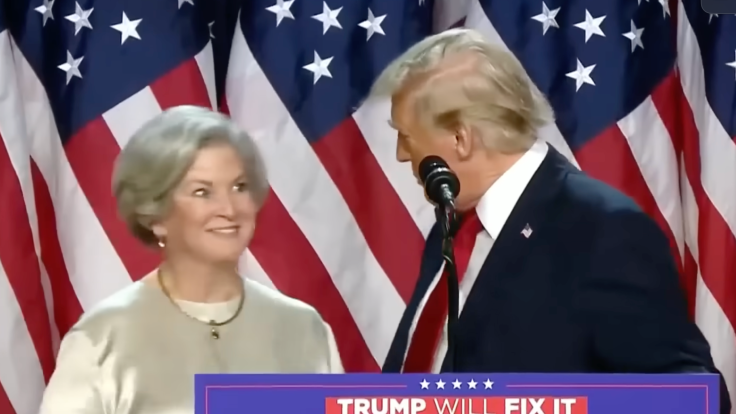
Wiles also offered critical views of other senior figures in the administration, labelling Vice-President JD Vance a 'conspiracy theorist' and expressing concern about the influence of tech executive Elon Musk.
These comments have sparked significant debate inside and outside government. Wiles's remarks swiftly became a matter of both media and political contention; while she later characterised the interview as a 'disingenuously framed hit piece,' she did not deny the quotes attributed to her.
Trump's Public Doubling Down
Rather than retreating from his Truth Social remarks about Reiner, who, along with his wife Michele, was found murdered in their Los Angeles home, Trump doubled down when questioned by reporters, describing Reiner as 'deranged' and 'very bad for our country.'
The Los Angeles Police Department arrested the couple's son, 32-year-old Nick Reiner, on suspicion of the killings; authorities have not linked the tragedy to politics.
The president's insistence on making Reiner's death about political animosity, despite the evident absence of any public evidence of political motive, has drawn sharp criticism from across the political spectrum.
Historical And Psychological Debate
Commentary about Trump's mental state is not new. During his first presidency, Trump famously described himself as a 'very stable genius' in response to earlier criticism, including from Wolff's 2018 book Fire and Fury.
At the same time, mental health professionals have debated the ethics and validity of publicly assessing a sitting president's psychological condition, referencing standards such as the Goldwater Rule, which limits psychiatric commentary on public figures without direct evaluation.
The combination of Trump's polarising public remarks and behind-the-scenes candid assessments by senior aides such as Wiles underscores growing tensions within his administration.
Analysts suggest that the Reiner incident has exacerbated existing fractures, between Trump's impulse-driven communication style and the governance expectations of his advisers, raising questions about leadership coherence ahead of critical policy battles and elections.
As the fallout continues, the interplay between personal rhetoric, staff perception and political consequence illustrates the profound challenges at the heart of Trump's presidency.
© Copyright IBTimes 2026. All rights reserved.