Massive Companies House Audit Reveals Two In Five New British Startups Have Collapsed Amid Brutal Cost Pressures
Data from a major UK analysis reveals sharp regional divides in business survival, as rising costs and early-stage pressures push thousands of startups out of the market.
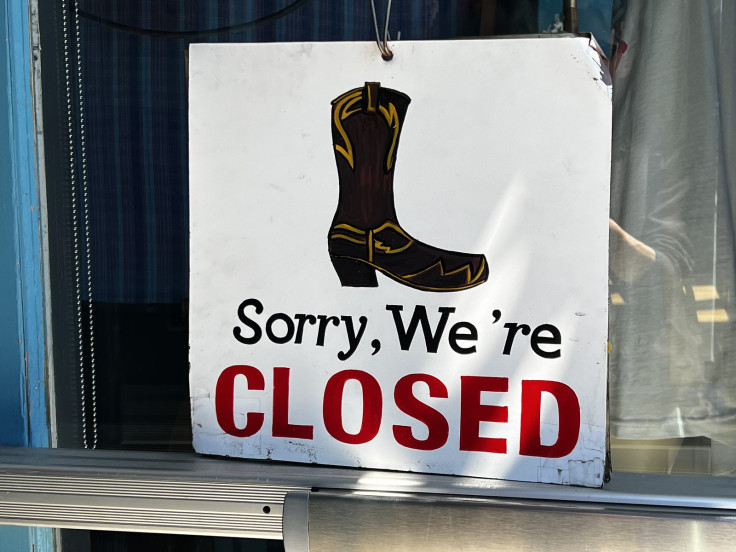
The UK startup failure rate has surged into uncomfortable focus after new analysis revealed that nearly two in five new businesses launched in recent years have already collapsed, raising serious questions about the health of Britain's entrepreneurial economy.
A major review of Companies House data, conducted by Birmingham-based digital marketing agency Avid Panda, shows that startups founded since January 2021 are disappearing at a striking pace, with closures, liquidations, administrations, and dissolutions piling up far earlier than many founders expected.
The scale of the findings has intensified debate about UK business closures, the UK startup survival rate, and whether the environment for new firms has become structurally harder in the wake of rising costs and economic pressures.
Why are record numbers of Australian businesses collapsing under Labor? pic.twitter.com/j6PIEBKmDJ
— Matt Davey (@MatttDavey) May 24, 2026
A Shock 40% Collapse Rate Raises Alarm Over UK Startup Survival
The data paints a stark picture of new business failure in the UK.
Of the 2,131,947 companies incorporated in the UK between January 2021 and December 2025, 879,991 have already shut down. That equates to a failure rate of around 40 per cent, meaning roughly two in every five startups launched in this period are no longer operating.
It is a figure that will concern policymakers and founders alike, especially as it suggests that many businesses are struggling to survive beyond their earliest, most fragile years.
For many entrepreneurs, the first phase of trading is the most uncertain for survival, with limited cash flow, unpredictable demand, and rising overheads often colliding at the same time.
Once pressure builds in those early stages, even promising startups can find themselves unable to recover.
BDO fined £2m by audit watchdog after collapse of construction firm NMCN https://t.co/JsPFuM94kr pic.twitter.com/VVCsmmvvkp
— The Independent (@Independent) May 28, 2026
UK Cities Where Startups Die Fastest
The regional breakdown of UK startup statistics for 2025 reveals sharp differences in survival rates by location, highlighting how geography may be shaping business outcomes more than many realise.
At the top of the list for closures is Wolverhampton, where 49 per cent of new businesses have already shut down. Mansfield follows closely at 48 per cent, while Luton stands at 46 per cent. Birmingham, one of the UK's largest commercial centres, records a 45 per cent closure rate, with Dudley at 44 per cent.
These figures suggest that in some parts of the country, nearly half of new ventures fail within a relatively short period, adding weight to concerns about small-business failure in economically pressured regions.
At the other end of the spectrum, several cities appear to offer more stable conditions for new businesses. Norwich records a 33 per cent closure rate, while Cambridge and Reading sit in the mid-30 per cent range. Oxford shows 34.8 per cent, and Swansea 35 per cent, suggesting a noticeably stronger startup survival rate in the UK in these areas.
The contrast points to a widening gap in business conditions across the country, where local demand, industry mix, access to recruitment, and operating costs may all influence whether a startup survives or fails.
@RachelReevesMP doubled down on IR35 discouraging British SMEs from growing, taking on British workers, instead she promoted offshoring. Sunak did this to line his family’s pocket with their tech firm, Infosys. Reeves was just naive. Chickens have come home to roost now and GDP… pic.twitter.com/zKKu6wQe0I
— R S (@RS73448285) May 28, 2026
Rising Costs Put Pressure On Fragile New Firms
The findings have been linked to rising cost pressures on UK businesses, which many startups struggle to absorb in their early years.
A spokesperson for Avid Panda said the results reflect the reality that many founders are already experiencing on the ground, citing rising operational costs across multiple sectors of the economy.
They highlighted that increases in employer National Insurance contributions and the national minimum wage have added further strain, particularly for small and newly formed companies already working with limited financial buffers.
The underlying issue, according to the analysis, is cash flow. Many startups begin with little room for financial error, meaning even modest increases in expenses can quickly destabilise operations.
When costs rise faster than revenue, survival becomes increasingly difficult, especially for businesses still trying to establish their customer base.
Too much caution and risk aversion is crippling the supply of finance to businesses. Absurd demands for security and capital requirements are killing growth. Never changes. Bank lending to UK businesses falls to lowest level in nearly 30 years via @FT
— Will Hutton (@williamnhutton) May 25, 2026
https://t.co/9ULp9tnie5
What Data Reveals About Britain's Startup Economy
Beyond the headline figures, the Companies House data highlights a broader structural reality. The UK continues to see high levels of business creation, but a significant share of those companies are not surviving long enough to establish themselves.
This creates a fast-turnover economy, where innovation and closure occur side by side at scale.
It also raises questions about whether sufficient support exists for early-stage firms, particularly during the vulnerable first few years, when the risk of failure is highest.
For founders, the implications are clear. Starting a business may be more accessible than ever, but sustaining one requires careful planning, strong financial resilience, and a realistic understanding of local and national economic pressures.
As the data shows, survival is not evenly distributed, and for many new companies, the first challenge is not growth, but simply staying open.
© Copyright IBTimes 2026. All rights reserved.
- Recommended For You