Blair's Paradox Haunts British Politics as Voters' Faith in Mainstream Parties Wanes
From Starmer's collapse to Farage's rise, Britain's political fracture reveals the timeless tension between governing and being liked

Reacting to the results of the 7 May 2026 local elections, Prime Minister Keir Starmer told reporters that 'the results are tough. They are very tough, and there is no sugarcoating this. We have lost brilliant Labour representatives across the country.'
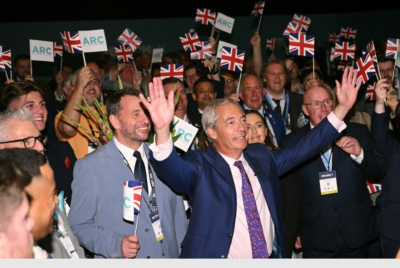
His party had just suffered its worst local election performance in decades, losing over 1,100 seats while Reform UK gained over 1,400 and took control of 14 councils.
A Two-Party State No More
For decades, Britain was divided between Left and Right but united in its belief in a two-party state.
Now, with nationalism resurgent and mainstream parties in turmoil, stark new divisions define the country and immigration is at the centre of it.
Electoral analysis of 1,282 wards shows the combined Conservative-Labour vote share fell to just 36.8%, the lowest in 80 years of local elections.
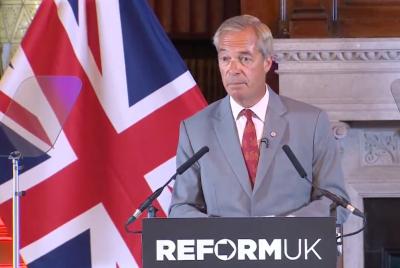
Relishing his party's latest electoral feat, Nigel Farage wrote in The Times: 'Our ability to attract disillusioned voters from the two main political parties has been nothing short of astonishing.'
The Arithmetic of Populism
Today, populism on both left and right relies on three emotionally appealing arguments: blame people of other nationalities for national frustration, promise a return to a utopian past, and insist that complex challenges have simple, divisive solutions.
A Gallup survey published in February 2026 found that the UK leads the world in concern about migration, with 21% of Britons naming it their top national problem, against a global median of just 1%.
Ipsos' Issues Index found that by September 2025, 51% of Britons cited immigration as a top concern, the highest figure since 2015.
For Donald Trump, the target is the Mexicans; for Nigel Farage, immigrants; for Marine Le Pen, the Parisian elite.
The formula is the same everywhere: emotionalism dressed up as sober reflection, critical thinking replaced by a single enemy.
When Feeling Replaces Argument
A parliamentary rhetoric study analysing nearly two million House of Commons speeches found that legislators deploy significantly more emotive language in high-profile debates, strategically deploying what researchers term 'emotive rhetoric' to appeal beyond their immediate electoral base.
Ipsos Veracity Index 2025 found that just 9% of Britons trust politicians to tell the truth, matching the joint-lowest score since 1983. When argument fails to earn trust, feeling fills the vacuum.
Politicians with a clear emotional story have always had the edge: Thatcher told a story of national decline; Blair told one of Tory heartlessness.
For Farage, it is about Britain reclaiming its borders. He recently warned on Facebook that 'the Channel migrant crisis is about to get a lot worse.'
Blair's Warning and Starmer's Reality
Blair remarked that in politics 'you start at your most popular and least capable, and end at your most capable and least popular.'
Ipsos polling from April 2026 found that two thirds of Britons lacked confidence that the UK government was running the country with integrity or competence.
Starmer's own admission that people's lives are not changing fast enough is, in Blair's terms, the sound of capability slowly arriving as popularity quietly departs.
Starmer stated he would never let the country be dragged into a war not in its interest, drawing a direct lesson from Iraq. Blair himself never managed to say those words. Yet foreign policy wisdom rarely outbids domestic anxiety, and immigration has dominated that debate.
Accountability and the Countdown
Badenoch accused Starmer of repeatedly misleading Parliament over national security issues connected to Peter Mandelson's appointment, and of sacking everyone around him to cover for himself, arguing the Prime Minister 'needs to be held to the same standards he held previous Prime Ministers.'
As of 14 May 2026, nearly 100 Labour MPs called for Starmer to resign or set a timetable for his departure, according to LabourList's live tracker.
Former deputy leader Angela Rayner issued a formal warning: 'What we are doing isn't working, and it needs to change. This may be our last chance.'
The Test That Waits
Reform currently enjoys the most intoxicating position in politics: the freedom of opposition without the burden of national responsibility. Its promises remain untested and its failures, as yet, non-existent.
Blair's paradox does not spare anyone. It waits. The real test for Reform will come, not on the campaign trail, but on the other side of power.
That is where stories end and governance begins. And governance, as Blair knew better than most, is where popularity goes to die.
© Copyright IBTimes 2026. All rights reserved.
- Recommended For You