The Big Supermarket Shakeup: How AI Is Shaping the Future for Major Players
Is AI driven inventory management a welcome change for alI?

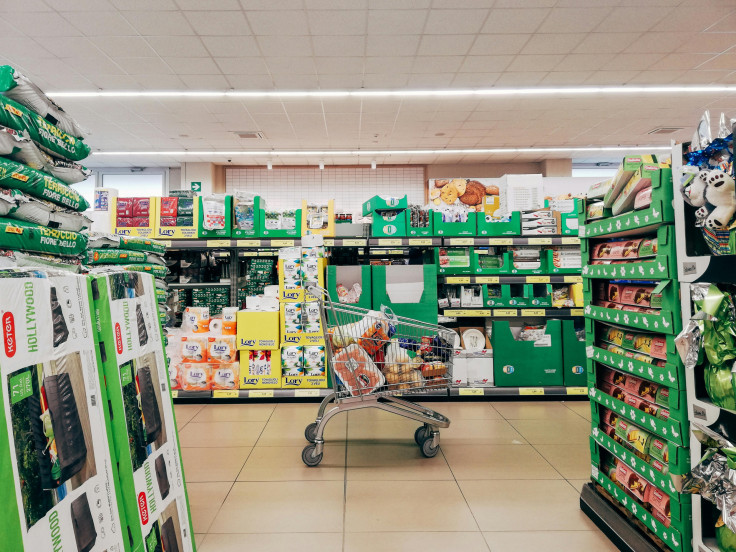
Across the UK, food retailers are seeking out AI driven management systems to future proof their businesses and safeguard against the industry's toughest challenges as shared by data from Science Direct.
Evolving technologies can provide a well measured visibility into daily operations and supply chain management, both of which play a vital role in the changing retail landscape.
The race is on to improve quality of service to the consumer while saving money from a reduction in food waste. With competition at an all-time high while operating at lower profit margins, grocers particularly understand the need to embrace AI systems, as shared by Accenture.
What improvements have been made so far?
Amazon Fresh led the way with the first store in the UK to introduce a 'just walk out' policy in 2021, where in store cameras and weight sensors track purchases, providing a real time tally without the need to queue.
Waitrose, Morrisons and Tesco's followed suit with the introduction of AI smart-trolleys and shelf edge cameras, monitoring customer purchases and stock levels, relying less on man hours and historical data for replenishment, while offering the customer a more convenient experience.
Marking Instacart's first retail partnership in the UK with their AI powered smart-trolleys, Caper Carts are set to launch in one Morrison's store in 2026, with potential for further roll out, Instacart reports.
Grocers are also utilising AI for innovative approaches to quality control, increasing profitability and reducing food waste.
Image based AI can establish quality standards on pure and non-pure food items, detecting defects that may not be visible to the naked eye, Medium shares. These new methods can replace traditional approaches, eliminating the risk of human error and revolutionising how food quality is assessed.
A Forecast for the Future - What's Next?
With AI forecasting tools now at the fingertips of supply chain directors, stores can confidently and accurately pre-empt demand for groceries alongside their supplier and logistics partners, resulting in waste minimisation.
With the contribution of AI tools, Sainsbury's reports a prevented waste figure of 7,386 tonnes of food from hitting landfill in 2024/2025, a healthy start to an ambition figure of 50% cuts in food waste by the year 2030.
More recently, Asda has announced they secured what they claim to be one of the 'largest technology deals in UK retail' through their partnership with Microsoft Azure, transferring operations to a cloud based infrastructure with the view to increase business productivity and consumer focused enhancements.
What are the Drawbacks to Embracing an AI Eventuality?
The benefits of streamlining operations in the food industry through AI technologies do not come without challenge.
One of the most obvious being a rise in resistance from a workforce who fear their jobs are replaceable, at a rate that is quicker than expected for many, Talking Retail reports.
A lack of skilled staff to fully understand and manage AI systems could also present a problem alongside workers who are resistant to change.
Consumer opinions on the integration of AI to their in-store experience can be divided. Although potentially offering a more convenient and 'smarter' shop, some customers are left questioning who is really benefiting the most, the consumer or the retailers?
With the implementation of new AI structures such as Electronic Shelf Labels, acting as a direct connector between the shopper and the retailers AI system, shoppers may find the prices and promotions of certain items fluctuate regularly, causing mixed opinions from those who prefer the relative continuity of a regular pricing strategy.
Certain criteria such as supply and demand, even the weather forecast, can dictate the prices and promotions of grocery items, which may appear, disappear and sometimes reappear at any given time.
'The bag of rice you bought for £2.10 yesterday is suddenly £2.55. Same product. Same shelf. No explanation. It feels like the floor is shifting', Naomi, a Sainsbury's shopper from South London reveals in Global Supermarket News.
'We know AI is involved', Naomi adds. 'But we don't know what it's optimising for — is it us? Or the shareholders?'
The anticipation of evolving customers expectations will continue to lead the way in the advancement of the food retail industry.
The widespread need to create larger efficiencies in productivity will dominate the rapid pace at which AI will be integrated, reinventing the shopping experience for the consumer and industry at large.
© Copyright IBTimes 2026. All rights reserved.
- Recommended For You