Microsoft And Uber AI Bills Mount: Workers Urged To Stop Using Claude As Costs Bite
Rising computing costs force tech companies to limit AI adoption

Big tech companies are starting to rethink how hard they push staff to adopt artificial intelligence, as the hype of the past year collides with awkward financial truths. After months of urging employees to weave machine learning into their daily routines, harsh budget realities are now forcing a massive change of tune.
The dream of boosting productivity with automated coding assistants is crashing into the enormous costs of running these complex models. To stop their budgets from spiralling completely out of control, corporations are now limiting the very systems they used to champion.
How Rising Computing Costs Are Forcing Microsoft to Limit Claude Code Licences
According to The Verge, Microsoft is actually cancelling most of its direct Claude Code licences. Instead, the company is pointing its software engineers towards the GitHub Copilot CLI platform.This shift arrives just six months after Microsoft granted access to Claude Code.
The internal popularity of the assistant grew so rapidly that usage prompted executives to withdraw a tool that engineers heavily relied upon. Ending these licenses will not impact the broader Foundry agreement established between the tech firms.
That partnership involves Microsoft investing up to £3.9 billion ($5 billion) in Anthropic. It encompasses Anthropic's commitment to acquire £23.6 billion ($30 billion) worth of Azure compute capacity, ensuring Foundry customers retain access.
Why Depleted Budgets Led Uber and Peers to Rethink AI Targets
Microsoft is not the only multinational enterprise curbing its internal dependency on large language models. Praveen Neppalli Naga, the Chief Technology Officer at Uber, informed The Information in April that the transport firm exhausted its entire 2026 AI budget within four months.
This massive drain happened because Uber's management actively rewarded adoption, setting up leaderboards to rank teams by how much they used the AI. You can find similar gamification strategies over at Meta, where staff set up a tracking system they called 'Claudeonomics'.
Amazon also instructed its workforce to use as many compute units as possible, a practice internally dubbed 'toxenmaxx.' Yet, these reports of budget exhaustion highlight that replacing human output remains highly complex.
Bryan Catanzaro, Nvidia's vice president of applied deep learning, reinforced this economic hurdle during an interview with Axios. 'For my team, the cost of compute is far beyond the costs of the employees,' he stated.
Microsoft just banned its own engineers from using AI.
— Ricardo (@Ric_RTP) May 24, 2026
The tool was literally costing MORE than the humans it was supposed to replace.
They lied to you about AI adoption and now the whole narrative is blowing up:
Microsoft gave thousands of engineers access to Claude Code six… pic.twitter.com/Cf19Gi1YPo
How the Paradox of Cheaper Tokens Drives Up Enterprise Invoicing
Both Anthropic and Microsoft declined to comment on these recent operational adjustments. The core of the financial issue lies in a token‑based pricing structure, where greater efficiency directly translates to higher aggregate costs.
Goldman Sachs reckons that agentic systems could spark a 24‑fold jump in token consumption by 2030. They estimate this massive surge will drive global usage up to an incredible 120 quadrillion tokens every single month.
A recent Gartner report suggested that running inference on a one‑trillion‑parameter model will cost providers almost 90% less by 2030 than it did in 2025. But even with that huge drop in unit pricing, analysts still predict these savings will not translate into cheaper enterprise solutions.
Agentic models require more compute power per task, meaning rising consumption levels will outpace falling unit costs. Will Sommer, a senior director analyst at Gartner, offered a stark warning about this economic reality.
'Chief Product Officers (CPOs) should not confuse the deflation of commodity tokens with the democratization of frontier reasoning,' Sommer warned.
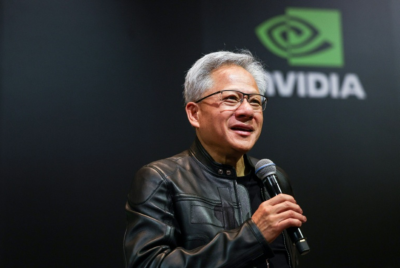
Nvidia CEO Jensen Huang suggested that 100 automated agents will one day work alongside every employee. If token requirements rise faster than prices fall, achieving an agentic future could carry a heavy financial burden.
© Copyright IBTimes 2026. All rights reserved.
- Recommended For You