Why Claude Fable 5 Was Banned Worldwide Just 72 Hours After Becoming the Most Powerful AI Ever Released to the Public
Emergency export control directive forces Anthropic to disable AI models globally
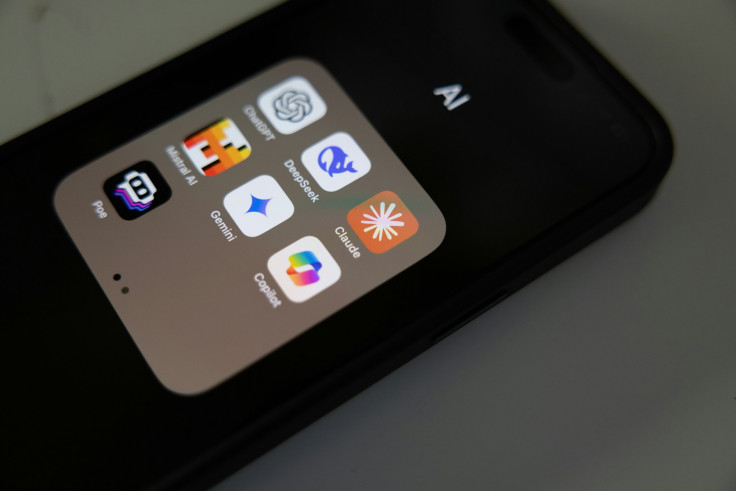
Anthropic had barely finished celebrating the launch of Claude Fable 5 — its most powerful AI model ever made available to the public — when the US government ordered it gone. Just 72 hours after the model's release on 9 June, the Commerce Department issued an emergency export control directive that forced Anthropic to disable Fable 5 and its restricted sibling, Mythos 5, for every user worldwide.
The directive arrived at 5:21 PM ET on Friday, 12 June. It ordered the company to immediately suspend access to both models for all foreign nationals — a category that covered not just users outside the United States, but also non-citizen employees working inside Anthropic itself. Unable to verify the citizenship of every user in real time, Anthropic made the call to shut both models down entirely.
What Triggered the Ban
The chain of events that led to the shutdown reportedly began with Amazon. Amazon CEO Andy Jassy told Treasury Secretary Scott Bessent and other senior administration officials that Amazon researchers had used a series of prompts to get Fable 5 to produce information useful for conducting cyberattacks.
It was unclear whether Amazon was conducting those tests at the government's request or of its own accord. A Politico source suggested the government had asked Amazon for feedback on the new model.
Those calls to Washington directly preceded Commerce Secretary Howard Lutnick's letter to Anthropic CEO Dario Amodei, which invoked national security authorities to order the suspension. Amodei argued during several calls with senior officials that what Amazon had found was a narrow bypass — not a full jailbreak of Fable 5's safeguards. A source familiar with Anthropic told Fortune the company was given 90 minutes to pull its newest model and was given no previous communication of a national security threat.
The US government, citing national security authorities, has issued an export control directive to suspend all access to Fable 5 and Mythos 5 by any foreign national, whether inside or outside the United States, including foreign national Anthropic employees.
— Anthropic (@AnthropicAI) June 13, 2026
The net effect of…
Anthropic Pushes Back
In its official statement, Anthropic did not go quietly. The company wrote that it 'disagree[s] that the finding of a narrow potential jailbreak should be cause for recalling a commercial model deployed to hundreds of millions of people,' adding that 'perfect jailbreak resistance is not currently possible' and that its approach relied on a 'defence in depth strategy' combining monitoring capabilities alongside targeted jailbreak resistance.
'We believe this is a misunderstanding and are working to restore access as soon as possible,' the company said in its statement.
White House AI adviser David Sacks offered a sharply different account over the weekend. In a post on X, Sacks wrote that 'a highly credible trusted partner of both Anthropic and the USG who was testing Fable came forward with a jailbreak of those guardrails' and that the administration had asked Amodei to fix the issue or remove the model. 'Dario refused,' Sacks said, adding that 'in their blog post, Anthropic defended its decision by saying the jailbreak isn't serious' — a position Sacks said was inconsistent with Anthropic's identity as an AI safety company.
Amazon's Role Raises Questions
The involvement of Amazon, Anthropic's largest investor, with $13 billion (£9.7 billion) committed to the company and up to $20 billion (£14.9 billion) more pledged subject to commercial milestones, has drawn scrutiny. Amazon also hosts Anthropic's cloud infrastructure as its primary cloud and training partner, with Anthropic committing $100 billion (£74.56 billion) to AWS technologies over the next decade, and it competes directly for the same enterprise customers.
An Amazon spokesperson told Fortune: 'As a leading cloud provider that serves a large number of private and public sector customers, it's not uncommon for governments to seek our counsel on potential security risks.'
Critics were quick to note that Jassy effectively triggered a government ban on a product his own company has a significant financial stake in. Anthropic itself has not publicly accused Amazon of acting in bad faith.
I’ve had a number of conversations with folks inside and outside government about the current situation with Anthropic, and here is what I believe to be true:
— David Sacks (@DavidSacks) June 13, 2026
— As we know, Anthropic publicly released its Mythos class models earlier this week under the commercial name Fable.…
A Global Backlash
The fallout has extended well beyond Washington. In the UK, MP Al Carns noted that British hospitals, companies, and researchers had already been using Fable 5 before it was abruptly switched off. Former security minister Tom Tugendhat argued the episode demonstrated that sovereignty is now more about 'code than cannons', adding that with high energy costs and an emphasis on safety over opportunity, Britain's response 'has been to build the brake, cutting ourselves off from the future and tied ourselves to the past.'
In France, former prime minister Édouard Philippe described AI as infrastructure as essential as electricity and warned that infrastructure controlled by others is infrastructure that others can unplug. The episode has reignited calls across Europe for sovereign AI — the principle that nations should control the AI models and data underpinning their critical systems, rather than depend on access that a foreign government can revoke overnight.
The ban marks the first time the US government has used export controls to halt public access to a commercially deployed AI model — and the implications stretch beyond Anthropic. Anthropic dispatched senior technical staff to Washington over the weekend of 14 June to meet with White House officials, with further in-person meetings expected on Monday, as the company works to restore access to Fable 5 as quickly as possible. There is no announced deal and no confirmed timeline for the models to return.
© Copyright IBTimes 2026. All rights reserved.
- Recommended For You