

Iran Warns of 'More Painful' Retaliation After US Strikes Three Oil Tankers in Gulf, Raising Fears of Wider Escalation
Tehran says the 'era of proportionate responses' is over as attacks at sea heighten scrutiny of commercial shipping near the Strait of Hormuz
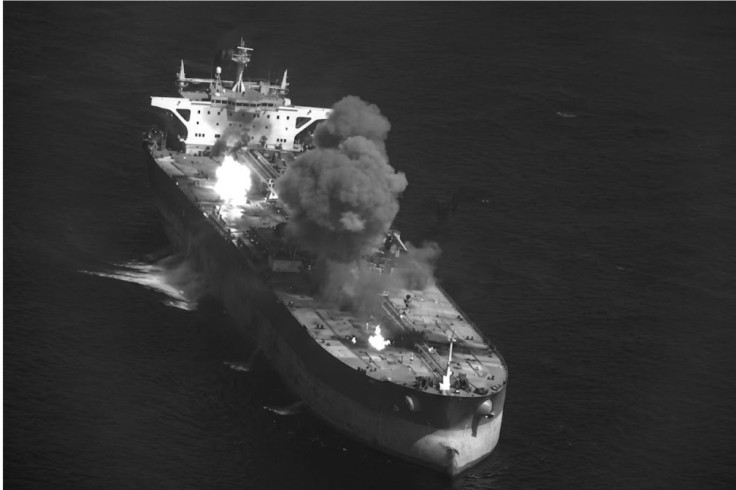
Iran's threat of a 'faster, heavier and more painful' retaliation came after US forces said they struck three Iranian oil tankers in the Gulf of Oman, permanently disabling two and destroying a third, in one of the most serious recent confrontations between Washington and Tehran at sea.
Iran has declared the era of 'proportionate responses' over, with parliament speaker Mohammad Bagher Ghalibaf warning that any further attack on the country's interests or security would draw a 'faster, heavier and more painful' response.
Ghalibaf's remarks followed US strikes on three Iranian crude oil carriers after the Islamic Revolutionary Guard Corps, or IRGC, launched ballistic missiles towards two US Navy warships patrolling regional waters, according to US Central Command (CENTCOM).
The command said the vessels successfully evaded the missile attacks and that no American personnel were harmed.
US Says Three Iranian Tankers Struck
US Central Command said American forces permanently disabled two Iranian crude oil carriers and destroyed a third, which it said later sank in the Gulf of Oman.
CENTCOM identified the vessels as the M/T Downy, off the coast of Kharg Island; the M/T Stark 1, near Jask; and the M/T Kylo, also known as the Noxen. The command said the Kylo was unladen and that its crew had been ordered to abandon ship before US forces struck it at several critical points, rendering it inoperable.
Today at 12 p.m. ET, U.S. forces began striking Islamic Revolutionary Guard Corps (IRGC) targets in Iran. The strikes follow recent attempted attacks by the IRGC against commercial shipping in the Strait of Hormuz and against American service members deployed to the region.
— U.S. Central Command (@CENTCOM) September 1, 2026
The US military said the operation was a response to what it described as failed Iranian missile attacks on an aircraft carrier and a guided‑missile destroyer. CENTCOM alleged that the targeted tankers were linked to a multibillion‑dollar network that finances the IRGC and its regional proxy forces. Iran has not accepted that characterisation.
Admiral Brad Cooper, commander of US Central Command, said Washington would impose 'an even higher economic cost' if Iranian forces fired on US naval vessels.
'Let the message to the IRGC be clear: If you shoot at two of our ships, we will impose an even higher economic cost — taking out three of yours,' Cooper said. 'We will not hesitate to defend American forces and, if necessary, destroy Iran's limited and exposed oil fleet.'
Tehran Signals Tougher Retaliation
In a statement posted on Telegram and carried by Iranian media, Ghalibaf said the US should understand 'before it is too late' that 'the rules of the game have changed'.
'Any aggression against Iran's interests and security will receive a faster, heavier and more painful response,' he said. Iran later said its naval forces had targeted three oil tankers that it accused of travelling through the Strait of Hormuz via an 'unauthorised route'.
The IRGC also said it had struck three US‑linked vessels in other areas and warned shipping not to use routes it had not approved. Those assertions have not been independently verified, and the US account of the confrontation differs from Tehran's.
Iranian state media further claimed that Iranian naval forces had attacked an American military unmanned surface vessel attempting to enter the Strait of Hormuz.
CENTCOM has disputed Iranian accounts of the wider maritime confrontation, saying its warships evaded the missile attacks, and a CENTCOM spokesman called the USV claim 'a total lie.' No independent confirmation of Iran's unmanned‑vessel claim was immediately available.
Global Oil Chokepoint Under Strain
The latest exchange has heightened concern over security in and around the Strait of Hormuz, a narrow waterway linking the Persian Gulf to the Gulf of Oman and a key route for global energy shipments.
Even limited attacks on tankers, port infrastructure or naval patrols can disrupt commercial routing, raise insurance and freight costs, and increase pressure on oil markets.
The risk is not confined to ships directly involved in the confrontation: commercial crews, insurers and regional authorities must weigh the possibility of misidentification, sea mines, missile launches or further restrictions on transit.
The confrontation follows a renewed phase of US‑Iranian military exchanges in recent days. CENTCOM has said earlier US operations targeted IRGC air‑defence sites, radar systems, maritime assets, mine‑laying capabilities and communications facilities, following what it described as attempted Iranian attacks on commercial shipping and US personnel.
For now, the competing statements leave questions unresolved, including the full extent of damage to the vessels, the status of the ships Iran said it targeted, and whether either side will take further action in one of the world's most strategically sensitive waterways.
© Copyright IBTimes 2026. All rights reserved.