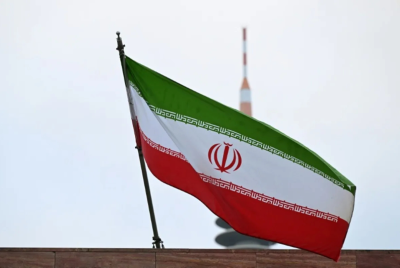
Revolutionary Guard Adviser Warns Iran Is Preparing Military Operations on US Soil as Hormuz Peace Talks Crash
As regional conflict deepens and maritime choke points face renewed assaults, senior Iranian officials demand major US concessions before reopening the Strait of Hormuz

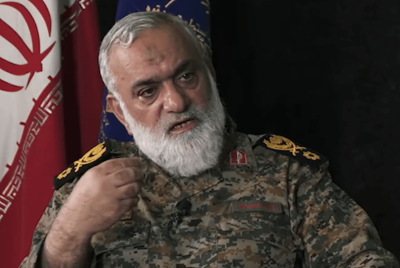
Tensions in the Middle East have reached a dangerous new threshold after a senior adviser to Iran's Islamic Revolutionary Guard Corps (IRGC) announced that the military branch is actively developing capabilities to execute operations directly on 'enemy soil,' including the United States.
Speaking on Iranian state television, Mohammad Reza Naqdi stated that implementing an 'offensive doctrine' requires the force to move operations far beyond regional borders whenever ordered.
The provocative declaration arrives as diplomatic efforts to resolve the devastating conflict, which erupted following coordinated US and Israeli strikes on 28 February, appear to be collapsing.
With thousands of casualties mounting and no definitive ceasefire framework in sight, the standoff over critical maritime trade routes continues to escalate.
Naqdi said the corps needed 'to be able to move the operations to the enemy's soil, whenever this is needed and ordered.'
Hormuz Standoff Deepens as Talks Stall
Iran's clearest threat over the strait so far came from Mohsen Rezaei, the country's top security official, who said Hormuz would remain closed unless Washington met Tehran's conditions. Quoted by the semi-official Tasnim news agency, Rezaei listed the release of Iran's frozen assets and an end to conflicts in Lebanon and Gaza among the demands.
'As long as America does not change its behaviour and does not accept Iran's conditions, the Strait of Hormuz will not be opened,' he said. Washington had not responded to the warning by the time of writing.
The remarks followed a demand from US President Donald Trump on Monday that Iran pay compensation for people killed over fifty years of wars, attacks and protests. Trump has continued to swing between threats of escalation and suggestions that a deal remains close, telling Real America's Voice he was 'sort of negotiating' with 'very devious negotiators'.
Violence spread beyond the strait itself on Tuesday. Yemen's Transport Ministry said four crew members died in a suspected Houthi attack on the Egyptian-owned cargo vessel Tihamah in the Bab el-Mandeb Strait, with two Yemeni rescuers from an anti-Houthi group also killed. If confirmed, these would be the first sea fatalities attributed to the Houthis since the war began.
The Houthi-run Saba news agency said the group had struck a Saudi vessel carrying military equipment, though it did not name the ship, and Saudi authorities had not commented.
Shipping Under Fire as Oil Markets React
Separately, the US military said a Navy MH-60 helicopter fired two Hellfire missiles at the steering gear of a Panama-flagged cargo ship after it allegedly defied repeated orders to stop violating a naval blockade on Iranian ports. US Central Command said the strike was meant to disable rather than sink the vessel, which maritime sources told Reuters had been heading towards the Gulf of Oman when it was hit off Pakistan.
Markets reacted swiftly. Brent crude rose 1.4 per cent to close at $88.91 a barrel, while US crude gained 1.3 per cent to $83.20, as traders priced in a longer conflict and tighter supply. Global equities slipped in response, a now familiar pattern whenever tensions around Hormuz resurface.
Iran has already struck US assets and infrastructure across several states, including Oman, Jordan, Kuwait, Israel, the United Arab Emirates and Saudi Arabia, according to previous official accounts.
With Hormuz still shut and rhetoric hardening in Tehran, the Revolutionary Guard's ambitions now appear to extend well beyond the Gulf. As their rhetoric expands its geographic horizons toward Western soil, the margin for diplomatic error grows vanishingly thin.
© Copyright IBTimes 2026. All rights reserved.
- Recommended For You