

Americans Could Face Years of Paying Out of Pocket for New Vaccines Amid RFK Jr.'s Policy Changes
RFK Jr.'s advisory committee overhaul has raised concerns about vaccine delays, insurance coverage, and access

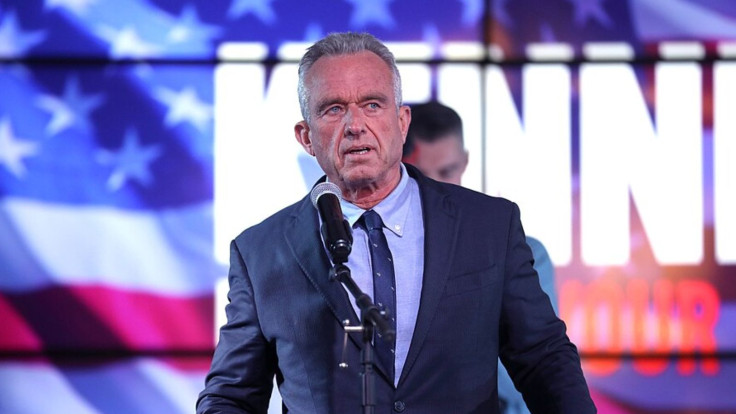
A $40 flu shot bill highlights how changes to US vaccine policy could leave some Americans paying out of pocket for newly approved vaccines for years. With a key federal advisory committee unable to issue new recommendations, mandatory insurance coverage for some vaccines could be delayed until January 2029.
The uncertainty follows sweeping changes by Health Secretary Robert F Kennedy Jr, who replaced members of the Advisory Committee on Immunization Practices (ACIP). A federal judge halted key changes over procedural failures, and the administration has appealed aspects of the ruling. Without new recommendations, some patients could wait longer for vaccines to qualify for mandatory coverage without cost-sharing.
New Flu Vaccine Leaves Patient With a $40 Bill
Ron Kroening, 63, has asthma and seasonal allergies. His doctor recommended Moderna's mRNA flu vaccine, mFLUSIVA, which the US Food and Drug Administration (FDA) approved on 5 August 2026 for adults aged 50 and over. After struggling to find a pharmacy that stocked the vaccine, Kroening was charged a $40 co-payment. He initially thought the bill was a mistake because he had never paid for a flu shot before.
According to Kroening, his insurer said the vaccine was not covered because it lacked an ACIP recommendation. He paid for the shot but warned that additional charges could discourage people from getting vaccinated.
A retired public health employee who previously worked on immunisation programmes in Oklahoma, Kroening said the cost could become a barrier for patients who cannot afford to pay. His experience highlights the difference between FDA approval and insurance coverage. FDA approval permits a vaccine to be marketed for an authorised use, but it does not automatically guarantee immediate coverage without cost-sharing under every health insurance plan.
Why Mandatory Coverage Could Be Delayed Until 2029
Federal rules generally require most non-grandfathered private health plans to cover ACIP-recommended vaccines without cost-sharing when patients use in-network providers. However, the timing of mandatory coverage depends on when a recommendation takes effect.
For calendar-year plans, a new recommendation in December 2026 could trigger mandatory coverage from January 2028. If the recommendation comes in January 2027, the requirement could instead begin in January 2029.
These dates depend on the applicable coverage rules and when the recommendation is issued and adopted. They are not guaranteed deadlines for every vaccine or insurance plan. Lindsay Wiley, a professor of law and faculty director of the Health Law and Policy Program at UCLA Law, explained that the legal requirement takes time to come into effect.
The delay could be particularly significant if ACIP does not resume issuing recommendations. However, insurers can choose to cover vaccines before federal rules require them to do so, meaning patients will not necessarily face additional charges across all plans. COVID-19 vaccines follow a different timetable. Federal law requires coverage without cost-sharing within 15 days of an applicable ACIP recommendation.
RFK Jr.'s Changes Leave Vaccine Committee in Limbo
Kennedy replaced ACIP members with his own appointees and oversaw changes that reduced routine childhood immunisation recommendations by about a third. A federal judge subsequently halted key changes over procedural failures, leaving the committee's status and aspects of the administration's vaccination policy in dispute.
The administration has appealed aspects of the ruling, but the committee has not resumed issuing new recommendations, according to the reported account. The impasse has raised concerns about how newly approved vaccines will receive federal recommendations and become eligible for mandatory insurance coverage.
Dorit Reiss, a vaccine law expert at UC Law San Francisco, has criticised the failure to restore the committee's work and raised concerns about its independence. The consequences could extend beyond the new flu vaccine. Some states restrict pharmacists from administering certain vaccines without an ACIP recommendation. Uncertainty surrounding respiratory syncytial virus (RSV) vaccines and hepatitis B vaccination at birth has also added to the debate over vaccine access and state-level policy.
What the Delay Means for Patients
The financial impact will depend on the vaccine, insurance plan, and state. AHIP, an insurance industry association, has pledged to continue covering vaccines recommended as of September 2025. However, that commitment does not guarantee identical coverage for every newly approved vaccine. For Kroening, the $40 charge was affordable, but he remains concerned about the wider consequences for immunisation access. Patients facing higher costs may delay or skip vaccinations, particularly when they have limited financial resources.
The immediate concern is not that all new vaccines will remain uncovered until 2029. Rather, the absence of new federal recommendations could delay mandatory no-cost coverage for some vaccines, leaving insurers to decide whether to cover them voluntarily. Until ACIP resumes its work, patients may face uncertainty over the cost of newly approved vaccines. The eventual impact will depend on when recommendations are issued and how individual insurers respond.
© Copyright IBTimes 2026. All rights reserved.