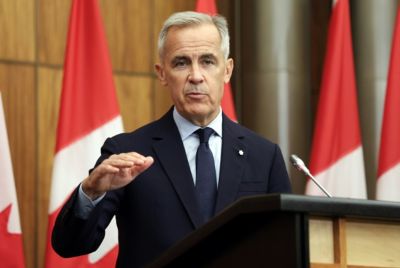
Markets Hold Their Breath for Friday's Jobs Number, the First Real Test of a Fed That Refuses to Guide
Economists expect 83,000 hires and a 4.2% jobless rate, but the range of forecasts runs from 18,000 to 120,000

Wall Street heads into Friday's July jobs report with unusually little to hold on to, because the Federal Reserve under new chair Kevin Warsh has stopped telling markets where policy goes next. Economists polled by Dow Jones expect 83,000 new jobs and an unchanged 4.2% unemployment rate when the Bureau of Labour Statistics reports nonfarm payrolls at 8:30 a.m. in Washington, 1:30 p.m. in London. The print lands on a bond market already unnerved.
The nerves date to last week. The Fed held its target range at 3.50% to 3.75% on 29 July, a fifth straight hold, and Warsh again declined to signal anything about the path ahead. The 30-year Treasury yield climbed to 5.28% by Friday, a level last seen in 2006, and economists at Bank of America called the reaction 'consistent with a central bank inflation credibility shock.'
A Fed That Will Not Say What Comes Next
Scrapping guidance was one of Warsh's first moves after his swearing-in on 22 May, and the June and July policy statements both dropped the old signalling language. He has argued the tool is 'not well suited for the current policy conjuncture', preferring to let each data release move markets directly. This week he was reported to be sticking with the lean approach, while standing ready to move in September if inflation data land hot. The squawk feeds that trading desks lean on have filled the vacuum, as the post below shows.
Markets Pause Ahead of US Jobs Report and Iran Deal Developments
— First Squawk (@FirstSquawk) August 6, 2026
Global markets traded cautiously as investors awaited Friday's U.S. nonfarm payrolls report and monitored progress in U.S.-Iran negotiations. S&P 500 futures edged slightly higher while Nasdaq 100 futures declined,…
The result is a market repricing itself daily. Traders put the chance of a September rise at 36% before the meeting, 56% after Warsh spoke, 68% by Monday, and roughly 58% on Thursday. 'Each meeting we're now building more uncertainty around it than the last,' said JP Powers of the wealth manager RWA Wealth Partners.
Forecasters have split to a remarkable degree. Bank of America now expects a quarter-point rise at each of the year's three remaining meetings. Citigroup sits at the other pole with three cuts by January, arguing the jobless rate will push above 4.5%. Its economist Veronica Clark wrote that the labour market may look stable now, but 'we expect this to change in just a few months.'
What Friday Is Expected to Show
The consensus itself is contested, as the chart below shows. The Dow Jones survey points to 83,000 jobs against June's weak 57,000, FactSet's panel says 100,000, and the outliers run from Vanguard's 18,000, drawn from its own pension-account data, to 120,000.

Wednesday brought the bears fresh ammunition when the payroll processor Automatic Data Processing (ADP) counted just 44,000 new private-sector jobs in July, the weakest month in six. Wage growth is pencilled in near 3.5% a year, and participation sits at a post-pandemic low of 61.5%, which is part of why the jobless rate looks calm. 'A labour market that is exhibiting stability but not heat,' is how Natixis economist Chris Hodge described it.
The first print also deserves handling with care. The June report cut April's count by 31,000 and May's by 43,000, so Friday's number can move markets and still be wrong.
The Bond Market Sets the Stakes
Yields have swung all week as traders positioned for the release, as the chart below shows.

The 10-year yield hit an 18-month high of 4.75% on Monday, eased to 4.60% on Wednesday as oil fell on the Iran talks, and stood at 4.67% on Thursday. Warsh has welcomed the move, arguing that rising long-term yields are tightening conditions on the Fed's behalf, while gold above $4,300 (£3,204) an ounce suggests not everyone is reassured.
A strong number on Friday would harden September's rise into something close to a lock. A weak one, in the direction ADP and Vanguard point, would reopen the cutting argument that Citigroup keeps alive. Either way, the Fed intends to let the data do the talking, which is precisely the point.
Disclaimer: Our digital media content is for informational purposes only and does not constitute investment advice. Please conduct your own analysis or seek professional advice before investing. Remember, investments are subject to market risks, and past performance does not guarantee future returns.
© Copyright IBTimes 2026. All rights reserved.
- Recommended For You