

US Debt Is More Severe Than It Seems, Top Economist Warns as Treasury Yields Increase
Robin Brooks warns US debt risks may be worse than they seem; Ed Yardeni dismisses fears of an imminent crisis

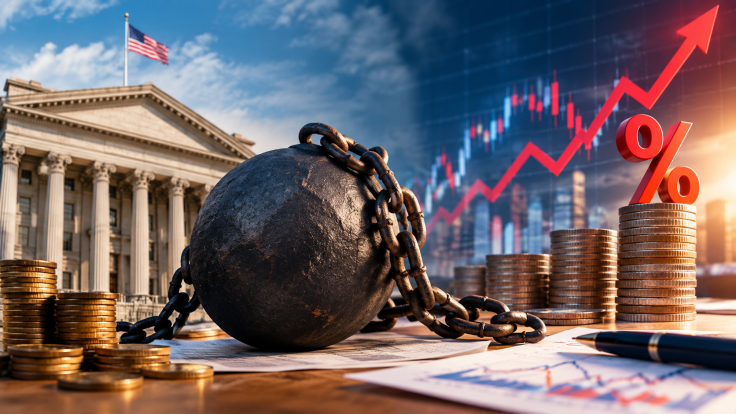
The warning signs are not coming from a government default or a failed bond auction. They are coming from the price of borrowing itself. US Treasury yields have risen despite a recent run of weaker-than-expected economic data. For Robin Brooks, a senior fellow at the Brookings Institution, that is a troubling sign.
In a Substack post on Tuesday, Brooks argued that the market may be under greater pressure than it appears. He said policymakers are now focused on preventing long-term borrowing costs from rising further. As he put it, it is an all-hands-on-deck situation where long-term yields are concerned.
Why Weaker Data Has Not Brought Yields Down
Normally, weaker economic activity can encourage investors to buy government bonds. That demand pushes bond prices higher and yields lower. Brooks said the recent market response has been different. Although Friday's jobs report surprised to the upside, he pointed to other economic releases over the past month that had fallen short of expectations. Yet long-term yields continued to climb.
He argued that this unusual pattern suggests investors are paying more attention to the US deficit and the government's future borrowing needs. That is an interpretation of the market, rather than proof of an imminent debt crisis.
The Treasury Faces a Changing Market
The US government now carries about $40 trillion in debt, according to the supplied reporting. The Treasury must continue borrowing to finance its spending and refinance existing obligations. The market for that debt has also changed.
Foreign central banks and other institutions have traditionally played an important role in buying Treasuries. But some investors have increasingly looked towards alternative assets, including gold. The supplied report also cited a proposal by Norges Bank Investment Management, the world's largest sovereign wealth fund, to reshuffle its debt holdings away from Treasuries.
As traditional buyers become less dominant, hedge funds have taken a larger role. These investors can be more sensitive to price movements, potentially adding to volatility. That makes the Treasury's task more difficult. To attract buyers, it must offer yields that make the debt appealing.
A Growing Deficit Adds Pressure
The federal budget deficit is heading towards $2 trillion a year, according to the supplied report. That means the government must continue borrowing heavily even as interest rates remain above the exceptionally low levels seen during the pandemic. Brooks believes the market is increasingly focused on that outlook.
He argued that the failure of long-term yields to fall alongside weaker economic data points to stronger upward pressure from the deficit. The concern is not that a crisis has already arrived. It is that borrowing costs could remain high for longer, increasing the cost of servicing government debt.
Economists Disagree on the Danger
Not all economists see the rise in yields as a warning of an approaching crisis.Wall Street veteran Ed Yardeni has argued that Treasury yields may simply be returning to more normal levels after years of unusually low rates. The Great Financial Crisis and the COVID pandemic helped create an era of cheap borrowing. As interest rates have risen, bond yields have moved closer to levels seen before those crises.
Yardeni has acknowledged that the current trajectory of US debt is unsustainable. But he does not believe the so-called bond vigilantes are yet showing signs of panic. He expects the 10-year Treasury yield to remain between 4% and 5%. That view offers a more reassuring interpretation of the market. Higher yields, in this reading, may reflect a healthier economy rather than a breakdown in confidence.
The Cost of Waiting
The debate comes as governments across major economies face similar pressures. Debt concerns have spread beyond the US, with yields in countries including the UK, France, Germany, and Japan also rising. Since the pandemic, governments have continued to spend heavily, often while deficits remain large. But borrowing costs are no longer at crisis-era lows.
Higher interest rates increase the cost of servicing government debt, leaving governments with less room to respond to future economic shocks. For investors, the question is whether the current rise in yields is a temporary adjustment or the beginning of a more lasting change.
Brooks sees a warning that policymakers must act before pressure builds further. Yardeni sees a market returning to normal after an extraordinary period of cheap money. For now, the Treasury market remains at the centre of the debate. And as borrowing costs rise, the question is not simply how much the US owes, but how much investors are willing to pay to keep lending.
© Copyright IBTimes 2026. All rights reserved.