Fed Holds Rates at 3.5%-3.75%, Gold Rallies: Warsh Says Goal Is To Keep Inflation Under Control
Fed Chair Warsh affirms no soft targets, committed to 2% inflation, and ready to tighten further if needed

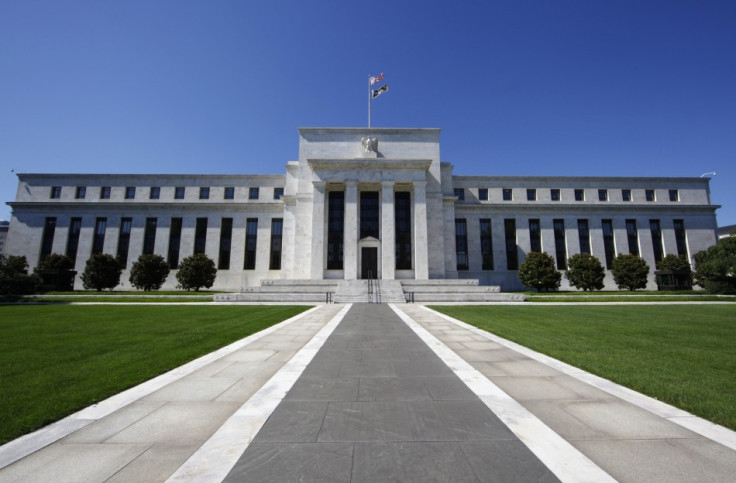
Fed officials split 9-3 on rates, exposing growing divisions over how aggressively to tackle stubborn inflation. Stocks, gold, and Treasury yields react as investors shift focus to a possible Fed rate hike in September.
The Federal Reserve has kept its benchmark interest rate unchanged for a fifth consecutive meeting, holding the range at 3.50% to 3.75%. The decision matched what markets had widely expected, yet the mood inside the meeting room was anything but settled. Chair Kevin Warsh was quick to reject the word 'pause'. He told reporters the committee had instead carried out a rigorous review of the economic picture, and that Wednesday's meeting marked the start of a longer process rather than its conclusion.
A Family Fight, by Design
The vote itself told its own story. Nine members backed the hold. Three did not. Cleveland Fed president Beth Hammack, Minneapolis Fed president Neel Kashkari, and Dallas Fed president Lorie Logan all pushed for a quarter point rise instead, arguing that inflation, stuck above target for more than five years, needed a firmer response.
Warsh appeared almost pleased by the split. He said he had asked for a proper debate among colleagues and got one, describing the discussion as open and unafraid of the hardest questions facing policymakers.
Warsh Draws a Hard Line on Inflation
If there was one message Warsh wanted to land, it was this: there is no soft target. The Fed, he said, is working towards a single number, 2% annual inflation, and nothing short of that will do.
He acknowledged the scale of the task. Prices have run hot for more than five years, and he was blunt that this cannot be undone in nine weeks or by a single encouraging inflation reading. Even so, he insisted the Fed will not waver, and that its credibility depends on following through. Crucially, Warsh left the door open to further tightening if price pressures do not ease. That is a notably different tone from a central bank simply sitting on its hands.
Markets Caught Between Relief and Unease
Wall Street took the decision in its stride at first. The S&P 500 edged up 0.2% and the Nasdaq rose 0.5%, lifted by gains in big technology names including Apple, Microsoft, and Alphabet. The Dow Jones Industrial Average told a different story, slipping around 1% on the day.
Gold, meanwhile, held its ground near four-figure territory per ounce, having wobbled in the lead-up to the announcement as traders weighed the odds of a surprise hike. Treasury yields, notably the 10-year note, pushed higher too, a move Warsh said he welcomed as a sign that markets are responding to real data rather than to Fed signalling.
A Deliberate Step Back From Forward Guidance
Perhaps the most striking shift under Warsh is his refusal to hint at where rates go next. He said plainly that the Fed under his watch is not in the forecasting business, and that policymakers need to observe how markets react to events rather than shape those reactions in advance.
That approach leaves investors with less certainty heading into September, when the Fed next meets. Traders are already leaning towards a hike at that gathering, with the CME FedWatch tool showing a clear majority now expecting tighter policy by then.
What Happens Next
Behind the technical language, the message from Washington is straightforward. Growth remains solid, unemployment has barely moved, and inflation, while easing from its worst, is not beaten yet. Energy prices tied to tensions in the Middle East remain a wildcard that could push price pressures back up at any moment.
For now, borrowers get a reprieve. But Warsh has made clear that reprieve should not be mistaken for retreat. The Fed, he says, will not hesitate to act if inflation does not keep moving towards its goal, and the next test comes in September.
© Copyright IBTimes 2026. All rights reserved.
- Recommended For You