

69-Year-Old Grandma Loses $100K to Fake FBI Scam: Grandsons' Sting Ends in Their Own Arrest
Elderly victim turned the tables on fraudsters with the help of her grandsons
The box looked like it had $20,000 (£15,000) in cash. Most of it was catalogue paper.
That decoy, photographed and sent to a man calling himself 'Calvin', was the last move in a con that had already stripped a 69-year-old Texas grandmother of $100,000 (£75,000). When a courier came to collect it at a Family Dollar car park in Kountze, one of her grandsons was hiding under a blanket in the back seat.
Vickie Nelson had been told by phone and WhatsApp that fraud investigators, and then an FBI agent, were probing criminal activity on her bank accounts, according to a Hardin County Sheriff's Office affidavit. She was told to keep it secret and withdraw cash because, the callers said, the money needed protecting.
The calls started on 9 July. Before each pickup, Nelson was given a password and told to hand the cash only to a person who could repeat it. Over three days she made three drops: $50,000 (£37,500) at the Family Dollar in Kountze, $30,000 (£22,500) near her mailbox in Silsbee, and $20,000 (£15,000) at a Valero petrol station. By 11 July, the callers wanted another $50,000.
Her banks slowed things down. Told to take out as much as she could, Nelson was refused the full amount by Capital One and 5Point Credit Union and came away with about $20,000. By now her family had a plan. Instead of handing the cash over, she staged a decoy: a box packed mostly with catalogue paper, a few real notes laid on top so the photo she sent 'Calvin' would look convincing. The money stayed with her as she drove to the Family Dollar for what the scammers expected to be another handover.
How the Fake FBI Scam Ended in a Car Park
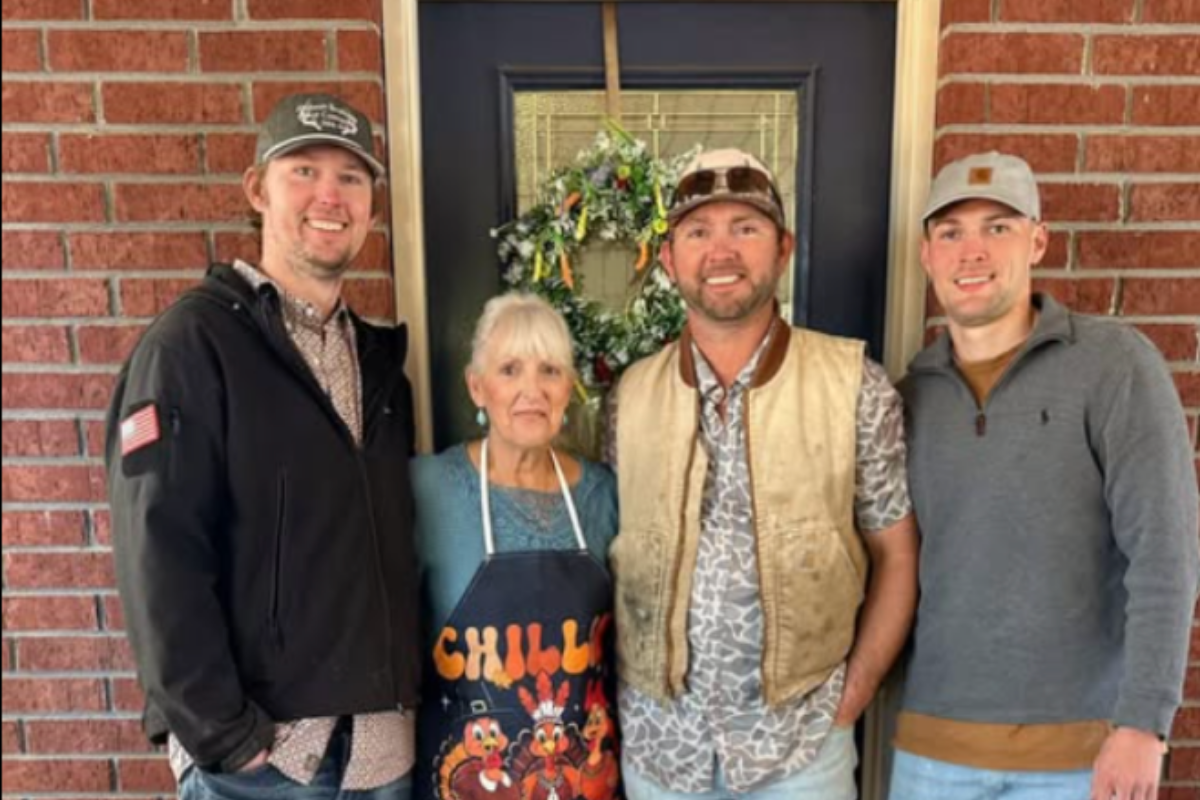
Her grandson Cutler Jackson lay under a blanket on the back seat while his brothers watched nearby, the affidavit states. A woman later identified as Zakia Hossain circled the store on her phone, allegedly acting as lookout. A man with a pink umbrella, named as MD Imran Hossain, approached the car. When Nelson asked for the password, and Jackson rose up, Hossain bolted, sparking a chase across the tarmac.
MD Imran Hossain and his wife Zakia, both 29, were booked into Hardin County Jail early the next morning. Each faces a first-degree felony of engaging in organised criminal activity, with $100,000 (£75,000) bail, and a second-degree felony of financial abuse of an elderly individual, set at $250,000 (£187,500).
Kountze Police Chief Dale Williford said the pair were also held on ICE detainers on suspicion of being in the country illegally. Their one-year-old daughter has been placed in state care.
The rescue came at a price. Nelson's three grandsons, David, Hunter, and Cutler Jackson, were arrested and charged with misdemeanour assault, with Justice of the Peace Rod Ousley setting each man's bond at $2,000 (£1,500).
Imran Hossain was hospitalised with injuries from the struggle. The family's lawyers at Smith & Shipley said the brothers were 'concerned for their grandmother's safety and life' and 'stepped up to protect her.'
Why Cash Courier Scams Keep Snaring Older Victims
Nelson's ordeal fits a pattern investigators call government impersonation, one of the costliest corners of consumer fraud. Americans aged 60 and over reported $4.9B (£3.7B) in losses to the FBI's Internet Crime Complaint Center in 2024, more than any other age group and 43% up on the year. About 7,500 of them lost more than $100,000 (£75,000) each.
The warning signs rarely change. The Federal Trade Commission says no genuine agency or bank will ever tell you to move money to keep it safe. 'Move your money to protect it' is a scam, the regulator states, whether the ask is to wire funds, buy gold or hand cash to a courier. Cash handed to government impersonators nearly doubled in a year, to $76M (£57M) in 2023.
Britain sees near-identical 'safe account' and courier frauds, in which a caller posing as police or a bank persuades someone to move savings for protection. The safeguard is the same on both sides of the Atlantic: no secret withdrawals, no couriers, and no money moved until a relative and the bank are reached on trusted numbers.
For Nelson, the plan came too late for the $100,000 already gone, but not for the last $20,000. The investigation continues, now involving a regional task force and federal agencies. Williford called scams of this kind 'a real problem', one reaching far beyond a single Kountze car park.
© Copyright IBTimes 2026. All rights reserved.