Professor Lost Nearly $500,000 in a Chilling 'Digital Arrest' Scam: 'They Were F***ing Brilliant'
Fraudsters posed as Indian police, convincing a professor to drain her savings in a months-long con
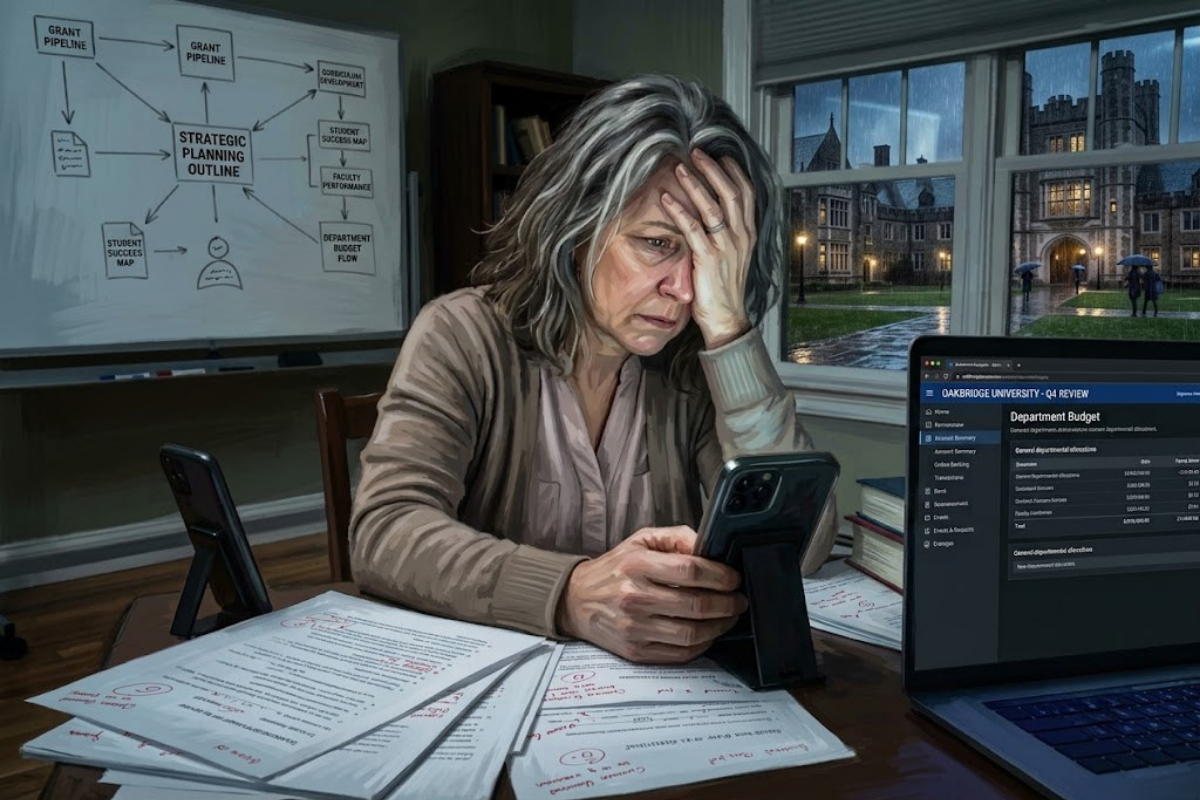
A university professor handed over close to her entire life savings, nearly $500,000 (£375,000), to fraudsters who spent weeks convincing her that Indian police were investigating her for money laundering and could arrest her at any moment.
The victim, who asked to be identified only as L.P. to protect her reputation, teaches at a liberal arts college in New England. In an interview with the San Francisco Chronicle, she described how a phone call in March spiralled into a months-long ordeal that emptied her accounts. 'They were f***ing brilliant actors,' she said of the men who posed as officials.
A man posing as a New Delhi police officer told L.P. an Indian bank had to run a 'forensic audit' of her finances, and that any lawfully acquired money would be returned. Over several weeks in April, she drained retirement savings from a former job, took a $50,000 (£37,500) loan against her 401(k), and drew on an account she shared with her mother, telling her she needed the cash to buy a house. She moved the money through a cryptocurrency app and bank wires. A fake officer coached her on what to say when her bank's fraud team called to query the transfers.
How the 'Digital Arrest' Scam Trapped a Professor
The con belongs to a fast-spreading category known in India as a 'digital arrest', in which victims feel jailed in their own homes. The version aimed at Indian nationals and Indian Americans surfaced in the US only this year. L.P.'s began on 23 March, when she answered a call from a San Francisco number. A woman claiming to be the vice consul general said Delhi Police wanted her passport blacklisted over a fraud inquiry.
The call was handed to men posing as police officers. They told her a warrant existed for her immediate arrest and that her name had surfaced in a multimillion-dollar money-laundering syndicate. One, who called himself Shaktivel, said that to prove her innocence she would have to accept round-the-clock video surveillance.
For weeks she carried two phones, one kept on a video call watched by a rotating shift of bogus officers. A New Delhi police logo glowed on the screen as she slept. She sent selfies when she left home and when she reached work. Told the matter fell under India's secrecy laws, she confided in no one, convinced their phones were tapped.
Why 'Digital Arrest' Losses Keep Climbing
The scheme is a form of imposter scam, the most frequently reported fraud in the United States. Americans reported losing $3.5B (£2.6B) to imposter scams in 2025, close to one in three fraud reports filed that year, according to the Federal Trade Commission. Government impersonators accounted for roughly $920M (£690M) of that, and reports of the type climbed 40% on the year.
Most imposter scams last hours. L.P.'s ran for months. Stacey Wood, a forensic neuropsychologist at Scripps College, said in the report that the con relied on prolonged, intense fear to wear down a victim's reasoning. 'It doesn't matter how smart you are if you're scared,' she said. The scripts are tailored with stolen data; in L.P.'s case, the callers recited her real passport number.
She was not the only target. Bhawna Dewan, an immigrant working a supply-chain job in California, endured two weeks of surveillance over Microsoft Teams and sent an initial $2,000 (£1,500) before a Reddit post describing the identical script broke the spell. 'I'm a very logical, analytical person,' she said. 'But they were able to hack my mind.'
The Consulate General of India in San Francisco has confirmed it advised several victims to file police reports, warning that such frauds have grown more sophisticated. In Santa Clara County, home to the Bay Area's largest population of Indian descent, police and the sheriff's office said six people had reported being targeted, at least one of whom lost money.
Britain sees near-identical 'safe account' frauds, in which a caller posing as police or a bank persuades someone to move savings for safekeeping. No genuine agency or bank will tell someone to move money to keep it safe, the FTC says, and no legitimate investigation requires secret withdrawals, couriers or silence from family.
For L.P., the money is gone. She said she does not expect to recover it, but refuses to let the fraud define her. 'They've taken enough', she said.
© Copyright IBTimes 2026. All rights reserved.
- Recommended For You