

3I/ATLAS Update: Avi Loeb Warns Comet's Trajectory Has Only 0.2% Chance of Being Accidental
Interstellar comet 3I/ATLAS is nearing Earth, and astrophysicist Avi Loeb suggests its path is too perfect to be natural

We are on the cusp of an extraordinary event in our solar system: the close approach of an object that simply shouldn't be here. Comet 3I/ATLAS, only the third known interstellar visitor to ever pass through our neighbourhood, is due to make its closest flyby to Earth on Friday, Dec. 19, 2025.
While NASA has been quick to reassure everyone that it poses no threat whatsoever, the bizarre behaviour and sheer rarity of this deep-space enigma have reignited one of the most provocative debates in modern astronomy: Is this truly just a chunk of ice and rock, or is something else — perhaps something engineered — gliding past us?
This cosmic interloper — the '3I' standing for its status as the third confirmed interstellar object (discovered by the Asteroid Terrestrial-impact Last Alert System, hence 'ATLAS') — will come within about 170 million miles of our planet, moving safely on the far side of the sun. This celestial alignment, while far away, presents Earth and space-based observatories with one of their best opportunities yet to study its physical composition and try to settle the mounting controversy surrounding its origins.
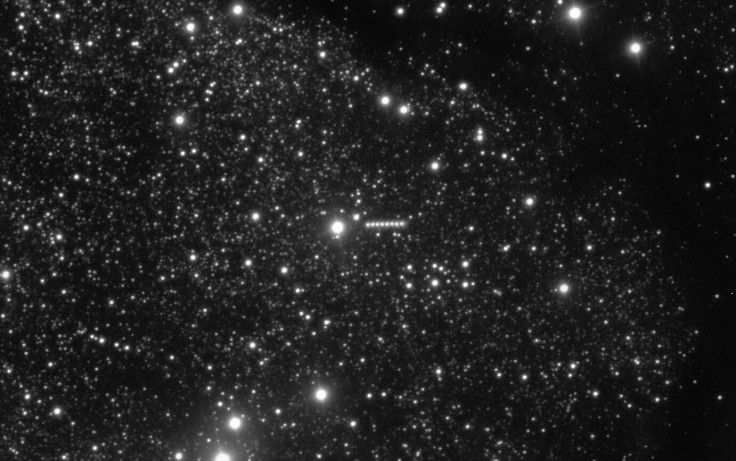
The Unexplained Manoeuvre of Interstellar Comet 3I/ATLAS
Astronomers first picked up 3I/ATLAS back on July 1. Just a few weeks later, on July 21, the world-famous Hubble Space Telescope managed to photograph it from a distance of 277 million miles, revealing a distinct teardrop-shaped cloud of dust — known as the coma — wrapped tightly around its icy core. The comet remained visible for several months before it was obscured by the glare as it slipped too close to the sun to be observed from Earth.
That's where things get interesting. In early October, three separate NASA spacecraft orbiting Mars — MRO, MAVEN, and Perseverance — managed to pick it up again. The MRO's powerful HiRISE camera, which is usually aimed at the Martian surface, captured the clearest view: a tiny, pixel-like puff representing the coma, the dusty envelope created as sunlight warms the nucleus. It's this classic 'comet' activity that initially set it apart from its famous predecessor, 1I/'Oumuamua, which behaved more like a rocky, inert object.
Yet, even with this classic comet behaviour, the conversation about its true nature hasn't quietened down — in fact, it's intensified. In recent weeks, the mystery has deepened further, with observations revealing both a rhythmic 16.16-hour 'heartbeat' — a regular brightening and dimming — and an unusual chemical profile, venting high amounts of both methanol and hydrogen cyanide.
Ongoing observations are crucial for scientists hoping to refine the current estimates of the comet's size and composition. Present measurements suggest a massive difference in potential scale, with the object spanning anywhere from a humble 1,444 feet up to a colossal 3.5 miles across. Understanding this range, and what it's made of, is the key to finally unmasking this rare space traveller.

Is Interstellar Comet 3I/ATLAS a Natural Phenomenon or Just an Illusion?
The debate over 3I/ATLAS has been driven primarily by the high-profile Harvard astrophysicist, Avi Loeb. Loeb is a name synonymous with interstellar controversy, having previously raised the possibility that 'Oumuamua might have been artificial. He is now questioning whether 3I/ATLAS could also have a technological origin, even as the majority of the scientific community continues to interpret it as a natural, albeit rare, comet.
Loeb has pointed out that natural comets expel gas and dust when sunlight heats icy pockets on their surface. This release acts like a small rocket, producing a slight non-gravitational push. The crucial point he makes is that an artificial object could experience similar non-gravitational forces, either through active propulsion or by simply collecting material as it hurtles through interstellar space, thus giving it the appearance of a comet in low-resolution images.
'Given these features, it may resemble a comet in unresolved images like the ones we have of 3I/ATLAS,' Loeb wrote, before offering a tantalising counter-argument. 'However, a spacecraft could also display artificial lights, release excess heat from its engine or manoeuvre in unusual ways'. It's a gripping idea that turns the current understanding of space-borne phenomena on its head.
The professor also highlighted several features he believes are unlikely for a purely natural object. The most compelling is the comet's trajectory itself. Loeb calculated that its path is aligned with the plane of the planets to within just five degrees, a coincidence he estimates has only a 0.2 percent chance of occurring by accident.

He also contends that the object's estimated mass and unusually high speed make it an improbable candidate for a naturally occurring rock randomly entering the inner solar system. Furthermore, he points to a peculiar jet of material that was observed to be directed toward the sun both before and after its perihelion — a timing and direction he calls unusual for familiar comets.
Scientists will continue to study the comet long after its closest approach this Friday. As NASA noted, 'Observations are expected to continue for several more months as 3I/ATLAS heads out of the solar system'. The European Space Agency's JUICE spacecraft also observed the comet last month, witnessing intense activity as the sunlight caused its ices to sublimate.
ESA expects the bulk of the invaluable data gathered by JUICE to arrive in late February. After passing Earth, 3I/ATLAS will move on toward Jupiter, offering yet another chance to examine this incredibly rare visitor from beyond the solar system in the spring of 2026.
The appearance of 3I/ATLAS is more than just a passing astronomical curiosity; it represents a genuine scientific mystery at the very boundary of our solar system. Whether it is an ancient, ice-rich fragment from a distant star system or, as some influential voices suggest, something far more deliberate, the data gathered by JUICE, Hubble, and NASA's Mars fleet over the coming months will be scrutinised for clues. As this rare messenger from deep space makes its safe exit, it forces us to confront a profound question: what exactly is out there?
© Copyright IBTimes 2026. All rights reserved.