40 Days of Staring: NASA Tracked Comet SWAN Every Few Minutes — Why?
40 days of data: NASA's PUNCH mission tracks Comet SWAN to protect Earth
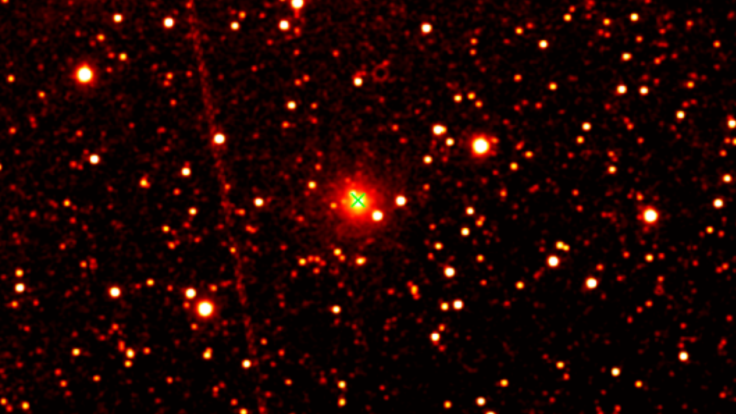
Forget the once-in-a-lifetime flybys that fade in days; the cosmos has just offered up a truly unprecedented spectacle. In an extraordinary feat of celestial tracking, one of NASA's newest spacecraft has kept an unblinking, nearly 40-day gaze upon a newly-discovered icy visitor, Comet C/2025 R2 (SWAN), capturing its dramatic journey through the inner solar system in minute detail.
This marathon surveillance session, executed by the PUNCH mission (Polarimeter to Unify the Corona and Heliosphere), is more than just a remarkable photo opportunity. Imaging the comet every four minutes, the campaign marks what the space agency proudly states 'may be the longest any comet has been tracked' with such astonishing frequency. This intensity represents a profound shift in how we monitor the deep dynamics of space.
The PUNCH mission itself is a constellation of four suitcase-sized small satellites, designed to function as a single 'virtual instrument' in low Earth orbit. Their ultimate purpose is to map how the sun's scorching outer atmosphere, the corona, transitions into the solar wind, an area of space that has been historically difficult to measure.
This high-speed, continuous data stream allows scientists to witness subtle cosmic changes in near-real-time, revealing previously hidden dynamics of the comet's structure and its unpredictable life.
For context, while other celestial nomads have been followed for years, the old standard for tracking was a leisurely 'once-per-day cadence'. Now, that has been definitively blown out of the water. Craig DeForest, the principal investigator for the PUNCH mission at the Southwest Research Institute in Colorado, highlighted the true significance of the breakthrough in a statement.
'Other comets have been tracked at once-per-day cadence for years,' he stated, before underscoring the leap in capability. 'What's new here is the few-minute cadence of observation'. The accompanying video, which stitches together hundreds of PUNCH images taken from Aug. 25 to Oct. 2, clearly shows the comet gliding dramatically across the sky, passing between the planet Mars and the star Spica in the constellation of Virgo.

Hammerhead Distortion: What NASA and 3I/ATLAS Reveal
The story of the comet itself is just as captivating. Dubbed SWAN — an acronym for the Solar Wind Anisotropies instrument on the SOHO spacecraft — the celestial body was first spotted in September by Vladimir Bezugly, a Ukrainian amateur astronomer. Mr. Bezugly was scanning publicly available images from the sun-watching Solar and Heliospheric Observatory (SOHO) when he noticed a bright, hazy blob close to the sun.
Swiftly confirmed, the comet reached its perihelion — its closest point to the sun — just a day after its discovery, passing at a distance of 46.74 million miles (75.20 million km) from our star. The images captured by PUNCH, though not fully processed (leaving thin black seams visible between individual frames), immediately offered a visual feast: a glowing, bluish-green coma.
This vibrant colour is the tell-tale sign of sublimation, the process where the sun's intense heat turns the comet's ices directly into gas. This newly released gas and dust are then swept backwards by the perpetual blast of the solar wind to form the distinctive, glowing tail.
However, by mid-September, the comet's head began to exhibit a worrying trait: a strange, triangular 'hammerhead' shape. For astronomers, this distortion is a critical clue, often linked to a fragmenting nucleus.
Outgassing from multiple, splintered pieces can stretch a normally round coma into a lopsided, unstable form, suggesting the icy visitor may be breaking apart under the sun's immense pressure.
Adding a layer of intergalactic intrigue to the spectacle, Comet C/2025 R2 (SWAN) was not travelling alone in that region of space. It happened to share the same slice of the sky with the now-famous interstellar visitor 3I/ATLAS.
This object, discovered on July 1, 2025 by the ATLAS telescope in Chile, is only the third confirmed object from outside our solar system ever detected passing through, following 1I/'Oumuamua in 2017 and 2I/Borisov in 2019.
Its nucleus is estimated to be between 440 metres and 5.6 kilometres in diameter. In the PUNCH time-lapse footage, 3I/ATLAS makes a brief appearance near the end of the sequence, 'zipping left to right beneath SWAN'. The near-simultaneous tracking of both a native solar system comet and an interstellar interloper provides NASA's heliophysicists with a rich dataset for comparative analysis, giving us two cosmic dramas for the price of one.

Why NASA's Stare at 3I/ATLAS Matters for Earth
The real-world importance of this mission goes far beyond astronomical curiosities. Comets, and specifically their tails, serve as natural, visible tracers of the solar wind — the continuous stream of charged particles that flows outwards from the sun, constantly shaping the space environment throughout our solar system.
The PUNCH video clearly illustrated this: as SWAN moves leftwards, its tail is demonstrably pushed in the same direction by the solar wind, making the comet appear to drift 'backward', as the NASA statement noted.
Understanding this dynamic flow is paramount to protecting our technology back on Earth. PUNCH's unique capability lies in using polarised light to create 3D maps of the inner solar system, allowing scientists to discern the exact trajectory and speed of Coronal Mass Ejections (CMEs) — giant, disruptive eruptions of solar plasma — as they move towards Earth.
Gina DiBraccio, a heliophysicist and acting director of the Solar System Exploration Division at NASA's Goddard Space Flight Center in Maryland, stressed the integrated value of the research in the same statement.
'Watching the sun's effects from multiple vantage points — and with different types of instruments — is what gives us a complete picture of the space environment', she explained. She then brought the context back home, underscoring the vital, human consequences: 'We use these same tools to track and analyze how space weather impacts our astronauts, our spacecraft, and our technology here on Earth'.
A major solar flare or coronal mass ejection, tracked in minute detail by missions like PUNCH, could spell disaster for satellites, power grids, and even aviation systems reliant on clear communications.
© Copyright IBTimes 2026. All rights reserved.
- MOST POPULAR IN Trending