3I/Atlas Suddenly 'Wakes Up' in Deep Space as Juice Spacecraft Captures Shock Activity
JUICE spacecraft captures dramatic new activity around interstellar comet 3I/ATLAS, hinting at outgassing and tail formation
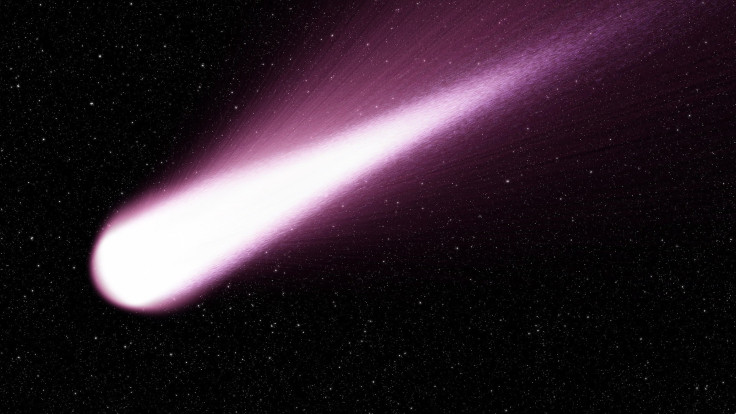
3I/ATLAS suddenly 'wakes up' in deep space, the European Space Agency's (ESA) JUICE spacecraft has captured the first sign of dramatic activity in the comet, revealing a glowing halo and possible tails far beyond Earth's gaze.
Since its discovery by the ATLAS survey on 1 July 2025, 3I/ATLAS has intrigued astronomers as the third known interstellar object ever to enter our Solar System. Observed from Earth and Mars in recent months, the comet has now drawn the attention of JUICE, ESA's Jupiter-bound probe, which on 2 November 2025 used its onboard Navigation Camera (NavCam) to capture a startling image of the object surrounded by signs of vigorous outgassing.
News of this observation arrives as scientists anticipate the full dataset from JUICE's five scientific instruments, to be delivered in February 2026, which promises to shed light on the comet's composition and behaviour.
Rare Interstellar Catch By JUICE
The decision to train JUICE's cameras on 3I/ATLAS marked a dramatic pivot from the probe's original mission profile. Although en route toward Jupiter, with the main antenna deployed as a heat shield due to proximity to the Sun, the spacecraft was repurposed to observe this unexpected visitor.
On 2 November, during JUICE's first observation slot, a quarter download of a single NavCam image revealed what ESA described as 'very clearly visible' features: a glowing coma, a bright halo of gas surrounding the comet's nucleus, and evidence of a plasma tail stretching upward in the frame, with a fainter dust tail perhaps visible reaching to the lower left.
The image was taken just two days before JUICE's closest approach at approximately 66 million kilometres from 3I/ATLAS. That path will likely yield the sharpest view yet of this interstellar interloper while it is still active after its recent perihelion.
Why This Visit Matters
Observations from Earth-based telescopes initially tracked 3I/ATLAS as it plunged toward the Sun. Once the comet moved out of Earth's line of sight, ESA turned to its interplanetary fleet for a clearer view. Between early October and mid-November, Mars orbiters such as ExoMars Trace Gas Orbiter (TGO) and Mars Express observed the comet as it passed near Mars, refining its trajectory, reducing the uncertainty in its orbit tenfold.
Now, JUICE's observations come at a critical moment, just after perihelion, when comets typically show peak activity. This gives researchers rare access to data on how an interstellar object behaves under the intense solar heat. As JUICE's instruments begin transmitting, scientists expect to analyse imagery from high-resolution optical cameras, infrared and ultraviolet spectrometers, and particle detectors. These data will help characterise the coma composition, tail dynamics, and possibly the nucleus itself.
Past observations have shown 3I/ATLAS to be different from many native Solar System comets. Spectroscopy by the James Webb Space Telescope (JWST) suggested a coma dominated by carbon dioxide, unusual compared with typical comets, where water ice usually drives outgassing, along with traces of water, CO, OCS, water ice, and dust. The CO₂/H₂O mixing ratio was recorded among the highest ever observed in a comet.
Polarimetric studies before perihelion also indicated that 3I/ATLAS exhibits a deep negative polarisation branch, a characteristic more akin to small trans-Neptunian objects or Centaurs than comets from our Solar System. That suggests the nucleus may have a surface enriched in water ice or other primitive ices under conditions not typical of comets formed around the Sun.
What Comes Next: Awaiting The Scientific Gold
Despite the excitement, a full scientific assessment remains pending. The data recorded by JUICE's science instruments, JANUS high-resolution camera, MAJIS infrared spectrometer, UVS ultraviolet spectrometer, SWI sub-millimetre instrument, and PEP particle detector, will not arrive until 18 and 20 February 2026. The delay stems from JUICE's current position in the inner Solar System and its use of a smaller medium-gain antenna for data return while the high-gain antenna serves as a thermal shield.
When that data arrives, scientists anticipate a detailed compositional profile of the coma and tails, and possibly even insights into the nucleus's surface properties and internal structure. Combined with earlier Earth- and Mars-based observations, the new findings could broaden our understanding of what interstellar comets are, and by extension, what kinds of planetary systems send them our way.
The scientific team at ESA described the observation campaign as 'unexpected for everybody', underlining the serendipity of JUICE being in the right place at the right time.
As humans peer across the void between stars, 3I/ATLAS stands as a rare, tangible messenger of another stellar system. Its activity, now caught by JUICE, could hold answers about the composition, formation, and evolution of icy bodies beyond our Solar System.
3I/ATLAS is not only awake, but it might also just be about to tell us secrets centuries in the making.
© Copyright IBTimes 2026. All rights reserved.
- MOST POPULAR IN Trending