

Andrew Tate Extradition Explained: 42 UK Charges and 81 Days in Miami Custody With No Final Hearing
A US judge refused both men bail on 9 September, but their lawyer says the defence lacks the accusers' names
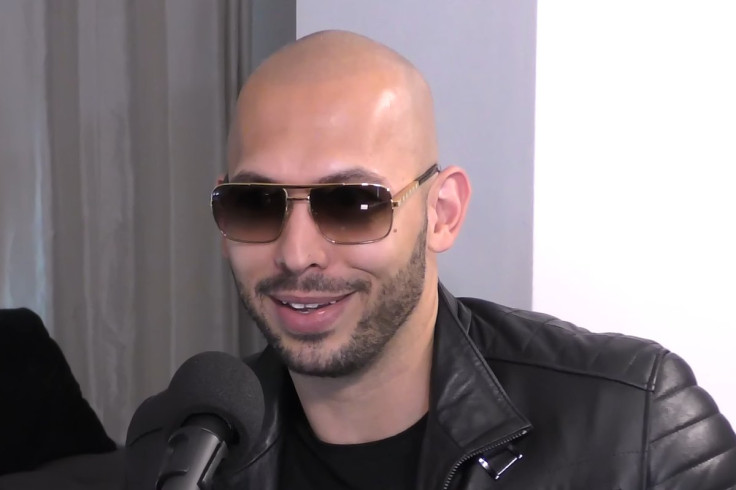
Andrew Tate has spent 81 days in a Miami jail fighting extradition, the process that could send him to the UK to face 42 charges. The charges include rape and human trafficking, which he denies. No date has been set for the final hearing on whether the US can hand him over.
The US Marshals Service arrested his brother Tristan alongside him on 18 July. Tristan Tate faces 17 charges and also denies them. Any trial in England depends on the US handing both men over. On Thursday 1 October, Judge Lauren Louis asked the brothers' lawyers for hearing dates.
What the British Case Covers
The Crown Prosecution Service (CPS) announced the original 21 charges in May 2025; it had authorised them in January 2024. The case has three alleged victims. Ten of those first charges were against Andrew Tate, including three counts of rape. A day after the arrests, the CPS added 38 new charges. The new charges add four more alleged victims and include seven counts of rape. Another 19 cover indecent images of a child and extreme pornography, as the graphic below shows.
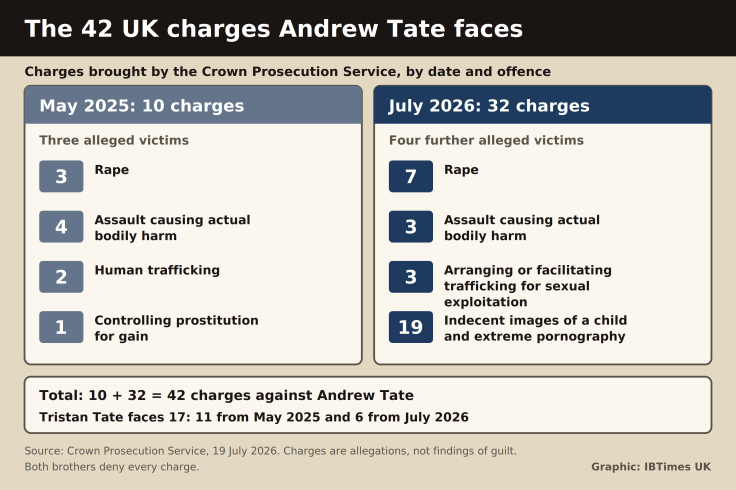
Six of Tristan Tate's charges are new, including one of sexual assault. They followed new evidence from the police force in Bedfordshire. Prosecutors now count seven alleged victims. They allege that the offending ran from July 2010 to August 2017. Malcolm McHaffie, head of the CPS Special Crime Division, said 'these defendants have the right to a fair trial.' He said nobody should comment on or share anything online that could make the trial unfair.
Why the Brothers Remain in Jail
In March 2024, a court in Romania ruled that Britain could extradite the brothers only after their case there ended. British prosecutors asked for the arrests while the brothers were in Miami for a boxing night Andrew Tate was due to co-host, filings show. US government lawyers now argue Britain's case. In July, the White House ruled out stepping in. At an eight-hour session on Thursday 27 August, each brother said he could not build a defence from jail.
Judge Louis kept both men locked up on Wednesday 9 September. Under US Supreme Court precedent, people fighting extradition get bail only in special circumstances, and the brothers cited their Romanian case. She found they had not ruled out a 'risk of flight or danger to the community,' the Associated Press reported. Washington's lawyers had told her the brothers often visit countries without a UK extradition treaty.
The Steps Left Before Any Handover
Britain's supporting papers went public in Miami on Monday 5 October. Joseph McBride, the brothers' lawyer, says Britain has not told the defence who the accusers are. Reuters ran his statement that nobody should ask an American court to hand a person over 'on the word of secret accusers.'
At the final hearing, a judge will decide whether the brothers are extraditable under US law and the treaty. If so, the judge certifies the case to America's Secretary of State, who has the final say. Justice Department guidance says neither decision allows a direct appeal, though a person can still challenge the outcome in a separate claim.
© Copyright IBTimes 2026. All rights reserved.