

Anthropic CEO Dario Amodei Reportedly Floated Immersive Video Games to Keep AI-Displaced Workers From Revolting
Layoffs spreading beyond technology could reportedly put another 1.6 million jobs at risk

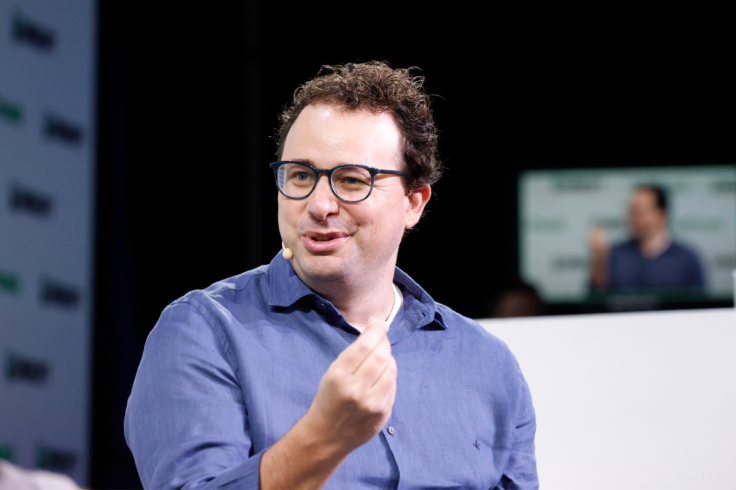
Anthropic CEO Dario Amodei reportedly once suggested that immersive video games could help prevent social upheaval if AI eventually leaves millions of people without jobs, offering a rather unconventional answer to one of the technology industry's biggest looming problems.
The idea had emerged from an internal Slack discussion during Amodei's time at OpenAI and was first reported by The Wall Street Journal.
The suggestion has since attracted attention because of its uncomfortable implications: if increasingly capable machines take over human work, perhaps people could simply spend their newly acquired free time inside virtual worlds.
Note that Amodei was reportedly floating an idea in an internal discussion, not presenting an official policy proposal.
From AI Job Losses to Virtual Escapism
Amodei's suggestion touches on a problem that AI executives have increasingly struggled to explain. AI promises enormous productivity gains, but those gains could come at a considerable cost if businesses replace human workers faster than economies can create alternative employment.
Amodei's thinking appears to acknowledge that unemployment could create problems beyond lost wages. Work provides people with routine, social connections, status, and a sense of purpose. Removing those things could produce political and social consequences that financial assistance alone might not resolve.
Still, immersive entertainment as a potential distraction from widespread unemployment is hardly a reassuring prospect for workers facing redundancy. The suggestion also raises questions about whether technological companies should be thinking about preserving people's economic opportunities rather than finding increasingly elaborate ways to occupy their free time.
AI Layoffs Are Already Raising Alarm Bells
A recent CNET report highlighted how major companies have been restructuring their workforces while redirecting spending towards AI.
The report cited more than 200,000 technology-sector job cuts in 2026. Companies, including Microsoft, Oracle, and Amazon, have announced substantial workforce reductions, although not every cut can be attributed directly to AI.
CNET also warned that layoffs spreading beyond technology could put another 1.6 million jobs at risk. It highlighted particular concerns about shrinking opportunities for younger workers entering the labour market.
However, there is an important counterpoint. The OECD's 2026 Employment Outlook describes the evidence linking generative AI to young people's employment difficulties as mixed. The widespread displacement scenario remains a risk rather than an established outcome.
Anthropic's Record IPO Adds Another Layer of Irony
Amodei's reported comments have resurfaced just as Anthropic has completed a record-breaking stock market debut.
The company, which develops the Claude family of AI models, raised approximately $93.5 billion through its initial public offering, including shares sold by existing shareholders. It also completed a concurrent $26 billion private placement, taking the combined gross proceeds to approximately $119.5 billion.
Anthropic's shares were priced at $83 and began trading on Nasdaq on 19 November under the ticker ANT. They opened at $111.50 before closing their first trading day at $97.17. The stock subsequently experienced a sharp pullback, falling by as much as nearly 15% on 20 November, although it remained above its IPO price.
Bloomberg also reported that the offering attracted between $115 billion and $120 billion in retail investor demand, according to a person familiar with the matter.
The contrast is difficult to ignore. Investors are pouring money into companies developing technology that could fundamentally reshape employment, while the industry's own leaders are considering what happens if that transformation leaves too many people without meaningful work.
Where Is the Pushback?
Amodei's video game suggestion has an obvious weakness: virtual entertainment cannot replace a dependable income, affordable housing, or the social value of meaningful employment.
There is also no indication that Amodei's Slack comment was intended as a serious blueprint for managing an AI-driven economic crisis.
For now, the episode is less a revelation of Anthropic's employment policy than an unusually revealing glimpse into the questions confronting AI's most influential executives.
The bigger challenge remains unanswered: if AI makes human labour less economically valuable, who ensures that the people displaced by the technology still have a meaningful stake in the prosperity it creates?
© Copyright IBTimes 2026. All rights reserved.