

NSA's Classified Communications Network Goes Down as FAA, Airline and Bank Outages Pile Up
NSANet's degradation occurred during scheduled maintenance and did not affect mission-critical capabilities

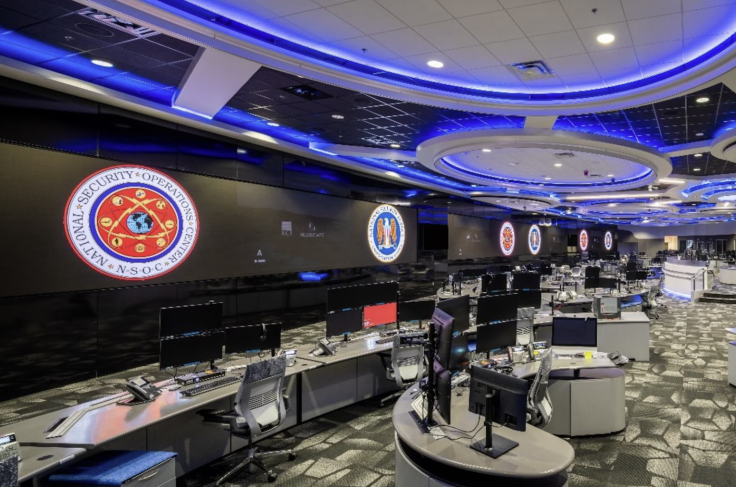
The US National Security Agency (NSA) has suffered a disruption to its classified internal communications network, adding to a growing list of technology failures affecting America's aviation, banking, and government infrastructure and raising fresh questions about the reliability of systems underpinning national security.
The outage affected NSANet, the highly classified network used by NSA employees to communicate and share sensitive intelligence internally, according to CNN, which first reported the incident on 17th November, citing people with knowledge of the matter.
The disruption is particularly concerning because the NSA plays a central role in America's signals intelligence and cybersecurity operations. Its internal communications infrastructure supports the handling and exchange of sensitive information, making network availability important to the agency's daily work.
However, there is no evidence that the incident resulted from a cyberattack. The NSA subsequently confirmed that it experienced a temporary degradation during scheduled maintenance, stressing that its mission-critical capabilities remained fully operational.
The development does not establish that intelligence collection, national security decision-making, or operational responses were suspended. Nevertheless, the incident comes at an uncomfortable time for Washington, with several major technology failures occurring across different sectors within days.
FAA Ground Stop Disrupted Thousands of Flights
One of the most consequential incidents involved the Federal Aviation Administration (FAA), which issued a nationwide ground stop on 13th November following instability in its telecommunications network.
The disruption began when the FAA's legacy equipment became unstable after excessive data flooded its FAA Telecommunications Infrastructure network.
According to the agency's preliminary investigation, the system was receiving 1,000 connection attempts every four to five seconds. Investigators identified two potential sources of the excessive traffic: a radar site in Amarillo, Texas, and a radio communications site in El Dorado, Arkansas.
The FAA said work involving a new router at the El Dorado site was being carried out by its network service provider, L3Harris.
The FAA implemented a nationwide ground stop as a precaution, with air traffic resuming at approximately 8:15 p.m. ET after the system stabilised. The halt lasted around four and a half hours.
The agency subsequently reported approximately 12,462 flight cancellations on 13 November, although it cautioned that not all cancellations were directly attributable to the ground stop.
Banks and United Airlines Hit by Further Disruptions
The technology problems continued on 16th November, when United Airlines experienced a widespread systems outage that temporarily disrupted departing flights.
The airline said some flights were delayed, but flights already in progress and United Express operations were unaffected. An internal company alert obtained by CNN indicated that multiple applications used by flight crews were affected, including flight-planning, weather-briefing, and crew-management tools.
United subsequently confirmed that the problem had been resolved and said there was no indication that it was cybersecurity-related.
The banking sector also experienced another disruption on the same day. JPMorgan Chase acknowledged a temporary technical problem involving a software bug in its on-premise hardware systems, which slowed the processing of certain transactions.
Washington Rules Out Evidence of a Coordinated Cyberattack
The clustering of outages has inevitably raised questions about whether the disruptions could be connected or represent a broader cybersecurity threat. However, US officials have pushed back against suggestions of a coordinated attack.
Secretary of State Marco Rubio said there was no evidence linking the incidents to hackers, criminal groups, or a foreign government. He acknowledged that the repeated technical failures were unsettling but described the incidents as distinct, with different technical causes.
Director of National Intelligence Jay Clayton offered another possible explanation, pointing to government agencies and private companies upgrading and patching computer systems around the same time. He argued that older infrastructure could struggle when new technologies and software updates are introduced, creating temporary instability.
© Copyright IBTimes 2026. All rights reserved.